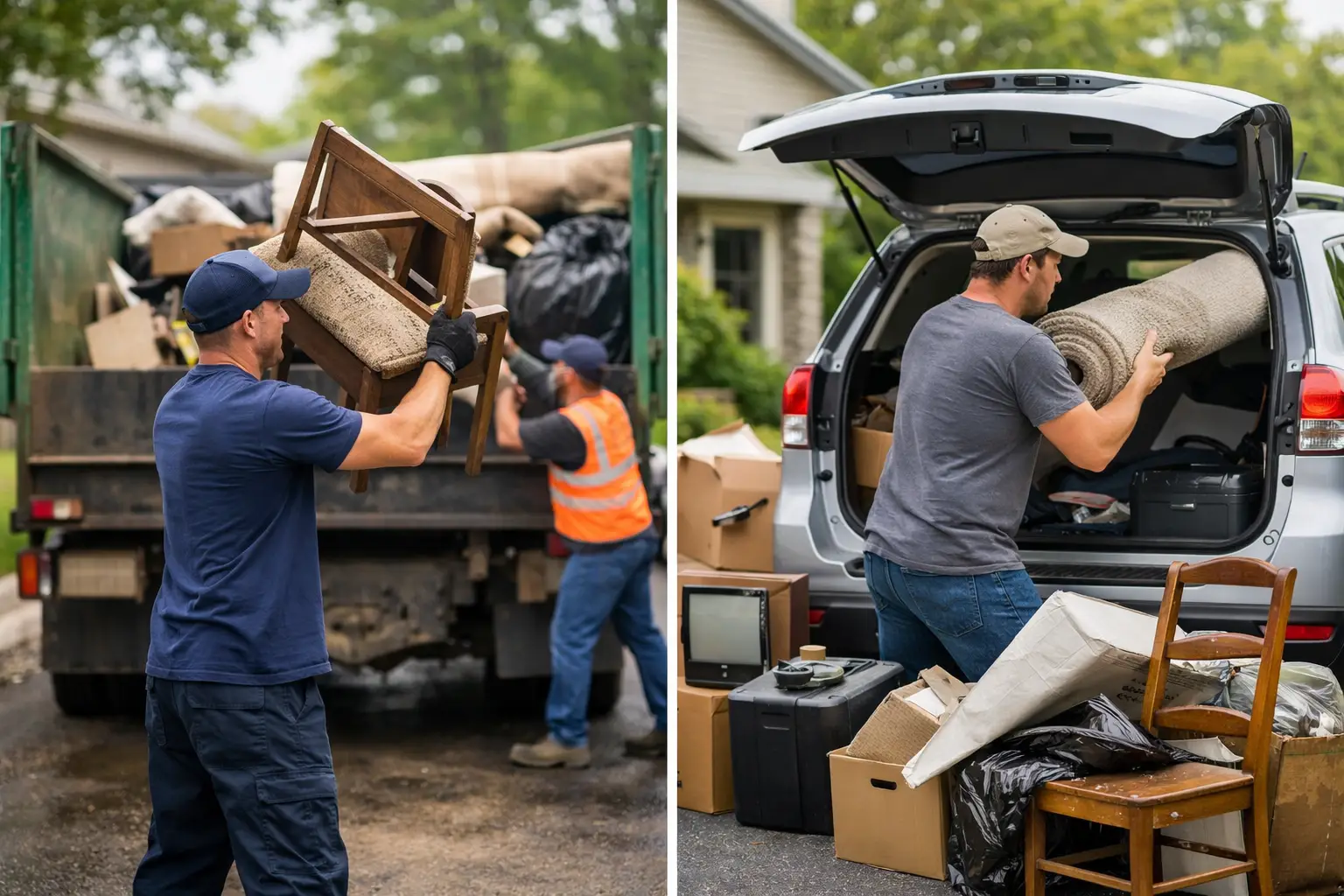
A garage cleanout can look simple until the old furniture, paint cans, broken appliances, and heavy bags are sitting at the curb. Then the real question becomes junk hauling or self hauling: should you handle every load yourself, or have a crew take it off your hands? The best choice depends on the size of the job, what you are getting rid of, how quickly you need it done, and what your time is worth.
For a few boxes and light household items, self hauling may be perfectly reasonable. For a packed garage, a renovation project, a rental turnover, or a commercial cleanup, professional removal can save more than just a few hours. It can save your back, protect your vehicle, and keep disposal from turning into an all-weekend project.
Junk Hauling or Self Hauling: Start With the Real Size of the Job
The biggest mistake people make is estimating a cleanup by the number of items instead of the volume, weight, and labor involved. A single couch may take up most of a pickup bed. Wet drywall, old tile, concrete, lumber, and yard debris can become surprisingly heavy fast. A room that looks half-cleared can still require several dump runs.
Self hauling usually makes sense when you have a suitable truck or trailer, the items are light and accepted at your local disposal facility, and you have enough time to load, unload, and clean up afterward. It can be a good fit for small decluttering jobs, cardboard, a few bags of trash, or items you can donate on your own schedule.
Junk hauling is often the better route when the pile is large, bulky, messy, or difficult to move. Think mattresses, appliances, furniture, construction debris, heavy yard waste, old sheds, or a full property cleanout. A removal crew brings the labor, hauling capacity, and experience to get the space cleared without asking you to make repeated trips.
The Cost Is More Than a Dump Fee
At first glance, self hauling looks like the cheaper option. You load your vehicle, pay a landfill or transfer station fee, and you are done. But that number does not always reflect the full cost.
If you do not own a truck or trailer, you may need to rent one. Add fuel, mileage, disposal fees, protective supplies, and possibly help to lift heavy items. If the load does not fit, you may be paying for a second or third trip. Some facilities also charge differently based on material type, load weight, or whether debris is mixed.
Then there is the cost of your time. A dump run is rarely just a quick drive. You have to sort materials, load the vehicle safely, secure the load, travel to the disposal site, wait in line, unload, return home, and repeat if needed. In Miami-Dade and Broward County, traffic alone can turn a simple errand into a large part of the day.
Professional junk hauling has a more direct price because the labor, truck, loading, transportation, and disposal process are handled for you. It may cost more than one light self-haul trip, but it can cost less than a rental, multiple disposal runs, and a weekend of hard labor. The right comparison is not just service price versus dump fee. It is total cost versus total effort.
Time Matters When the Cleanup Has a Deadline
Some projects do not give you the luxury of waiting. A landlord may need a unit ready for the next tenant. A contractor may need debris cleared before the next phase of work. A homeowner may be preparing for a move, inspection, renovation, or family event.
Self hauling puts every part of the job on your schedule, which can be helpful if you want to sort through items slowly. But it also means the cleanup stays in your driveway, garage, or job site until you can make the time for it. If the dump is closed, the truck is unavailable, or rain hits on your planned day, the project gets delayed.
With a hauling service, the work can move much faster. You point out what needs to go, the crew loads it, and your space is cleared. That speed can make a major difference when clutter is blocking a renovation, creating a safety issue, or making a property look unprepared.
Heavy Items Change the Equation
Not all junk is created equal. A bag of clothes is very different from a refrigerator, a cast-iron tub, a broken sectional, or piles of demolition debris. Heavy and awkward materials create risk before they ever reach the truck.
Improper lifting can lead to strained backs, crushed fingers, falls, and damage to walls, floors, gates, or vehicles. Loading a truck also requires more than strength. Items need to be positioned safely and secured so they do not shift during transport. A loose mattress, branches, or construction material can become a road hazard quickly.
Professional crews handle this type of work regularly. They know how to break down items when needed, carry bulky materials through tight spaces, and load efficiently. For jobs involving demolition debris, large furniture, or items that require more than one person to move, paying for help is often the safer decision.
Disposal Rules Can Make Self Hauling Complicated
Responsible disposal is not always as simple as dropping everything into one bin. Many disposal locations have rules about appliances, electronics, paint, chemicals, tires, batteries, refrigerants, and certain construction materials. Some items may require separate handling or may not be accepted at all.
That does not mean self hauling is impossible. It means you need a plan before loading up. Check what the receiving facility accepts, whether you need proof of residency or a specific vehicle type, and whether materials must be separated. Mixing restricted items into a general load can lead to extra fees or a rejected load.
A hauling company helps remove that uncertainty. The team can sort through common junk removal materials and direct items to the proper disposal channels. That is especially useful after renovations, evictions, estate cleanouts, or commercial projects where the debris is mixed and time is limited.
When a Dumpster Rental May Be the Better Middle Ground
There is also a third option for customers who want to do the labor themselves but do not want to make repeated dump runs: a dumpster or trailer rental. This works well when a project will create debris over several days, such as remodeling a kitchen, replacing flooring, clearing a yard, or cleaning out a property room by room.
You can load at your own pace, keep the debris contained, and have it hauled away when the job is finished. It gives you more control than full-service junk removal while eliminating the transportation and disposal side of self hauling.
The key is choosing the right size and understanding what can go inside. A small cleanout may not need a rental, while a major demolition project may need a larger container, scheduled swap-outs, or additional site support. A good provider can help match the equipment to the amount and type of material you have.
A Simple Way to Decide
Choose self hauling if the job is small, light, easy to load, and you already have the right vehicle and time. It can be a practical way to clear a few items while keeping costs low.
Choose professional junk hauling if the job is large, heavy, urgent, or physically demanding. It is also the smarter choice when you do not know where materials should go, do not want to risk damage to your vehicle, or simply want the clutter gone without giving up your day.
For projects that will create debris over time, consider a dumpster or trailer rental instead. It keeps the work area cleaner and lets you focus on the project rather than planning the next disposal run.
A&D Junk Removal LLC helps homeowners, property managers, contractors, and local businesses clear out unwanted material without the usual stress. Whether you need a crew to do the lifting or a container delivered for a project, the goal is the same: clear the clutter, reclaim your space, and get back to what needs your attention.