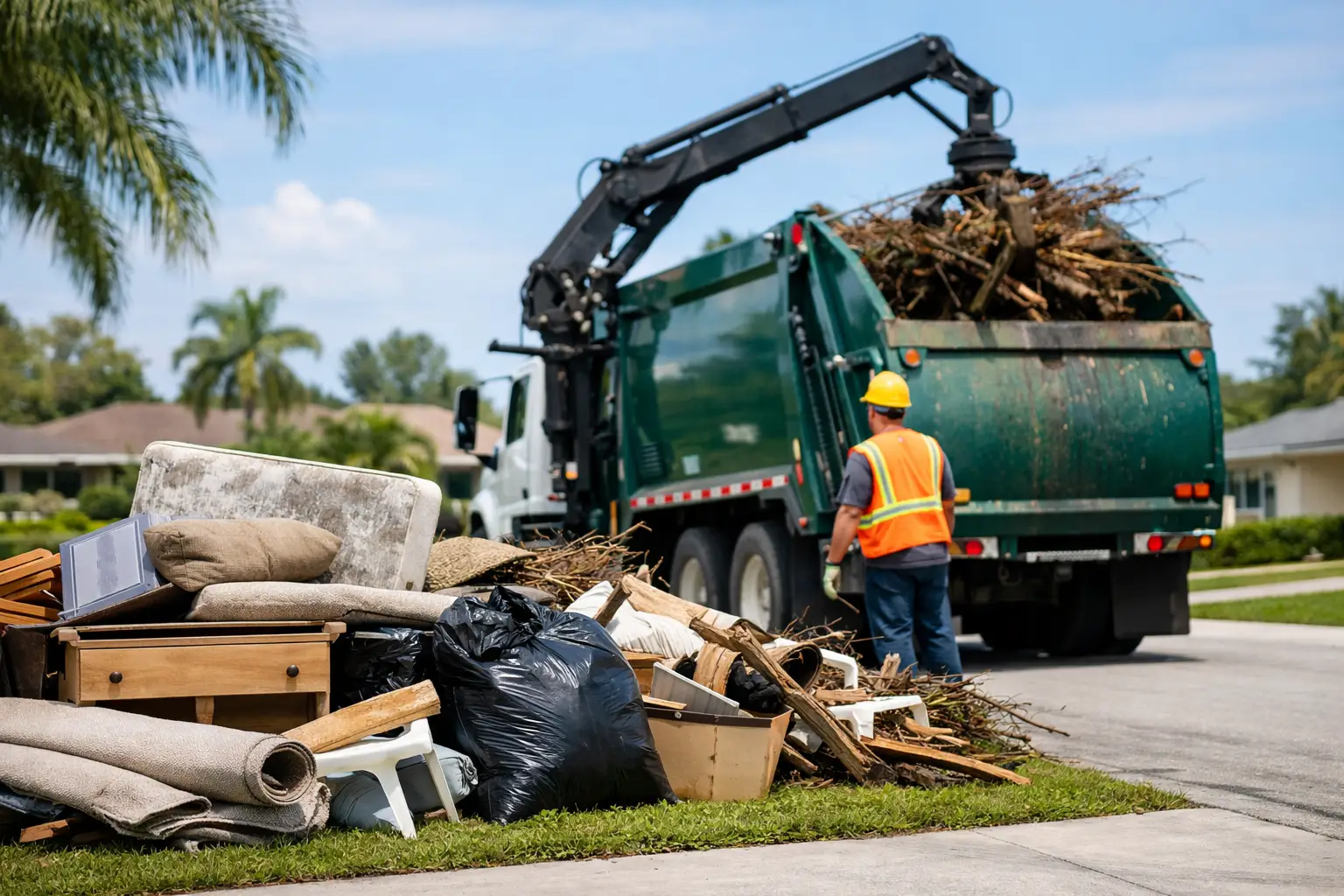
A pile of old furniture on the curb sounds simple until pickup day comes and nothing moves. That is usually when people start searching for bulk trash pickup Dade County options and realize there is a difference between regular waste service, municipal rules, and full-service junk hauling. If you are trying to clear space fast, avoid code issues, or keep a project moving, knowing that difference matters.
For some jobs, curbside pickup works fine. For others, it creates delays, extra lifting, and a bigger mess than expected. The right option depends on what you are throwing out, how much of it you have, and how quickly it needs to disappear.
How bulk trash pickup works in Dade County
Bulk trash usually means items too large for normal garbage service. Think couches, mattresses, broken dressers, shelving, appliances, yard debris, or renovation leftovers that do not fit in your cart. In many parts of the county, pickup rules depend on your municipality, your service schedule, and the type of material.
That is where people get tripped up. One neighborhood may allow scheduled bulky waste collection, while another has volume limits, special prep rules, or restrictions on certain items. Condos, apartment buildings, commercial properties, and rental units often have a different process altogether.
If you only have one or two accepted items and your area offers curbside service soon, waiting may be the cheapest route. But if you are dealing with a move-out, estate cleanout, remodel debris, or a property that needs to be cleared now, curbside service can feel slow and restrictive.
What qualifies for bulk trash pickup Dade County services
The short answer is large household junk, but the details matter. Most accepted bulk items fall into a few categories: furniture, mattresses, non-hazardous household clutter, yard waste, and some appliances. A small cleanout after replacing a bedroom set is very different from a garage packed with old shelving, paint cans, loose debris, and tile scraps.
The challenge is that not everything can go together. Household junk may be accepted, while construction debris is limited or excluded. Tree branches may need to be bundled a certain way. Appliances may need special handling. Electronics, chemicals, tires, and paint are commonly restricted or refused through standard bulk channels.
That is why a quick visual check is not enough. What looks like one junk pile often contains materials that belong in separate disposal streams. If you put out a mixed pile, part of it may stay behind.
When curbside pickup makes sense
Curbside service is a practical option when the load is small, the material is clearly accepted, and you can wait for the next scheduled collection. It works best for straightforward jobs like getting rid of an old couch, a couple of chairs, or a worn-out mattress after a delivery.
It also makes sense when you have enough help to move everything safely to the curb and the property gives you room to stage it neatly. Homeowners with driveways and easy access usually have a simpler time than people in tight urban lots, multi-unit buildings, or properties with limited frontage.
The trade-off is control. You work around the schedule you are given, not the timeline you want. If the pile is rejected or partially collected, you are left figuring out the rest.
When private junk hauling is the better option
Private hauling is usually the better fit when speed, labor, and flexibility matter more than waiting for a curbside date. If the junk is inside the house, up a flight of stairs, behind a fence, or scattered across a property, a full-service crew saves you from dragging everything out yourself.
This matters for landlords between tenants, contractors on a tight timeline, business owners trying to keep a site clean, and homeowners who do not want a pile sitting outside for days. The same goes for larger jobs where volume becomes the real problem. A few oversized items are one thing. A garage cleanout, demolition pile, or post-storm mess is another.
A private crew also helps when the waste stream is mixed. Instead of guessing what your local service will accept, you get a more direct answer about what can be removed, what needs special handling, and whether a dumpster, trailer, or labor-based removal makes the most sense.
Common items that cause problems
People usually run into trouble with materials that are heavy, dirty, regulated, or project-related. Construction debris is a big one. Drywall, tile, concrete chunks, cabinets, roofing materials, and lumber often fall outside basic bulky item pickup rules or exceed what curbside service is meant to handle.
Appliances can also be tricky, especially when they contain refrigerants or need to be prepared in a certain way. The same goes for TVs, computer monitors, paint, propane tanks, batteries, and automotive waste. These items are not just inconvenient. Some require specific disposal because of environmental and safety rules.
Mattresses deserve a mention too. They are common in bulk pickup requests, but they are awkward, hard to move, and not fun to leave outside in bad weather. If timing matters, waiting on a scheduled pickup is not always worth it.
Choosing the right cleanup option for the job
The best choice depends on the kind of job you are facing, not just the pile itself. If you are clearing a single room and only have a few bulky items, direct pickup may be enough. If you are renovating a kitchen, cleaning out a foreclosure, or removing debris from a commercial space, you may need something more flexible.
For ongoing work, a dumpster or dump trailer can be more efficient because you can load as you go. For one-time cleanup where you want everything gone immediately, full-service junk removal is usually easier. For heavier site work, including tear-outs or lot cleanup, it helps to work with a team that can handle both removal and support equipment instead of sending you to multiple providers.
That convenience is a big reason people choose a local company over piecing together county schedules, rental equipment, labor, and disposal on their own. A&D Junk Removal LLC fits that need well because the service is built around fast response, straightforward pricing, and handling the hard part for the customer.
Questions to ask before you book bulk trash pickup Dade County help
Before setting anything out or scheduling a crew, ask a few basic questions. What exactly is being removed? Where is it located? How fast does it need to go? Is it clean household junk, yard waste, or construction debris? Do you need labor, hauling, a trailer, or all three?
Those details affect cost, timing, and the right service type. They also help avoid the most common mistake, which is assuming every kind of waste can be handled the same way. It cannot.
Photos help a lot. So does being honest about access. Narrow gates, elevators, upstairs units, and soft ground can change how a job is done. A good provider will want that information upfront so there are no surprises on site.
What matters most: speed, labor, or price
Every customer prioritizes something different. If price is the only factor and the load is small, waiting for municipal pickup may be worth it. If your priority is getting the job done today without lifting a couch, clearing debris, or making multiple trips, private hauling earns its keep quickly.
There is also the hidden cost of delay. A blocked garage, a messy rental turnover, or a construction site piled with debris can slow down everything else. In those cases, fast removal is not just a convenience. It keeps the next step moving.
The best bulk trash solution is the one that matches the job in front of you. If curbside pickup works, great. If it does not, there is no reason to waste a week staring at junk that could be gone in a few hours. Clear space, keep the property clean, and make the next step easier on yourself.