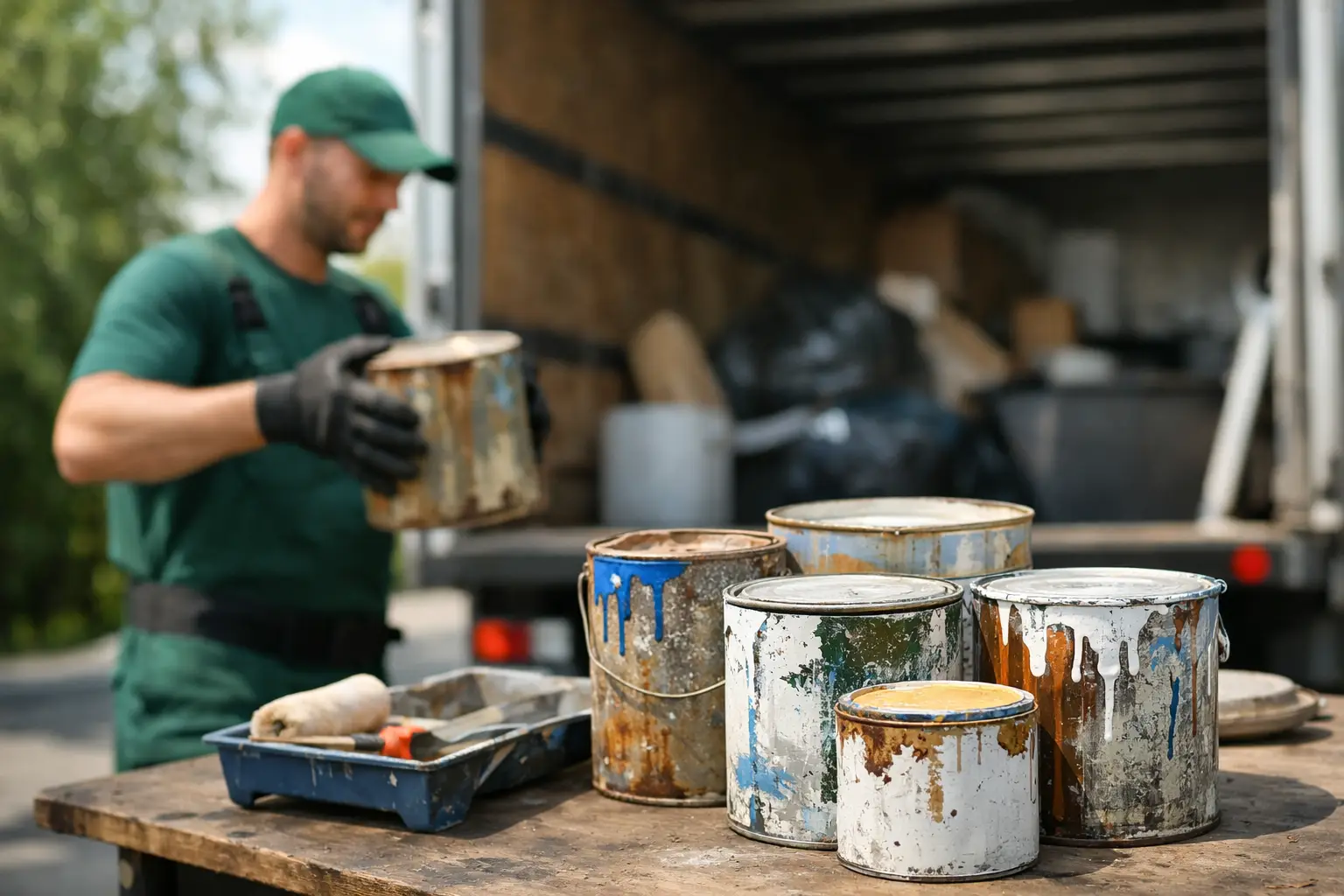
You finished the room, the garage shelf is finally visible again, and then you notice it – half-used paint cans stacked in the corner. It’s a common cleanup problem, and many people ask the same thing: can junk removal take paint? The short answer is sometimes, but it depends on what kind of paint you have, how much is left in the can, and local disposal rules.
Paint is one of those items that seems simple until it’s time to get rid of it. A broken chair or old mattress is easy to point at and say, “haul it away.” Paint is different because some types can be tossed out once they’re dried up, while others are treated as hazardous waste and need special handling. If you’re trying to clear out a home, rental, office, or job site, knowing the difference saves time and keeps you from loading up items that can’t legally go in a standard junk haul.
Can junk removal take paint or not?
In many cases, junk removal companies can take paint only if it meets certain conditions. Latex paint that has fully dried out is often much easier to remove as part of a standard cleanout. Oil-based paint, stains, solvents, and some specialty coatings are a different story because they may be considered hazardous materials.
That distinction matters. Most junk removal services are set up to haul bulky waste, household junk, renovation debris, furniture, and general clutter. Hazardous waste usually falls under a separate set of disposal rules. A company may still help you figure out the right next step, but it may not be able to load certain liquids onto the truck with everything else.
If you have only one or two cans, the answer may depend on whether the paint is empty, dried, or still wet. If you have shelves full of old products from years of home projects, the job takes more sorting. The best first step is always to identify what’s actually in those cans.
The type of paint makes all the difference
Latex paint is usually easier to deal with
Latex paint is water-based, and that makes disposal more flexible in many areas. If the can is empty or the remaining paint has been completely dried, it is often allowed with regular trash or junk removal loads. The key is that it cannot still be liquid.
If the can is half full, that changes things. Wet latex paint usually needs to be dried first before it can go out with normal waste. Some people leave the lid off in a safe, ventilated area. Others mix in paint hardener, cat litter, sawdust, or shredded paper to absorb the liquid. Once it becomes solid, disposal is usually much more straightforward.
Oil-based paint usually needs special disposal
Oil-based paint is where people run into trouble. This type of paint is commonly treated as hazardous waste because it contains chemicals that should not go into the regular trash. The same often applies to paint thinners, mineral spirits, varnishes, lacquers, and certain solvents.
A junk removal crew may not be able to take those materials at all, even if they are already coming out for a larger pickup. That is not a matter of convenience. It is about transportation rules, landfill restrictions, and environmental safety. If a company says no to wet oil-based paint, it is usually because the law or disposal facility says no first.
Specialty coatings can fall into the same restricted category
Spray paint, marine paint, industrial coatings, pool paint, epoxy products, and automotive finishes often need extra caution too. Some are flammable. Some are toxic. Some can’t be mixed in with general debris under any circumstances. If the label includes warnings about flammability, toxicity, or chemical solvents, assume it needs a closer look before pickup.
When paint can usually be removed with junk
There are a few situations where paint is more likely to be accepted during a junk removal job. Empty cans are often fine. Dried-out latex paint is also commonly allowed. In some cases, cans with only a thin layer of hardened paint at the bottom can go with regular junk, especially during a garage cleanout, move-out, or renovation cleanup.
The condition of the container matters too. A sealed, clearly labeled can is easier to assess than a rusty, leaking one with no readable label. If the paint is leaking, mixed with other chemicals, or completely unidentified, removal gets more complicated.
This is why photos help. Before scheduling a pickup, it’s smart to show the company exactly what you have. That avoids surprises on site and helps you get a clear answer before the truck arrives.
What junk removal companies will usually ask
If you call about paint, expect a few basic questions. They may ask whether the paint is latex or oil-based, whether the cans are full or empty, and how many you need removed. They may also ask if the paint is dried or still liquid.
That is not red tape. It helps determine whether your paint can go with a regular load, needs prep before pickup, or requires a separate hazardous waste drop-off. If you’re already clearing out other items like old shelving, flooring, boxes, broken furniture, or renovation debris, getting the paint sorted ahead of time keeps the whole job moving faster.
For property managers and contractors, this matters even more. A project can stall when one restricted item is mixed into a pile that is otherwise ready to go. A little sorting upfront can prevent delays and return trips.
If your paint cannot go with junk removal
If the paint is still liquid and classified as hazardous, you’ll likely need to use a county household hazardous waste program or a designated drop-off event. That may sound like a hassle, but it is usually the safest and most affordable route for restricted materials.
In Dade County and Broward County, disposal rules can change by municipality and waste program, so it’s worth checking local guidance before assuming all paint can go curbside or into a dumpster. This is especially true for contractors, landlords handling turnovers, and homeowners cleaning out older garages where the paint may have been sitting for years.
If you are dealing with a larger cleanup, a junk removal team can still take the non-hazardous items and help reduce the size of the job. That way, you only have a small batch of restricted materials left to handle separately.
Can paint go in a dumpster rental?
People often ask this right after asking whether junk removal can take paint. The answer is similar. Dried latex paint may be acceptable in some cases, but liquid paint, oil-based paint, and hazardous coatings usually cannot go into a dumpster.
Dumpster loads are still subject to disposal facility rules. If prohibited materials are found in the container, you could face extra fees or have the load rejected. That’s why being upfront about paint before the dumpster is dropped off is the smart move.
For renovation projects, this comes up all the time. You may be tossing drywall, trim, cabinets, flooring, and packaging, and it is tempting to throw old paint cans in with everything else. Sometimes that works if the cans are empty or fully dried. Sometimes it creates a problem you don’t want on pickup day.
A simple way to tell what you have
If you are not sure whether the paint is latex or oil-based, the label is the first place to look. If it says cleanup with soap and water, it is usually latex. If it mentions mineral spirits or paint thinner for cleanup, it is usually oil-based.
If the label is missing or unreadable, be careful. Old cans with no clear markings should be treated as questionable until identified. Mixing mystery liquids or trying to dump them out is a bad idea. It creates a mess and can turn a manageable cleanup into a hazardous one.
The best way to avoid delays
The easiest way to deal with paint is to separate it before your pickup day. Put all cans in one spot. Check labels. Set aside anything empty or fully dried. Keep liquid or questionable products separate from the regular junk pile.
If you’re booking a full cleanout, tell the company about the paint when you schedule. A dependable crew would rather know about it in advance than find it buried behind boxes and lumber on arrival. That keeps pricing accurate, prevents delays, and makes the whole job simpler.
At A&D Junk Removal LLC, that kind of straightforward communication is what helps customers get fast, no-hassle service instead of last-minute surprises.
So, can junk removal take paint? Sometimes yes, sometimes no, and the difference usually comes down to whether the paint is dried, what type it is, and where it’s headed for disposal. If you treat paint as its own category instead of just another can on the shelf, the rest of your cleanup gets a whole lot easier.