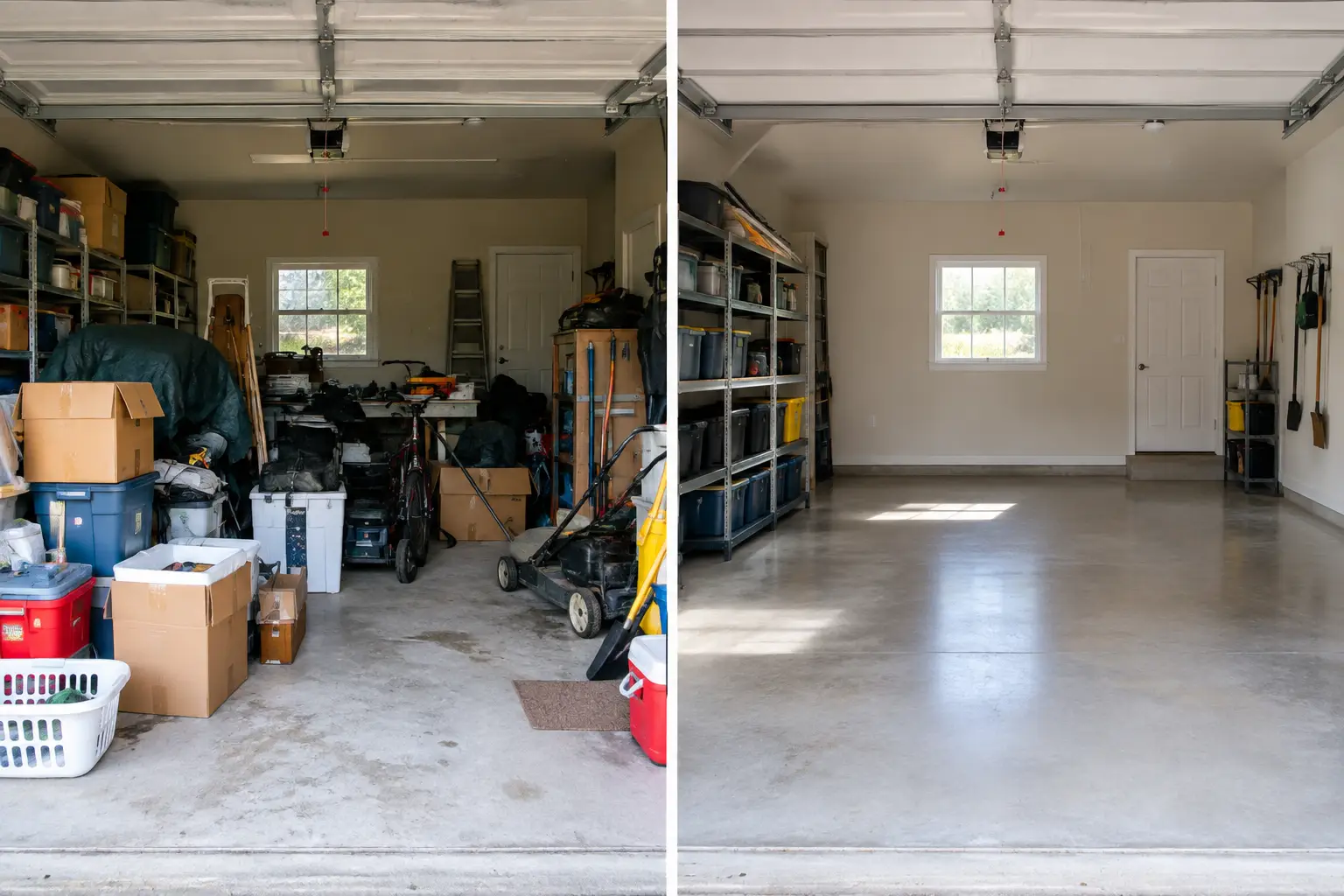
A garage can fill up one box, broken chair, paint can, and half-finished project at a time. Then one day, you cannot park inside, find a tool, or walk from the door to the back wall without stepping around something. A garage cleanout before after is more than a satisfying photo opportunity. It is a chance to make a useful part of your home work for you again.
The best results do not come from moving everything into a pile and hoping it gets handled later. They come from making quick decisions, removing unwanted items promptly, and setting up the space around how you actually live. Whether you need room for vehicles, storage, a home workshop, or equipment for a small business, a clear plan keeps the job from dragging on for weeks.
What a Garage Cleanout Before After Really Changes
Before a cleanout, garages often become the default holding area for items that do not have another home. Old mattresses, damaged furniture, moving boxes, exercise equipment, yard debris, renovation leftovers, and outdated electronics all end up there. The clutter can hide pests, create tripping hazards, and make it harder to spot water damage or other maintenance issues.
Afterward, the improvement is practical. You can reach holiday storage without pulling out ten other items. You know what you own. You can pull your car in during Miami rain, protect tools from the weather, or finally use that workbench. For landlords and property managers, a cleared garage also makes a property easier to show, repair, and turn over between tenants.
The visual difference is dramatic, but the reduced stress is usually the bigger win. A clean garage removes one more unfinished task from your daily view.
Start With a Goal, Not a Trash Pile
Decide what the garage needs to do when the work is finished. This one question makes sorting much easier. A two-car garage used for parking needs a different setup than a garage that stores contractor equipment or lawn supplies.
Measure the floor area if parking is part of the goal. Mark where vehicles need to sit, including enough room for doors to open. If you want a workspace, choose one wall for it before you start organizing. These boundaries stop the kept items from expanding back into every available corner.
It also helps to set a realistic time limit. A lightly cluttered garage may be manageable in an afternoon. A garage packed with years of belongings, construction debris, or large furniture may need a full weekend or professional hauling support. There is no prize for doing heavy lifting alone when a faster, safer option is available.
Sort Items Into Four Clear Categories
Work one section at a time, beginning near the garage door so you can create an open path. Do not empty every shelf and cabinet at once unless you have plenty of space to stage items. A garage can look worse before it looks better, but it should not become impossible to move through.
Use four categories:
- Keep: Items you use, need, or have a defined storage place for.
- Donate or sell: Clean, usable items that someone else can realistically use.
- Recycle or dispose of separately: Electronics, batteries, paint, chemicals, tires, and other materials that may require special handling.
- Haul away: Broken, outdated, damaged, or unwanted items with no reasonable next use.
Be honest about the donate pile. If an item has been sitting unused for years, is missing parts, or would require a major repair, it is often better to remove it. A donation center is not a dumping ground, and holding onto questionable items delays the cleanout.
For sentimental belongings, set a small limit. Keep a labeled bin for photos, family keepsakes, and items you truly plan to pass along. This gives meaningful items a home without allowing every old box to become untouchable.
Watch for Items That Need Special Disposal
Not every item should go into a standard junk pile. Old paint, gasoline, propane tanks, chemicals, fluorescent bulbs, and some electronics require specific disposal methods. Keep containers closed, upright, and separate from regular debris. If you are unsure what something is, do not mix it with household trash.
Florida garages can also contain items affected by heat and humidity. Check boxes for mold, pest damage, and leaking containers before moving them indoors. Wear gloves, closed-toe shoes, and a mask if you are dealing with dust, rodent droppings, or moldy materials.
Remove the Big Items Early
Large items create the most visual clutter and take up the most decision-making energy. Start with old couches, mattresses, appliances, shelving that is falling apart, scrap wood, and renovation debris. Once those pieces are out, the garage immediately feels more manageable.
This is where hauling help can save serious time. Loading a pickup truck over several weekends may work for a few bags and boxes. It is less practical for a full garage, especially if you have bulky furniture, heavy debris, or no place to take it. Renting a dumpster can be a good fit for an ongoing renovation or a cleanout with a large volume of mixed debris. Full-service junk removal is often the easier choice when you want a crew to do the lifting and hauling in one visit.
The right option depends on your timeline, the amount of material, and how much labor you want to handle. If the job includes demolition debris, heavy concrete, or difficult access, be upfront about it when scheduling so the crew can bring the right equipment.
Clean Before You Put Anything Back
Once the unwanted material is removed, resist the urge to refill the garage right away. Sweep out dirt and leaves, vacuum corners, and check the walls, ceiling, and floor for signs of leaks, cracks, or pests. This is the easiest time to address problems that clutter may have hidden.
Wipe down storage shelves and bins. If the floor has oil spots, use an appropriate degreaser and follow the product directions. A fresh, clean floor changes the whole before-and-after feeling and makes it easier to keep the space under control.
If you are adding shelves or cabinets, choose durable options that can handle humidity and the weight of what you store. Wall-mounted storage keeps frequently used items accessible while freeing up the floor. Clear bins or labeled solid bins both work well, as long as every container has a specific purpose.
Set Up the Garage for Real Life
The biggest mistake after a cleanout is organizing for appearance instead of use. Put frequently used items within easy reach. Store seasonal decorations, extra household supplies, and keepsakes higher up or toward the back. Keep hazardous materials secured and away from children and pets.
Create zones that match your routine. One area may be for tools, another for sports gear, another for yard equipment, and another for household overflow. You do not need a showroom-perfect system. You need one that makes it obvious where items belong when you come home tired or are rushing out the door.
Avoid using the empty floor as storage. A clear floor is what makes a garage flexible. It leaves room for cars, deliveries, projects, and the unexpected items that come with homeownership. If something must stay on the floor, keep it contained in one designated area rather than allowing it to spread.
Keep the After Photo From Becoming the Before Photo Again
A garage stays clean through small habits, not one massive annual effort. Schedule a 15-minute reset once a month. Put loose items back, break down empty boxes, and move anything that does not belong in the garage. After a renovation, move, or big purchase, deal with the leftover packaging and debris immediately rather than letting it become a new pile.
A simple rule helps: when a new item comes in, decide where it will live before it enters the garage. If it has no place, it may be time to let something else go.
For homeowners, renters, property managers, and contractors in Dade and Broward counties, A&D Junk Removal LLC can take the hauling and disposal work off your plate when the pile is more than you want to manage. A cleared garage gives you room to work, park, store what matters, and breathe a little easier. Pick one corner, make the first decision, and let the open space build from there.