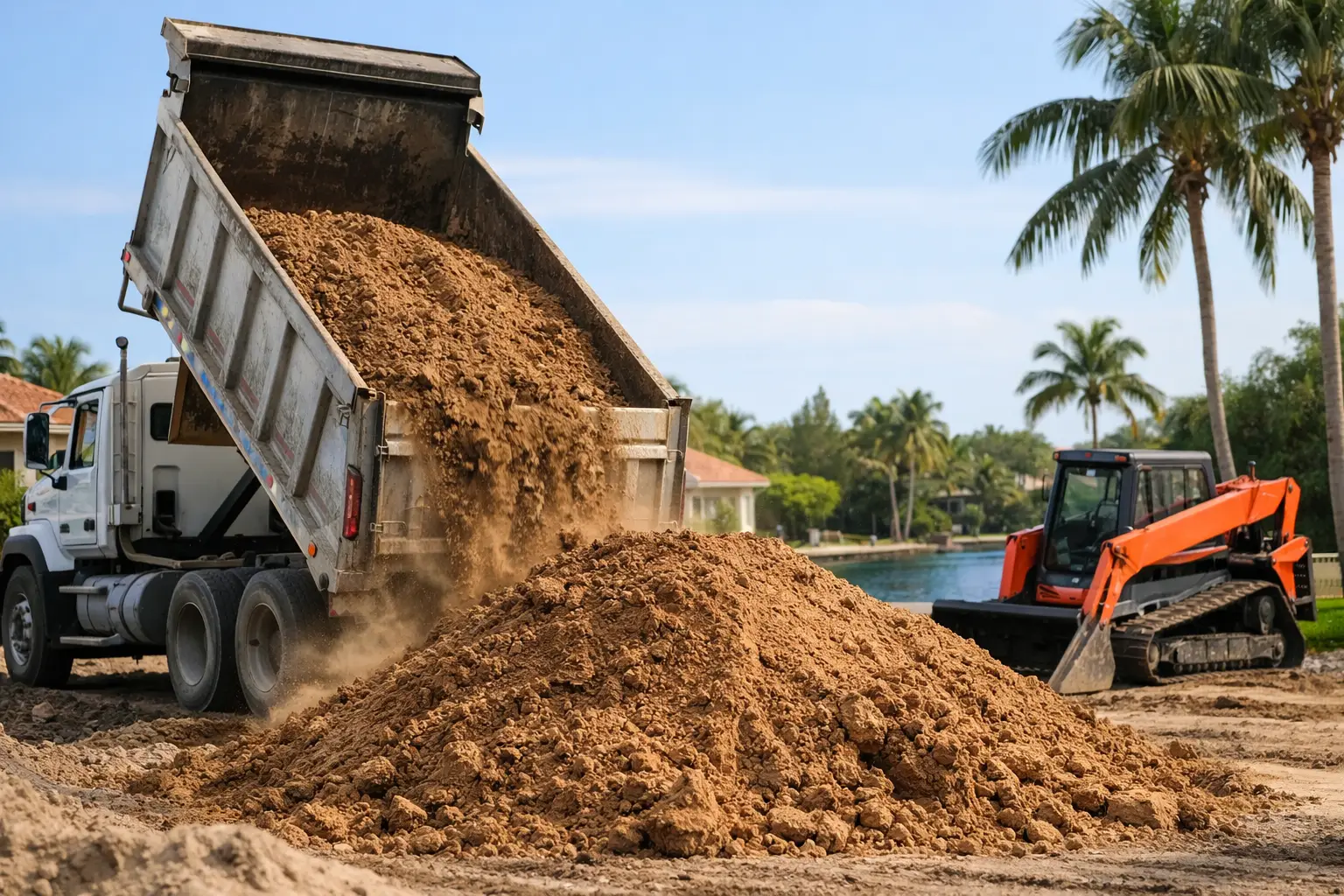
A backyard that holds water after every storm, a low spot along a driveway, or a site that needs rough grading before the real work starts – these are the jobs where fill dirt delivery Broward customers usually need fast. The challenge is not just getting dirt dropped off. It is getting the right material, in the right amount, at the right time, without slowing down the rest of the project.
When fill dirt delivery in Broward makes sense
Fill dirt is meant for building up and leveling ground. It is not the same as topsoil, and that difference matters. Topsoil contains organic matter that helps plants grow. Fill dirt is denser and more stable, which makes it better for raising grade, filling holes, supporting pads, and preparing an area before other materials go on top.
That is why property owners and contractors often order fill dirt for practical jobs rather than finish work. If you are trying to fix a drainage issue, bring a low area up to match surrounding grade, backfill around a structure, or create a base for another layer of material, fill dirt is usually the right starting point. If your goal is planting grass or landscaping beds, you will likely need topsoil after the fill work is done.
In Broward, timing also matters. Heavy rains can expose poor grading fast. A lot that looked mostly fine in dry weather can suddenly show pooling water, soft spots, or uneven runoff. In those cases, getting material delivered quickly can keep a small problem from turning into erosion, mud, or property damage.
What fill dirt actually is
Good fill dirt is usually a clean mix of subsoil with little to no organic material. It should not be loaded with roots, mulch, trash, or debris. The reason is simple – organic material breaks down over time. When that happens, the ground can settle unevenly, which creates new problems after the job is supposed to be finished.
Not every fill dirt load is identical, though. Some loads are better for general leveling, while others are more suitable for larger site prep where compaction and stability matter most. If the area will support a structure, slab, driveway section, or another load-bearing surface, the quality of the dirt and how it is installed becomes more important than just getting the cheapest load available.
That is where a dependable local provider helps. When delivery is handled by a team that also works around cleanup, site prep, hauling, and Bobcat services, there is usually a better understanding of how the dirt will actually be used once it hits the ground.
How much fill dirt should you order?
This is where many jobs go sideways. People either under-order and lose time waiting on another trip, or over-order and end up with a pile they did not plan for. The right amount depends on square footage, depth, and how much settling or compaction you expect.
As a rough example, a shallow leveling job in a small yard may only need a modest amount. A larger area with several low spots, or a site that needs the grade raised by a few inches across the whole footprint, can require far more material than most people expect. Dirt also spreads differently depending on whether the ground is flat, sloped, soft, or already compacted.
If you know the length, width, and average depth you need to fill, you can estimate volume before booking. But if the site is uneven or the grade issue is hard to judge, it is smart to talk it through first. A quick review of the project can save money and prevent extra deliveries.
Fill dirt delivery Broward projects often involve more than delivery
The dirt itself is only one part of the job. A delivery solves the material problem, but many customers also need help getting the area ready or finishing the work after the drop-off. That can include clearing debris, removing old material, rough grading, spreading, or hauling away what is no longer needed.
For a homeowner, this might mean cleaning out a side yard before filling a washout area. For a contractor or property manager, it might mean coordinating dirt delivery with demolition debris removal or machine work on the same schedule. When those services are split across multiple providers, delays are more likely. When one company can handle the support work too, the project usually moves faster.
That is one reason customers often look for a team that can do more than just bring a load and leave. If the site needs cleanup, access is tight, or equipment is needed to move the dirt where it belongs, having that available matters.
What affects the price?
The biggest cost factors are usually the amount of dirt, the type of fill, delivery distance, site access, and whether extra labor or equipment is involved. A simple drop at an easy-to-reach location costs less than a job where the driver has limited access, the area needs prep, or the material has to be moved and spread after delivery.
There is also a trade-off between price and convenience. The lowest number is not always the best deal if it means long wait times, poor communication, or a load that is not right for the job. Most customers are trying to solve a problem quickly and keep their schedule intact. Reliable service has value, especially when other parts of the project depend on that delivery showing up when promised.
For larger jobs, it is worth asking whether the provider can also help with grading, cleanup, or hauling. Bundling services can be more efficient than hiring separate crews.
Site access can change the whole plan
A lot of dirt delivery issues come down to access. If the drop area is open and straightforward, the process is simple. If the site has soft ground, overhead wires, narrow gates, parked vehicles, or limited room to maneuver, the delivery needs more planning.
This is especially common on residential properties where the customer wants the load placed in a specific area without damaging existing concrete, grass, or landscaping. In some cases, the best option is to drop the material in a safe accessible spot and then move it with equipment. In others, a smaller load or a different placement area may be the smarter choice.
That is why clear communication before the truck arrives matters. A few details about access can prevent damage, delays, and frustration on delivery day.
Common mistakes to avoid
One of the most common mistakes is using fill dirt where topsoil should go. Another is assuming all dirt is the same. It is not. If the area needs to support weight or stay level over time, material quality matters.
Another problem is ignoring drainage. Raising one section of ground without thinking about where the water will go next can shift the problem somewhere else. The goal is not just to fill a low spot. The goal is to improve the way the site works after rain.
It is also easy to overlook cleanup. Old concrete, roots, junk, and loose debris can interfere with proper filling and compaction. If the site is not prepared first, the final result may not hold up the way you want.
Choosing a provider for fill dirt delivery in Broward
The best fit is usually a company that answers quickly, explains the process clearly, and can adapt if the job needs more than a basic drop-off. That matters whether you are a homeowner trying to fix a drainage issue or a contractor working against a deadline.
Look for straightforward pricing, realistic scheduling, and a team that understands site work, not just transportation. If they also handle hauling, cleanup, demolition support, or Bobcat services, that can make the job much easier to manage. A&D Junk Removal LLC is one example of the kind of local service company customers call when they need that mix of material delivery and hands-on project support without a lot of back-and-forth.
The biggest thing most customers want is simple – show up when promised, bring the right material, and help keep the project moving. That is what dependable service looks like.
If you are planning a fill job, think past the pile of dirt itself. Think about drainage, access, prep, and what needs to happen next. A little planning up front usually saves time, money, and a second round of work later.