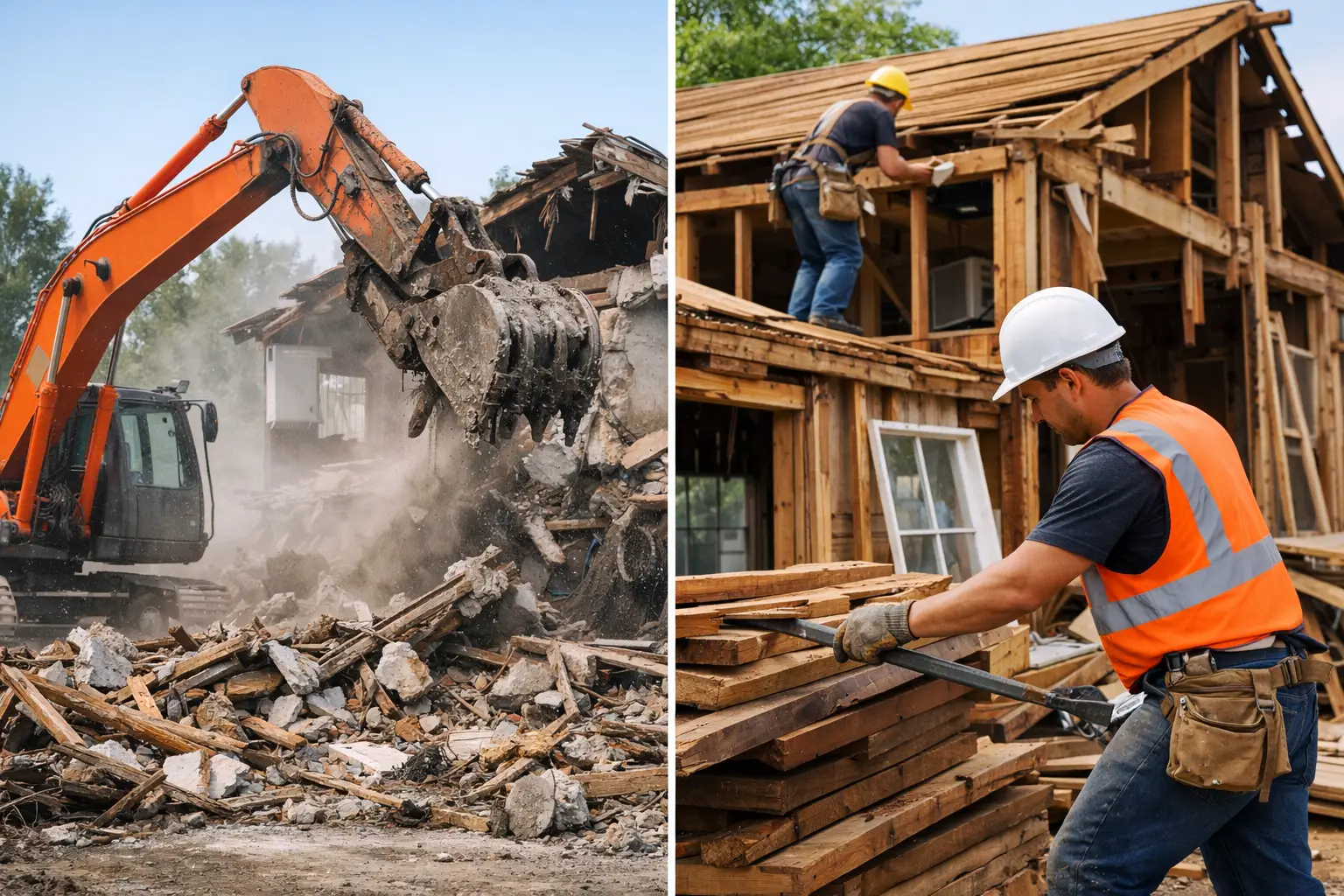
A bathroom remodel can leave a homeowner with one immediate question: do we tear it out fast, or carefully take it apart? Demolition versus deconstruction costs can look very different on an estimate, but the lowest upfront price is not always the lowest total project cost. The right choice depends on your timeline, the materials in the space, disposal needs, and whether anything has real value after it comes out.
For most Miami-Dade and Broward County projects, demolition is the faster, more predictable option. Deconstruction can make sense when materials are worth saving, a property has reusable architectural features, or a project has sustainability goals that justify extra labor. Knowing what drives each price helps you make a clear decision before debris starts piling up.
What Is the Difference Between Demolition and Deconstruction?
Demolition means removing a structure, room, fixture, or material quickly using the most efficient method for the job. Depending on the scope, that may involve hand tools, saws, skid steer or Bobcat work, dumpsters, and hauling. The goal is to clear the area safely and get it ready for the next phase of construction.
Deconstruction is more selective. Materials are removed in an order that preserves them for reuse, resale, recycling, or donation. Instead of breaking cabinets apart, a crew may unfasten them. Instead of sending old hardwood flooring to a landfill, they may pull it up board by board.
That difference in handling is the biggest reason prices vary. Demolition prioritizes speed. Deconstruction prioritizes recovery.
Demolition Versus Deconstruction Costs: The Main Drivers
There is no reliable one-price answer because every property, material, and access point is different. A small shed behind a house with clear access is not priced like a second-floor commercial interior with elevators, tight parking, and concrete block walls.
Labor and time on site
Labor is usually the largest cost difference. A demolition crew can remove materials in larger sections and load debris quickly. A deconstruction crew must work carefully, separate materials, remove fasteners, stack items without damaging them, and often prepare them for transport.
A job that takes one day to demolish may take several days to deconstruct. If you are paying for labor by the hour or by the crew day, that added time matters.
This does not mean deconstruction is automatically overpriced. It means the estimate should reflect the actual work involved. If a contractor gives a very low deconstruction price without discussing sorting, storage, hauling, and material condition, ask what is included.
Disposal, hauling, and dumpster needs
Demolition creates mixed debris. Drywall, lumber, tile, insulation, carpet, fixtures, and broken materials often go into the same dumpster or trailer load. Disposal fees depend on the volume, weight, material type, and local facility rules.
Deconstruction can reduce the amount of waste sent for disposal, but it can also add hauling steps. Salvaged cabinets may need one trip, recyclable metal another, and remaining debris a third. Those logistics can offset some landfill savings, especially when materials are not close to a recycling or donation destination.
For a straightforward renovation cleanup, a dumpster rental or debris-hauling service can keep costs controlled because the crew has a clear place to load waste as work moves forward. The key is choosing the right container size and avoiding overages from heavy materials such as concrete, tile, dirt, or roofing.
The material being removed
Some materials are easy to salvage. Solid wood doors, quality cabinets, historic trim, hardwood flooring, brick, pavers, metal fixtures, and certain appliances may have resale or reuse value. Other materials are usually not worth the careful labor required to save them.
Water damage, mold, termite damage, heavy paint buildup, broken tile, glued-down flooring, and low-grade particleboard cabinets can turn a potential salvage job into expensive handling with little return. Age alone does not make a material valuable. Condition and local demand matter more.
Site access and project complexity
Easy access lowers costs in either approach. A ground-level room near a driveway is far simpler than a unit with stairs, a narrow hallway, limited loading space, or strict building rules. In South Florida, condos and managed properties may also have elevator reservations, work-hour limits, insurance requirements, and designated debris routes.
Structural work, electrical components, plumbing lines, and possible hazardous materials also change the scope. Older properties may require testing or special handling for materials that cannot simply be loaded into a dumpster. A clear walkthrough before work begins prevents surprises later.
When Demolition Usually Makes Better Financial Sense
Demolition is often the practical choice when the priority is getting a space cleared on schedule. It works well for damaged interiors, rental turnovers, storm-damaged materials, outdated kitchens with low-value cabinets, flooring removal, sheds, fences, and renovation debris that has no realistic reuse market.
It can also be the smarter choice when construction is waiting. Every extra day spent carefully removing materials may delay framers, plumbers, installers, painters, or tenants. The cost of a slower process is not just the removal invoice. It can affect the whole project schedule.
A fast, professional demolition plan should still include responsible disposal. Efficient removal does not mean careless removal. Materials can be separated when practical, metal can be recovered, and debris can be hauled away without leaving the property messy or unsafe.
When Deconstruction Can Be Worth the Extra Cost
Deconstruction earns its place when the recovered materials have a clear purpose before the job starts. Maybe a homeowner wants to reuse original doors in another part of the house. Maybe a contractor has a buyer for reclaimed lumber. Maybe a commercial property has high-quality fixtures that can be reused in a second location.
It can also be a good fit for selective work. You do not have to deconstruct an entire building to benefit from it. Saving a set of custom cabinets, architectural beams, brick pavers, or an expensive entry door while demolishing the rest is often the best middle ground.
Before choosing this route, ask a simple question: who will take the materials, and when? Donation and resale plans can fall apart if items are not accepted, cannot be stored, or require more cleaning and repair than expected. A material has value only if someone will actually use it.
A Hybrid Plan Often Delivers the Best Value
Many projects do not need an all-or-nothing decision. A hybrid approach can control costs while keeping useful materials out of the waste stream.
For example, a crew may remove appliances, metal, solid wood doors, reusable cabinets, and good-condition pavers separately. Then the remaining drywall, damaged flooring, old insulation, and broken fixtures can be demolished and loaded for disposal. This keeps the careful labor focused on items that are actually worth saving.
The best time to identify salvage items is before demolition begins. Once materials are broken, mixed with debris, or exposed to rain, their value drops quickly. Walk the space with your removal or demolition provider and point out anything you want protected.
How to Compare Estimates Without Getting Surprised
Do not compare only the total number at the bottom of an estimate. Ask whether the price includes labor, loading, hauling, disposal fees, dumpster rental, equipment, permits if needed, cleanup, and final sweeping. If the project involves concrete, soil, roofing, appliances, or especially heavy debris, confirm whether there are weight limits or separate charges.
For deconstruction, ask how materials will be handled and whether the estimate assumes resale, donation, recycling, or customer storage. For demolition, ask how the crew will protect areas that are staying, such as floors, landscaping, nearby walls, and utility lines.
A dependable provider should be able to explain the plan in plain language. You should know what is being removed, where it is going, how long the work should take, and what could change the price. That clarity is more useful than a vague low quote that grows once the job is underway.
Choose the Option That Keeps Your Project Moving
If your goal is a clean, empty space as quickly as possible, demolition and professional debris hauling will usually give you the best value. If you have materials with proven reuse value and enough time for careful removal, deconstruction may justify the added labor.
For many property owners, the practical answer is selective salvage followed by efficient demolition. A&D Junk Removal LLC can help make that process easier by handling removal, dumpster needs, hauling, and site support around the scope of your project. Start with a clear plan, save what truly matters, and let the rest get cleared safely so the next phase can begin.