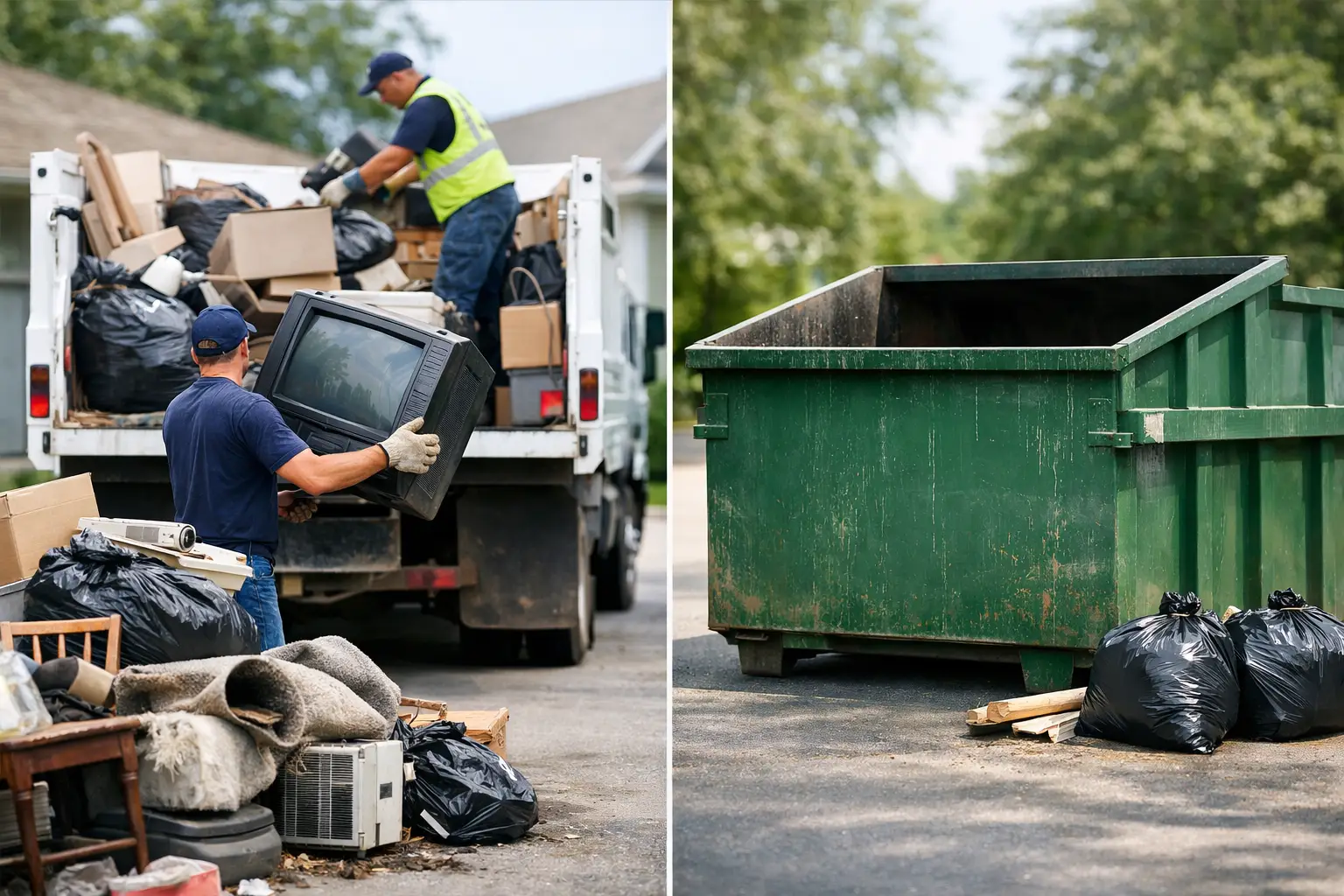
A garage full of old furniture needs to be gone by the weekend. A kitchen remodel is starting tomorrow. A rental unit has debris piled up after move-out. That is usually when the junk removal vs dumpster question stops being theoretical and starts costing you time.
Both options solve the same basic problem – getting unwanted material off your property. But they work very differently, and the best choice depends on how much debris you have, how fast you need it gone, and how much work you want to do yourself. If you pick the wrong one, you can end up paying for convenience you did not need or taking on labor you did not have time for.
Junk removal vs dumpster: the real difference
Junk removal is a full-service option. A crew comes out, lifts the items, loads them, and hauls everything away. In most cases, you point to what needs to go, and the job gets handled for you.
A dumpster rental is more hands-on. The container gets dropped off at your property, you fill it on your own schedule, and it gets picked up later. That means more flexibility, but it also means the loading, sorting, and pacing are your responsibility.
That distinction matters more than people think. On paper, both can remove clutter, renovation debris, or job site waste. In practice, one is better when you need speed and labor, while the other is better when you need time and space to work through a project.
When junk removal makes more sense
Junk removal is usually the better fit when the biggest problem is not just the debris – it is the effort. Heavy furniture, broken appliances, old mattresses, yard waste piles, and post-cleanout messes are easier to deal with when a crew handles the lifting.
This option is especially useful for homeowners clearing out a garage, landlords turning over a unit, or business owners who want junk gone without tying up staff. It is also a strong choice when access is tight. If you are in a neighborhood or commercial property where keeping a dumpster on-site would be difficult, fast haul-away service can be cleaner and simpler.
There is also the time factor. If you need the area cleared today or within a very short window, junk removal is often the faster route. You are not waiting days to fill a container. The material leaves with the crew, and the space is usable again right away.
The trade-off is that junk removal is less ideal for slow-moving projects. If you are cleaning out in stages over a week or two, paying for a crew to come every time may not be the most efficient setup.
When a dumpster is the better option
A dumpster rental usually wins when debris is being created over time. Remodels, roofing jobs, flooring tear-outs, estate cleanouts, and landscaping projects often do not happen all at once. You need a place to toss material as the work moves along.
That is where a dumpster helps. It stays on-site so you can load as you go. For contractors and serious DIY projects, that can keep a job cleaner and more organized. Instead of stacking debris in a driveway or making repeated dump runs, you have one container ready when you need it.
Dumpsters can also be the better value when the volume is high and the material is straightforward to load. If you already have labor on-site, or you plan to handle the loading yourself, renting a dumpster can make the process more cost-effective.
But there are trade-offs here too. You need enough room for delivery and pickup. You also need to think about what can and cannot go in the container, how high it can be loaded, and whether the weight of the material will affect the final cost. A dumpster is convenient, but only if the property and project fit it.
Cost depends on more than the price tag
A lot of people compare junk removal and dumpster rental by looking for the cheaper number. That makes sense, but it can be misleading.
Junk removal may look more expensive at first because you are paying for labor, loading, and haul-away in one service. But if you would otherwise need to rent a dumpster, spend hours loading it, and possibly hire help anyway, the full-service route can be the better value.
A dumpster rental may have a lower starting cost for larger jobs, especially if you have a crew already doing demolition or cleanup. Still, if the project runs long, the material is heavier than expected, or the container size is wrong, the cost can shift.
The smartest way to compare is to ask what your time is worth and who is doing the physical work. If you want a no-hassle solution, junk removal often pays off in convenience. If you are managing an active project with ongoing debris, a dumpster can be the more practical fit.
Think about the type of material
Not all debris behaves the same. Old couches, dressers, and household junk are different from concrete, drywall, roofing shingles, or demolition scraps.
If the material is bulky but easy to identify, junk removal is often simple. A crew can come in, remove the items, and clear the area quickly. This works well for cleanouts, office furniture removal, storage unit cleanups, and move-out situations.
If the material is coming from construction or demolition, a dumpster usually gives you more control. You can keep tossing in debris throughout the day instead of waiting until the pile becomes a problem.
Heavy materials need more attention. Dirt, concrete, and dense construction waste may require special planning no matter which route you choose. That is one reason it helps to work with a provider that understands both hauling and project support, not just basic pickup.
Property access can decide the answer fast
Sometimes the junk removal vs dumpster decision has less to do with preference and more to do with logistics.
If your driveway is short, your lot is tight, or your property has HOA rules or limited access, placing a dumpster may be more trouble than it is worth. In those cases, having a crew arrive, load quickly, and haul away the debris can avoid a lot of hassle.
On the other hand, if you have a renovation site, a larger driveway, or commercial access where a container can sit without getting in the way, a dumpster can make daily cleanup much easier.
In parts of Dade and Broward County, space can be a real issue. That is why local knowledge matters. A service that understands the practical side of delivery, pickup, and fast scheduling can save you from ordering the wrong solution.
Which option is better for homeowners, landlords, and contractors?
For homeowners, junk removal is often the easier call when the job is mostly old stuff that needs to disappear fast. Few people want to spend a Saturday dragging broken furniture or bagged trash into a dumpster if a crew can handle it in one visit.
For landlords and property managers, the answer depends on turnover speed. If a unit needs to be cleared quickly before cleaning, repairs, or showings, junk removal is usually the better fit. If the property is going through a bigger rehab, a dumpster may support the work better.
For contractors, dumpsters are often the standard choice for ongoing debris. But not every job needs one. If there is a final pile after a project, or if a site has limited access, a haul-away service can be the faster finish.
That flexibility is where a company like A&D Junk Removal LLC stands out. When one provider can handle both removal and project-related support, it is easier to match the service to the job instead of forcing the job into one option.
Ask these questions before you book
Before choosing, think about how the debris will be created, who will load it, how long it will sit on-site, and how quickly you need the space back. Those four questions usually point you in the right direction.
If the debris is already piled up and you want it gone now, junk removal is probably the move. If the debris will build over several days and you have labor to load it, a dumpster likely makes more sense.
If you are still unsure, that usually means the project has mixed needs. Some jobs do. A cleanout may need full-service removal for heavy items first, then a dumpster for renovation debris after. The best choice is not always either-or.
The goal is simple: keep the project moving, keep the property clean, and avoid paying for the wrong kind of help. When you choose based on labor, timing, and debris type instead of guessing off a price alone, the whole cleanup gets easier.