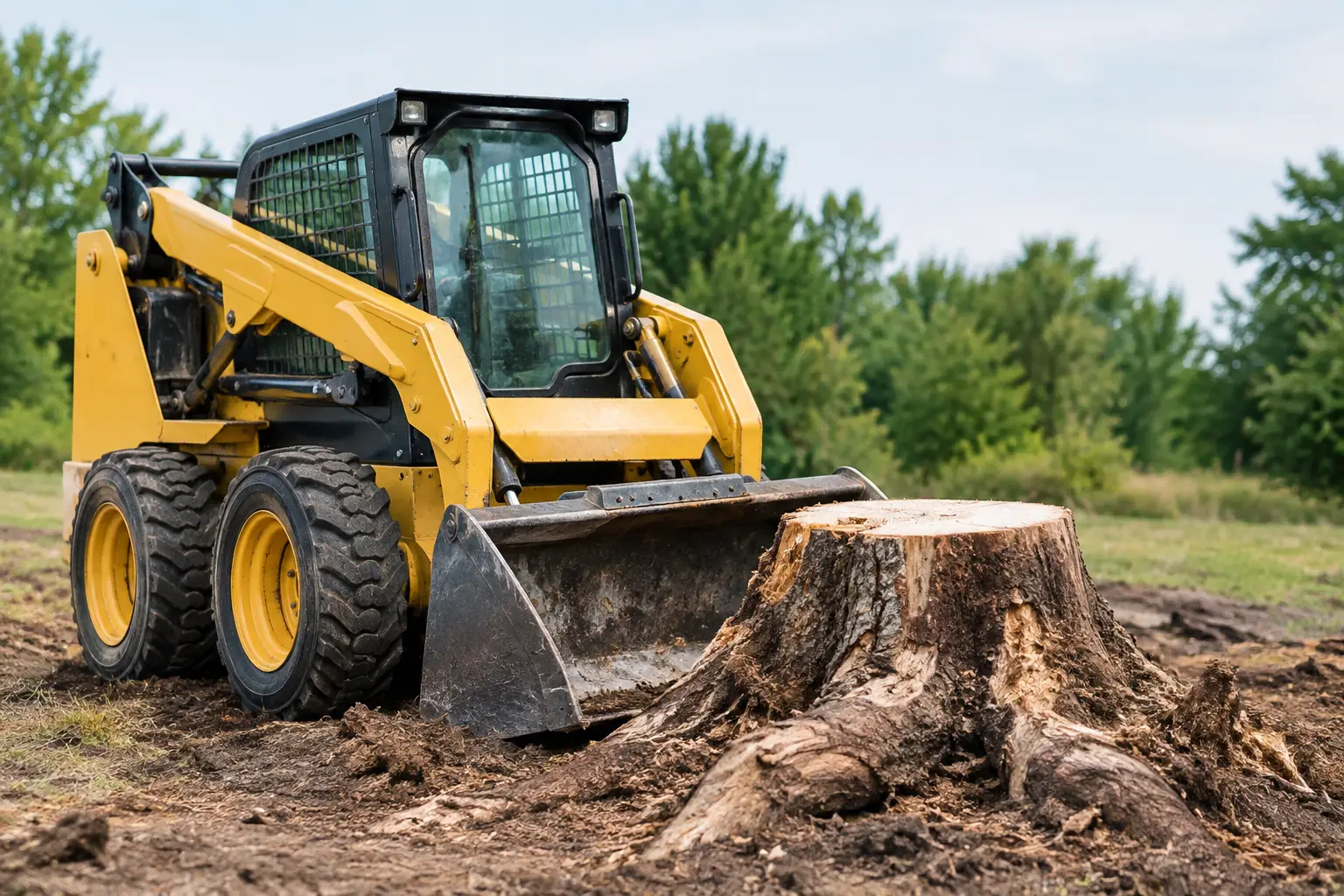
A stump can look small from the surface, then turn into the hardest part of a yard cleanup once you start digging around it. So, can bobcats remove tree stumps? Yes, a Bobcat can remove many stumps, but the right approach depends on the stump’s size, root system, tree species, soil conditions, and access to the work area.
For smaller or recently cut trees, a skid steer with the right attachment may be able to dig around the roots, loosen the stump, and pull it out. Larger, older stumps are a different job. They may require a stump grinder, an excavator, or extra cutting before removal. Choosing the right equipment up front prevents torn-up lawns, damaged underground utilities, and a job that takes longer than it should.
Can Bobcats Remove Tree Stumps Safely?
A Bobcat, often used as a general name for a skid steer or compact track loader, has the power to move dirt, pull roots, lift debris, and haul away heavy pieces of wood. With a bucket, grapple, stump bucket, tree puller, or hydraulic attachment, it can be a practical tool for stump removal.
Safety and results come down to the stump itself. A thin palm stump in loose soil is not the same as a wide oak stump with roots spreading far beyond the trunk. The machine must have enough operating weight and hydraulic power to break the roots loose without constantly spinning tires, sinking into wet ground, or putting unnecessary strain on the equipment.
Before any digging starts, the work area should be checked for utility lines, irrigation, drainage pipes, septic components, fences, and nearby structures. In South Florida, irrigation lines and shallow utility connections can be easy to hit during yard work. Calling for utility marking before digging is a smart first step, even if the stump appears to be far from the house.
When a Bobcat Is a Good Choice
Bobcat stump removal works best when there is clear access and enough room to work around the tree. The operator needs space to approach the stump, dig around the root ball, reposition the machine, and load the material for hauling.
It is often a strong option for small-to-medium stumps, especially when the property already needs broader cleanup. If you are clearing brush, removing a damaged tree, cleaning up storm debris, leveling a section of yard, or preparing a lot for a new project, using a skid steer can handle several parts of the job in one visit.
A Bobcat is also useful after a stump has been ground. Stump grinding removes the visible wood but leaves a pile of mulch and a shallow depression. A skid steer can scoop up the grindings, bring in clean fill, spread topsoil, and leave the area ready for sod, gravel, pavers, or landscaping.
Fresh stumps are generally easier to remove than old ones. As a stump ages, its roots may decay, but the wood can also become stubborn, irregular, and difficult to grab. Species matter, too. Some trees produce thick, tough root systems that hold tightly in compact soil. A professional will evaluate the stump instead of assuming every stump can be pulled in the same way.
When Stump Grinding Makes More Sense
Removing a stump completely means removing the root ball. That can leave a sizable hole and disturb a much larger section of lawn than many homeowners expect. For a stump near a driveway, patio, pool deck, mature landscaping, or utility line, grinding is often the cleaner option.
A stump grinder turns the visible portion of the stump and major surface roots into mulch below ground level. It is usually less disruptive than excavation, although it does not remove every root. The remaining roots will break down over time underground.
Grinding makes sense when your goal is to restore the surface and plant grass or landscaping. Full removal makes more sense when you need to excavate for a foundation, install a driveway, place a shed, build a fence, repair a drainage area, or remove roots that would interfere with construction.
There is a trade-off with both methods. Grinding is usually easier on the yard but leaves organic material below the surface. Pulling the stump removes more of the root structure, but it creates more debris, requires more restoration, and may cost more depending on access and stump size.
The Equipment and Attachments Matter
A standard loader bucket can dig around a stump and help expose roots, but it is not always the most efficient tool. A stump bucket has a narrow, pointed shape that can cut into the soil and get underneath the root ball. A grapple can grab chunks of stump, roots, logs, and brush after they are loosened.
For some jobs, the operator may first use a chainsaw to cut the stump lower or cut major roots as they are exposed. This reduces resistance and gives the machine a better angle for lifting. The stump should never simply be yanked at full force without first loosening the soil and roots. That approach can damage equipment, tear up the yard, or make the machine unstable.
Tracked machines are often preferable in soft or sandy soil because they spread their weight over a wider area. Wheeled skid steers can be a good fit on firm ground or paved access, but they may leave deeper ruts in wet conditions. The right machine is based on the site, not just the size of the stump.
What to Expect During the Removal Process
A professional stump removal job usually begins with access and safety. Vehicles, outdoor furniture, loose yard items, and anything fragile should be moved away from the work zone. If the stump is inside a gated backyard, measure the gate opening and consider whether the machine can enter without damaging the gate, fence, or landscaping.
The operator will clear brush and surface debris, then excavate around the stump to find the major roots. Thick roots may be cut or broken apart before the root ball is lifted. Once the stump comes free, the material can be loaded into a trailer or dumpster for disposal.
The hole left behind should not be ignored. It may need to be backfilled with clean soil, compacted, and graded to avoid a low spot that collects water. If the area is being sodded, it should be brought close to the surrounding grade so the finished lawn does not look uneven.
The amount of cleanup depends on your goal. Some customers only need the stump removed and hauled away. Others want the area backfilled, leveled, and cleared of roots, wood chips, and debris. Discussing that scope before work begins avoids confusion about what is included.
Factors That Affect Stump Removal Cost
There is no honest flat price for every stump because site conditions change the labor and equipment needed. Diameter is one factor, but it is not the only one. A 20-inch stump in an open front yard may be easier to remove than a smaller stump behind a narrow gate with roots under a sprinkler system.
The main cost factors include stump size, tree type, root depth, access, soil condition, nearby obstacles, disposal needs, and whether the hole needs to be filled afterward. Multiple stumps on the same property may be more efficient to handle at once because the equipment is already on site.
If you are planning a renovation, fence installation, pool project, or major landscaping update, schedule stump removal before the next phase begins. Removing a stump after sod, pavers, or new plants are installed creates extra work and extra cost.
Prepare Your Property Before the Crew Arrives
A little preparation helps the job move quickly. Mark or point out irrigation heads, septic covers, drain cleanouts, landscape lighting wires, and any areas where you know pipes or cables run. Keep pets and children away from the work area, and make sure there is a clear path from the street or driveway to the stump.
If possible, save a few photos of the stump from different angles when requesting service. Include a picture that shows the route to the work area. This gives the crew a better idea of whether a Bobcat can access the site and what attachment may be needed.
For homeowners and property managers in Dade and Broward counties, A&D Junk Removal LLC can help with Bobcat work, debris hauling, demolition cleanup, and material support when a property needs more than a simple pickup. The goal is straightforward: remove the problem, clean up the mess, and help get the next project moving.
A tree stump does not have to stay in the way of a cleaner yard or a better use of your property. Get the site evaluated before choosing between pulling, grinding, or hauling, and you will spend money on the method that actually fits the job.