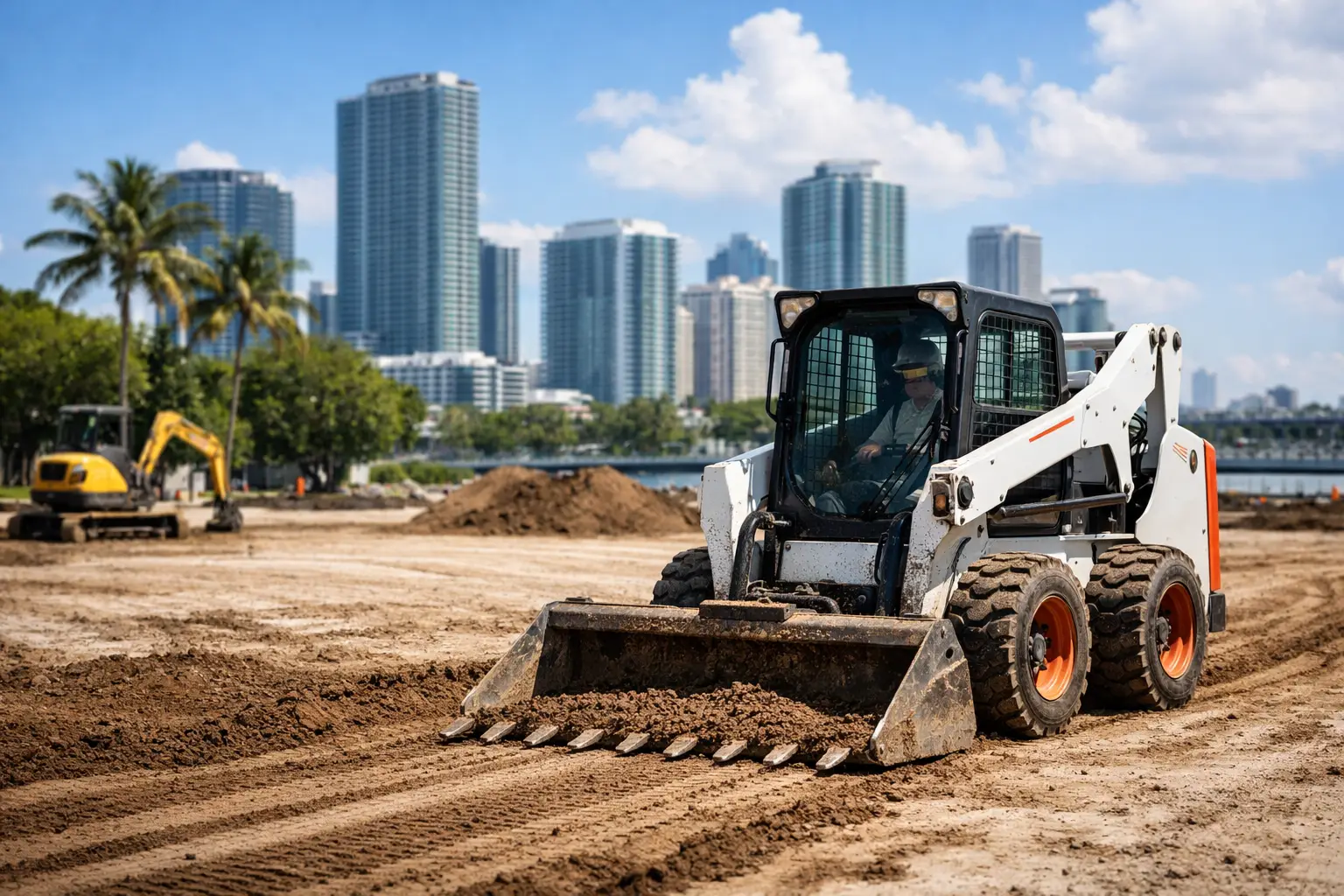
A yard can look level from the driveway and still cause expensive problems once the rain starts. Water may settle beside the foundation, a new paver area may shift, or a construction project may stall because the base is uneven. A reliable bobcat grading service miami property owners can schedule quickly takes the heavy work off your hands and helps create a clean, usable surface for what comes next.
Grading is more than pushing dirt around. It is the process of shaping land so water moves in the right direction, surfaces have a stable base, and your project starts on solid ground. For homeowners, contractors, property managers, and business owners, the right equipment and operator can save a major amount of time, labor, and cleanup.
What Bobcat Grading Does for Your Property
A Bobcat is compact enough to work in many residential yards, side access areas, parking lots, and tighter job sites where larger equipment may be impractical. With the proper attachment and a skilled operator, it can cut down high spots, fill low areas, spread material, remove loose debris, and shape the ground for a specific purpose.
The goal depends on the job. A backyard may need a smoother surface before sod or artificial turf installation. A driveway may need fresh aggregate spread and compacted. A contractor may need the site cleared and leveled before a slab, walkway, fence, or paver project begins. On demolition and cleanup jobs, grading can also help restore a site after broken concrete, dirt piles, roots, and leftover materials are removed.
Miami-area soil conditions make planning especially valuable. Heavy rain can expose poor drainage fast, while sandy or loose material may need careful shaping and compaction. A quick pass with a machine is not always the answer. The surface needs to be graded with the project, the drainage path, and the finished elevation in mind.
When You May Need Bobcat Grading Service in Miami
Most customers call for grading when they can see an obvious issue: standing water, deep ruts, uneven dirt after construction, or piles of fill that need to be moved. But grading is often most valuable before a visible problem becomes worse.
If you are planning a driveway refresh, patio, shed pad, pool-area work, landscaping, drainage correction, or new sod, the site should be prepared first. Installing a finished surface over uneven ground can lead to drainage trouble, cracking, shifting, and extra labor later. Taking care of the base early is usually more affordable than tearing out completed work to fix what sits underneath.
Property managers also benefit from quick site support between tenants, after storm cleanup, or during exterior repairs. A messy lot, broken-up ground, or leftover material pile makes a property look neglected and can slow down other vendors. A Bobcat can help get the area back to a clean, workable condition without asking your maintenance team to handle equipment they do not use every day.
The Right Grade Is About Drainage, Not Just Appearance
A flat-looking yard is not necessarily a properly graded yard. In many cases, the surface needs a controlled slope so rainwater travels away from structures and does not pool in low areas. The exact approach depends on the property layout, nearby elevations, existing drains, soil, and the type of work being completed.
This is where a site walk-through matters. Some areas need material removed to lower the grade. Others need clean fill brought in and spread. A small swale or drainage path may be enough for one yard, while another property may need a more involved plan from a drainage or landscaping specialist. Grading can support drainage, but it does not replace permit requirements, engineered plans, or utility-related work when those are needed.
Be clear about the outcome you want. Tell the operator whether the area is being prepared for sod, pavers, concrete, gravel, landscaping, or general cleanup. That information affects the finish, material needs, and how precisely the surface must be shaped.
What to Prepare Before the Equipment Arrives
Good preparation keeps the job moving and helps avoid surprises. First, make sure the work area is accessible. Gates, parked vehicles, trailers, stored items, and loose debris can limit where equipment can travel. If access is tight, share that information before scheduling so the right machine and plan can be selected.
It also helps to mark or identify anything that should not be disturbed, including irrigation heads, utility lines, septic components, landscape lighting, pool equipment, and buried drainage features. Do not assume a line is deep enough to be out of the way. If digging, cutting, or substantial earth movement is involved, utility locating and site verification should be handled before work begins.
Finally, decide what happens to the excess material. Dirt, broken concrete, brush, old pavers, and demolition debris may need to be hauled away. In some cases, material can be relocated elsewhere on the property. In others, new fill, gravel, or base material needs to be delivered. Coordinating grading, material delivery, and debris removal through one dependable team can make the project far easier to manage.
Why Equipment and Cleanup Should Work Together
A grading job rarely exists by itself. The property may first need junk removed, a shed or patio demolished, construction debris hauled away, or aggregate delivered for the next phase. When those services are split among several vendors, the schedule can get complicated quickly. One crew leaves piles behind, another waits for access, and the homeowner ends up coordinating every detail.
A&D Junk Removal LLC helps simplify that kind of project support. The team can remove unwanted materials, handle debris hauling, assist with demolition cleanup, deliver needed material, and provide Bobcat services when the site needs to be cleared, shaped, or leveled. That means less back-and-forth for customers who want to move from a cluttered or uneven space to a job-ready area.
There is still a trade-off to consider. A small touch-up may not require a full grading service, while a large commercial site may require heavier equipment, engineering direction, or specialized drainage work. The practical answer is to match the machine and service scope to the property instead of paying for more than the job needs.
Choosing a Bobcat Grading Team You Can Trust
Price matters, but the lowest quote is not always the lowest final cost. An inexperienced operator can damage landscaping, leave a poor slope, create more cleanup, or fail to account for access and hauling needs. Look for a local team that asks practical questions before arriving: What is the finished use of the area? Is there access for equipment? Are materials staying or being removed? Is drainage a concern?
You should also expect clear communication about what is included. A straightforward estimate should distinguish between equipment work, labor, material delivery, disposal, and any additional hauling. That helps you compare options fairly and avoid a job that looks inexpensive until extra trips or debris charges appear.
For busy property owners and contractors in Dade and Broward counties, responsive scheduling can matter just as much as the equipment itself. A project can lose momentum when debris sits in the way or the site is not ready for the next crew. Prompt, professional support keeps the work area cleaner and helps your timeline stay on track.
Start With the Finished Result
Before booking a bobcat grading service, picture how the space should work when the job is done. Should water drain away from the building? Does a driveway need a firm, even base? Is the yard being prepared for new landscaping or a clean outdoor space? A clear answer helps the work stay focused, the materials stay organized, and the finished ground support the project instead of creating the next problem.