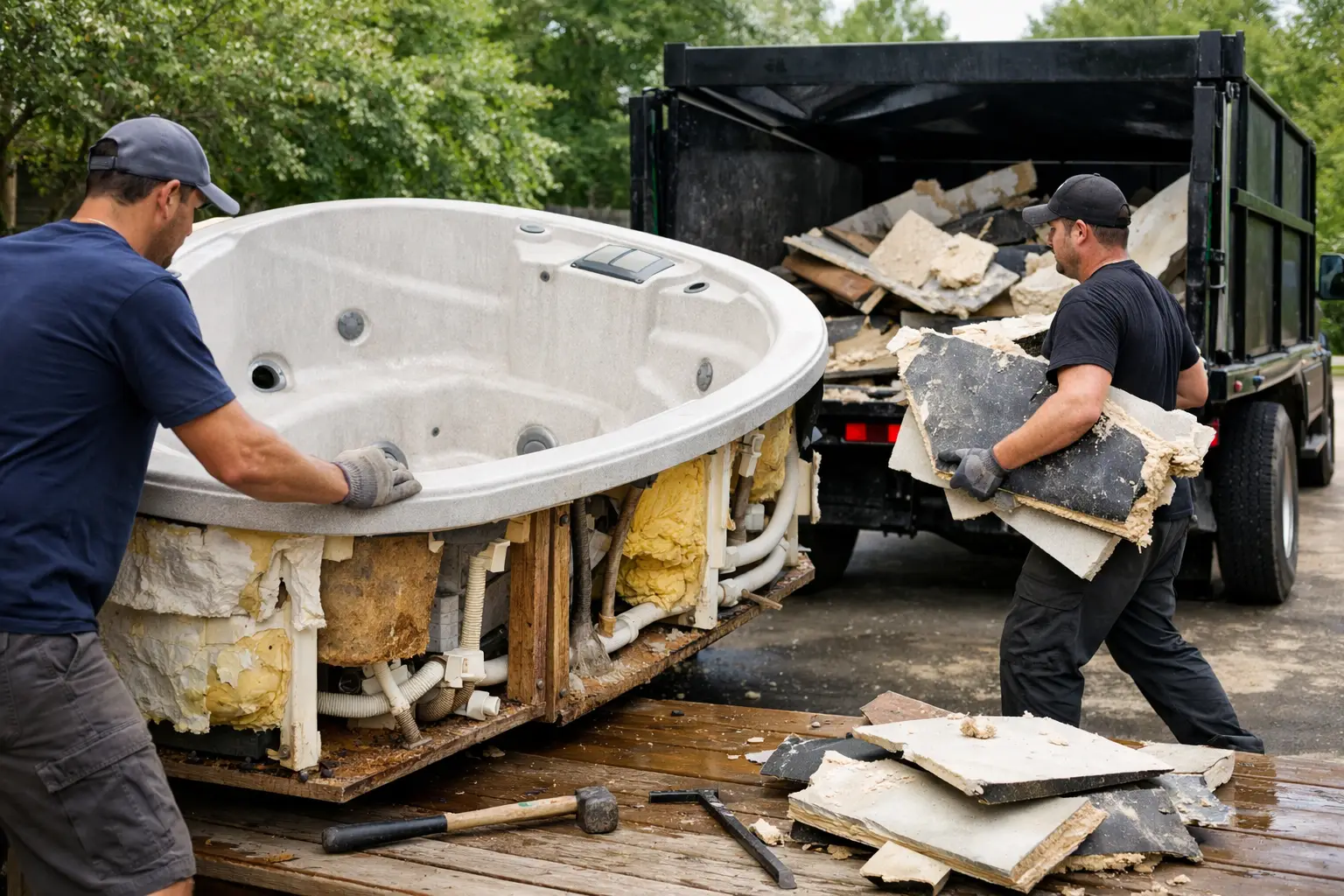
A hot tub can be the best part of a backyard – until it stops working, starts leaking, or takes up space you would rather use for a patio, pool deck, or outdoor seating. The best ways to remove hot tubs depend on their condition, size, access to the yard, and whether you want to handle the labor yourself or have a crew take care of the entire job.
A typical hot tub is not something you can drag to the curb. Even an empty unit can weigh several hundred pounds, while larger models may weigh 800 pounds or more. It also contains electrical wiring, plumbing, insulation, a heavy shell, and a bulky frame. A little planning keeps the removal safe, avoids damage to your property, and makes disposal much easier.
Start With Safety and a Clear Plan
Before deciding how to remove the hot tub, make sure it is completely disconnected and drained. Turn off power at the breaker first. If the tub is hardwired, have a qualified electrician disconnect it properly rather than cutting wires or assuming the power is off.
Drain all water through the tub’s drain valve or with a submersible pump. Direct water away from your home, neighboring properties, and areas where standing water could create a mess. Once it is empty, remove loose accessories such as the cover, steps, filters, and removable panels.
Take a close look at the route from the hot tub to the street or trailer. Measure gates, side yards, walkways, and any tight turns. In many Miami-area homes, fences, landscaping, pavers, and pool equipment can make access more complicated than the hot tub itself. Knowing what is in the way helps you choose between moving the unit whole or breaking it down on site.
Best Ways to Remove Hot Tubs Based on Their Condition
There is no one-size-fits-all solution. A newer, working hot tub deserves a different plan than a cracked, nonworking one that has been sitting unused for years.
Sell or Give Away a Working Hot Tub
If the hot tub still heats, pumps water, and looks presentable, selling it or giving it away may be your lowest-cost option. Some buyers are willing to remove a working unit themselves, especially if it is a recognized brand and includes a cover or steps.
Be realistic about the condition. A buyer will need to pay for transport, electrical reconnection, and setup at the new location. Pricing a used hot tub too high can leave it sitting in your yard for months. Clear photos, accurate dimensions, and an honest description of any issues help attract serious interest.
This option works best when the unit is accessible and can be lifted or moved without dismantling fences or landscaping. If it is built into a deck, placed behind a narrow gate, or no longer reliable, removal is usually the better use of your time.
Donate a Usable Unit When Accepted
Some local charities, reuse organizations, or community groups may accept a hot tub in excellent working condition. Acceptance varies widely because transportation and liability can be a challenge. Call first and confirm whether they accept hot tubs and whether pickup is available.
Donation is a good route only when the unit is clean, functional, and easy to access. A hot tub that needs major repair is generally not a donation candidate. Trying to give away something that is near the end of its life can delay the cleanup you are trying to finish.
Disassemble It Yourself
For homeowners who are comfortable with tools and physical work, taking the hot tub apart can make it easier to remove. The process commonly involves removing side panels, cutting the shell into manageable sections, separating the frame, and disconnecting pumps, pipes, and wiring.
This approach can work when there is limited yard access and the tub cannot fit through a gate in one piece. However, it is labor-intensive and requires the right equipment. Reciprocating saws, pry bars, drills, gloves, eye protection, and heavy-duty disposal containers are often needed. The shell can be tough acrylic or fiberglass, and the frame may contain treated wood or metal that needs separate handling.
Do not rush this part. Hidden wiring, sharp cut edges, and awkward pieces create real safety risks. Cutting a shell also creates dust and debris, so protect nearby windows, vehicles, plants, and pool surfaces. DIY removal may save money in some situations, but it can cost more if you damage pavers, fencing, or a deck while trying to force oversized pieces out.
Rent a Dumpster for a Larger Cleanup
A dumpster rental makes sense when hot tub removal is part of a bigger project. Maybe you are replacing old patio furniture, removing a deck, clearing landscaping, or renovating the backyard at the same time. Having a trailer or dumpster on site gives you room for the hot tub pieces, packaging, lumber, and other construction debris.
Ask about what materials are accepted before loading everything in. Hot tub covers, treated wood, plastic shells, metal components, and electronic parts may need to be handled differently. It is also smart to consider where the dumpster will sit. A driveway is convenient, but protecting the surface with boards can help prevent marks or damage.
For a hot tub removal by itself, a full dumpster may be more capacity than you need. For a full backyard refresh or renovation, it can be the most practical choice.
Hire a Professional Hot Tub Removal Crew
Professional removal is often the best answer for nonworking, oversized, built-in, or hard-to-reach hot tubs. A trained crew can disconnect loose components after power has been safely handled, dismantle the unit when needed, load the debris, and haul it away without leaving you with a pile of broken material.
The main benefit is not just the lifting. It is avoiding the entire disposal process. You do not have to figure out where each component belongs, borrow a truck, make multiple trips, or spend a weekend cutting up a tub that has already become a headache.
When requesting a quote, share a few photos and include the hot tub’s approximate size, location, access points, and whether it is built into a deck. Let the company know about stairs, narrow gates, pool enclosures, or obstacles in the removal path. Good information up front leads to a more accurate price and a smoother appointment.
For homeowners and property managers in Dade and Broward counties, A&D Junk Removal LLC can handle the heavy lifting, haul-away, and cleanup so the space is ready for what comes next.
What Not to Do When Removing a Hot Tub
Avoid placing an entire hot tub at the curb unless your local bulk pickup program specifically allows it and you have confirmed the rules. Most programs will not take a large spa unit whole, and leaving it out can lead to delays, complaints, or code issues.
Do not try to tip or roll a heavy hot tub alone. Its weight is uneven, the shell can crack, and one bad move can damage a fence, screen enclosure, vehicle, or person. Also, never assume that an unplugged control panel means the unit is electrically safe. The wiring may still be connected at a disconnect box or breaker.
Burning a hot tub is not a disposal method. Plastic, foam insulation, treated lumber, and electrical components can release harmful fumes and create a fire hazard. Responsible disposal or professional hauling is the safer route.
Make Room for the Backyard You Want
Removing an old hot tub is often the first step toward making your outdoor space easier to enjoy. Once it is gone, you may have room for new pavers, a grilling area, a storage shed, landscaping, or simply a cleaner, more open yard. Choose the removal option that matches the unit’s condition and your access, but do not let a difficult lift turn into a bigger project than it needs to be.