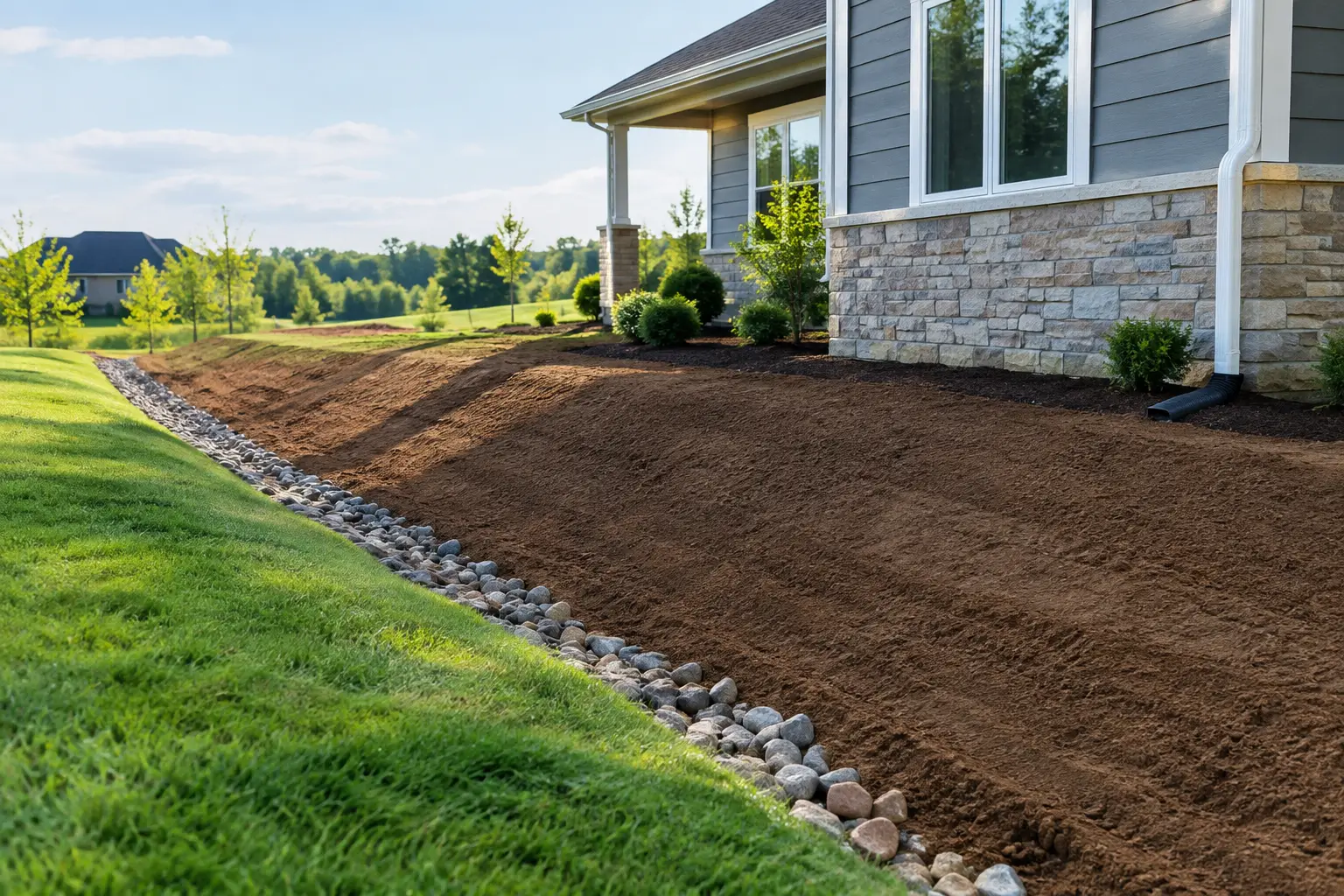
A heavy South Florida rain can tell you more about your yard in 30 minutes than a sunny weekend ever will. If water collects beside the house, runs toward the garage, or leaves the lawn muddy for days, land grading may be the work that solves the real problem instead of just covering it up.
Land grading is the process of shaping soil so water drains where it should, surfaces sit at usable heights, and a property is ready for the next phase of work. That might mean preparing for a driveway, leveling an area for a shed, correcting a low spot, or creating a cleaner base before landscaping. It is not just about making a yard look flat. In many cases, the right grade is deliberately sloped to direct water away from structures and prevent expensive damage.
For homeowners, property managers, and contractors, grading is one of those jobs that is easy to underestimate. Moving dirt sounds simple until you are dealing with wet ground, buried debris, tight access, drainage concerns, or a project that needs to meet a specific elevation. A clear plan and the right equipment can save a lot of rework later.
What Land Grading Actually Does
A properly graded property manages water first. Rainwater should move away from a building’s foundation rather than pool against it. When water repeatedly sits near a structure, it can contribute to erosion, moisture intrusion, mold concerns, damaged landscaping, and foundation issues over time.
Grading also creates a workable surface. A contractor may need a level, compacted area before placing pavers, pouring concrete, installing a fence, or starting a landscape project. A homeowner may simply want to stop tripping over ruts, eliminate a swampy section of lawn, or make room for a new patio.
The goal depends on the property. A flat-looking yard is not always the right answer. Some areas need a gradual slope, while others need soil added, soil removed, or a swale that guides water across the lot without sending it toward a neighbor’s property. Good grading works with the site instead of forcing a quick fix that creates another drainage problem downhill.
Common signs your property needs attention
Water that remains for more than a day after normal rainfall is a strong warning sign, especially near the home. Other clues include bare soil washing away, mulch repeatedly floating out of beds, tire ruts in a driveway area, uneven ground around a patio, and cracks or gaps where a slab meets the yard.
You may also notice that a project keeps getting delayed because the site is not ready. If a dumpster cannot sit level, materials cannot be staged safely, or demolition debris is spread across soft ground, basic site preparation can make the entire job easier to manage.
Start With the Water, Not the Dirt
Before bringing in a Bobcat or ordering fill dirt, look at what happens during and after rain. Identify where water begins, where it travels, and where it stops. Check gutters and downspouts too. A downspout dumping water beside the foundation can create the same trouble as a poor grade, so moving soil without addressing the discharge point may not solve much.
Pay attention to property lines, sidewalks, driveways, patios, utility equipment, and mature trees. Soil should not be piled against siding, cover vents, or bury the flare at the base of a tree. Raising the ground in one place can also push water into a neighboring yard, which is a problem nobody wants after the next storm.
For a small low spot away from the house, adding and blending soil may be enough. For drainage near a foundation, a steep slope, or a larger construction area, the job calls for more planning. Local rules, drainage requirements, and underground utilities may affect what can be changed. When there is any doubt about utility lines, use the proper utility-location process before digging or grading.
The basic slope around a home
As a general rule, soil should slope away from the foundation. The exact design depends on the lot, existing drainage, and local conditions, but the principle stays the same: water needs a clear path away from the structure.
Do not rely on a single pile of dirt against the house. That can trap moisture, bury exterior details, and settle unevenly. The soil needs to be spread, shaped, and compacted in layers as needed. A clean final grade should blend naturally into the surrounding yard while keeping water moving in the right direction.
When a Bobcat Makes the Job Better
Hand tools can handle light touch-ups, such as spreading a few bags of topsoil or smoothing a small garden area. But larger land grading jobs move quickly from weekend project to equipment work. A compact loader can remove excess soil, bring in fill, break up uneven areas, and shape a site with far more control than a shovel and wheelbarrow.
Equipment is especially useful when a property has construction debris, old pavers, tree roots, broken concrete, or unwanted materials mixed into the work area. Clearing that material first gives the new grade a better base. Trying to grade over junk or loose demolition debris usually leads to soft spots and settling later.
Access matters. A tight side yard, soft lawn, overhead branches, and nearby structures all affect how equipment can enter and work on the property. That is why it helps to discuss the full project, not just ask for a price to “move dirt.” A crew needs to know what must be removed, what material is being delivered, where it can be staged, and what the finished area needs to support.
Soil, Fill Dirt, and Topsoil Are Not the Same
One common mistake is using whatever dirt is available without thinking about its purpose. Fill dirt is generally used to build up low areas and establish elevation. It should be placed properly and compacted where stability matters. Topsoil is the upper layer that supports grass, plants, and landscaping. It is usually added after the rough grading is complete, not used as the main material for raising a large area.
The right material also depends on drainage. Some soils hold water longer than others, and Miami-area properties can have challenging conditions after periods of heavy rain. If the site needs a finished lawn, the final surface should be smooth enough to mow and shaped so water does not settle in dips.
Expect some settling after fresh soil is placed, particularly if the ground is wet or the fill was not compacted well. Planning for that reality is better than assuming the surface will stay exactly where it is on day one. Larger projects may need a rough grade first, then a final grade after material has settled or other construction work is complete.
Grading Before Construction or Cleanup
Land grading often works best as part of a larger site plan. If you are removing a shed, tearing out a patio, cleaning up a rental property, or starting a renovation, the order of work matters. Demolition and debris removal should generally happen before final grading, since heavy equipment and hauling can disturb a newly finished surface.
A practical sequence is to clear unwanted items and debris, remove old structures or hardscape if needed, bring in or remove soil, establish the rough grade, and then complete the final surface once the main work is done. This keeps the site safer and reduces the chance of paying twice to repair ruts or re-level an area after another phase of the project.
A&D Junk Removal LLC can help coordinate the hands-on parts of that process, from hauling out debris to providing Bobcat work and material delivery. Having one local team handle several moving pieces can reduce the back-and-forth that slows down a property project.
What to Ask Before Booking Land Grading
A quick conversation before work begins can prevent misunderstandings. Be ready to explain the problem area, whether water is involved, what is currently on the site, and what you plan to do with the finished space. Photos after rainfall can be especially helpful because they show the drainage issue clearly.
Ask whether debris removal, soil hauling, material delivery, and final cleanup are included or handled separately. Confirm where excess dirt will go, whether new fill is needed, and how the crew will protect nearby surfaces. If the work is near a building, patio, driveway, fence, or utility area, make that clear from the start.
Price should be straightforward, but the cheapest option is not always the best value if it leaves piles of soil, skips compaction, or does not address the actual drainage path. The right scope is the one that leaves you with a clean, usable area and fewer headaches when the next storm rolls through.
If your yard is holding water or your project site is uneven, take a few photos, note where the water travels, and get the area evaluated before the problem spreads. A well-shaped piece of ground makes every job that follows easier.