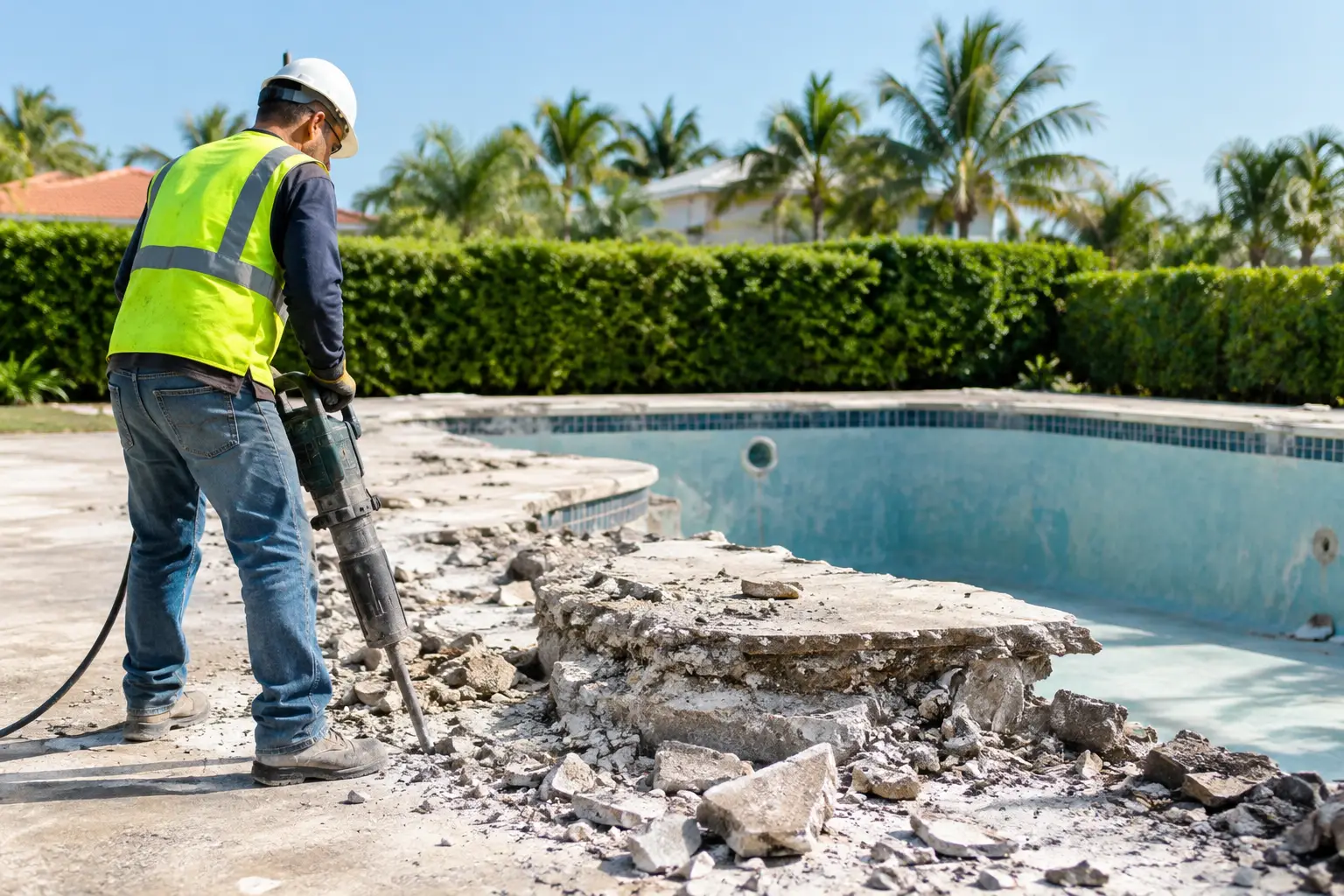
A cracked, sinking, or outdated pool deck can make the entire backyard feel unusable. Loose pavers create trip hazards, broken concrete collects water, and old finishes can make a pool area look tired even when the pool itself is in great shape. When people search for pool deck demolition Dade, they usually need more than somebody to break up concrete. They need a clean plan for protecting the pool, removing heavy debris, and getting the space ready for what comes next.
Whether you are replacing the deck with pavers, resurfacing the area, repairing drainage, or making room for a larger outdoor living space, demolition is the step that sets up the rest of the project. A rushed tear-out can damage coping, landscaping, plumbing, or nearby structures. A well-managed one clears the old material without adding more problems to your renovation.
What Pool Deck Demolition in Dade Usually Includes
Pool deck demolition can mean different things depending on what is around your pool. Some properties have a thin concrete slab with a coating on top. Others have thick poured concrete, pavers over a sand base, tile, travertine, or a combination of materials added over the years.
The job usually begins with identifying the deck material and the areas that need to stay intact. The pool shell, coping, skimmer, drains, screen enclosure, patio furniture, landscaping, and outdoor equipment all need consideration before any equipment arrives. If the deck is being removed right up to the pool edge, the crew must work carefully to avoid cracking or loosening the coping.
After the work area is prepared, the old deck is broken into manageable pieces, loaded, and hauled away. For concrete decks, that may involve saw cutting certain sections first to create cleaner edges and control where the slab breaks. Paver removal is often less disruptive, but the base material underneath may still need to be removed or regraded.
The goal is not just to make the old deck disappear. It is to leave a usable work area for the next contractor, whether that means a paver installer, concrete crew, pool renovation company, or landscaper.
Why Planning Matters Before the First Break
A pool deck is not a driveway. It sits next to water, plumbing, electrical components, and often a screen enclosure or patio structure. That is why the lowest price is not always the best value if it leaves you arranging debris removal, repairing accidental damage, or dealing with an uneven base afterward.
First, consider the condition of the pool coping. Coping is the cap around the edge of the pool, and it may be separate from the deck or tied into it. If it is staying, demolition needs to be controlled near that edge. If it is being replaced, the scope can be broader, but the pool shell still needs protection from falling concrete and debris.
Drainage is another major factor in South Florida. Your replacement deck needs to move water away from the home and manage rain runoff properly. Removing the old deck can reveal low spots, poor grading, soft soil, or areas where water has been sitting beneath the slab. Finding those issues early is useful, because covering them with a new surface only delays the repair.
Access also affects the plan. A backyard with a wide side gate is much easier to service than one with narrow access, delicate landscaping, or no direct path for equipment. In some cases, materials must be moved by hand with wheelbarrows. In others, a Bobcat can speed up loading and site cleanup. The right approach depends on the property, the amount of concrete, and what needs to be protected.
What Affects the Cost of Pool Deck Demolition?
The cost of removing a pool deck depends on the deck size, material thickness, access, and disposal volume. A small paver patio that can be lifted and loaded is a different job from a reinforced concrete deck surrounding a large pool.
Concrete thickness matters because heavier slabs create more debris and take longer to break down. Reinforcement, such as wire mesh or rebar, adds labor as well. If the deck includes thick footings around a screen enclosure, built-in planters, steps, outdoor kitchens, or old additions, those areas may need separate attention.
Hauling is a real part of the job, not an afterthought. Concrete, pavers, dirt, and base material add up fast. A reliable estimate should account for loading, transportation, and proper disposal instead of leaving you with a pile of broken material at the curb or in the driveway.
It also depends on the condition you need after demolition. Some customers only need the deck removed. Others need the area cleared, rough graded, and ready for the next phase. Being clear about that outcome before work starts helps avoid surprises and keeps the project moving.
How to Prepare Your Backyard for Demolition
A little preparation makes the work safer and helps the crew stay focused on the demolition instead of moving obstacles. Remove patio furniture, grills, planters, pool toys, hoses, umbrellas, and anything stored around the deck. If you have fragile décor, outdoor lighting, or potted plants near the work zone, move them farther away than you think is necessary.
Pool protection should be discussed before the job begins. Depending on the scope, the pool may need a cover or protective barrier to limit dust and prevent debris from entering the water. Keep the pool pump, filters, heaters, and electrical equipment accessible, but protected from impact and dust when possible.
If you live in a community with an HOA, check the rules for work hours, contractor access, parking, and dumpsters or trailers. Some properties may also require permits for the replacement work, structural changes, or enclosure modifications. Demolition requirements can vary by project, so it is smart to confirm what applies before scheduling the job.
Finally, let your neighbors know if the work will be close to a property line. Concrete demolition is noisy, and a simple heads-up goes a long way. It also helps prevent cars from blocking access on the day debris needs to be loaded out.
Choosing the Right Removal Support
The easiest pool deck demolition projects have one clear point of responsibility for the hard work: breaking up material, loading it, hauling it away, and leaving the site clean. That matters when you are coordinating multiple trades and trying to avoid delays between demolition and installation.
Ask practical questions before you book. Will the crew protect the pool edge and surrounding surfaces? Is debris hauling included? Can they handle concrete, pavers, base material, and other construction debris? Will the site be cleared so the next contractor can start? Straight answers are a good sign that the job has been thought through.
For homeowners, property managers, and contractors in Dade County, A&D Junk Removal LLC can provide demolition support and debris hauling without making you coordinate separate cleanup crews. The focus is simple: remove the old material efficiently, keep the work area organized, and help you move to the next phase with less stress.
Don’t Treat Debris Removal as the Last Step
Broken concrete can take up far more space than expected once it is piled up. Leaving it on-site can block access, create safety hazards, and slow down the installer waiting to start the new deck. It can also damage lawns or driveways if it is stockpiled carelessly.
Scheduling removal as part of the demolition plan keeps the site under control. It is especially helpful when weather is unpredictable or when a new surface is scheduled soon after the tear-out. A clean, open work area gives the next crew room to measure, grade, deliver materials, and begin without working around old debris.
Your old pool deck may be the part of the backyard you are ready to forget. Make sure its removal leaves you with a clean start, not another project to manage.