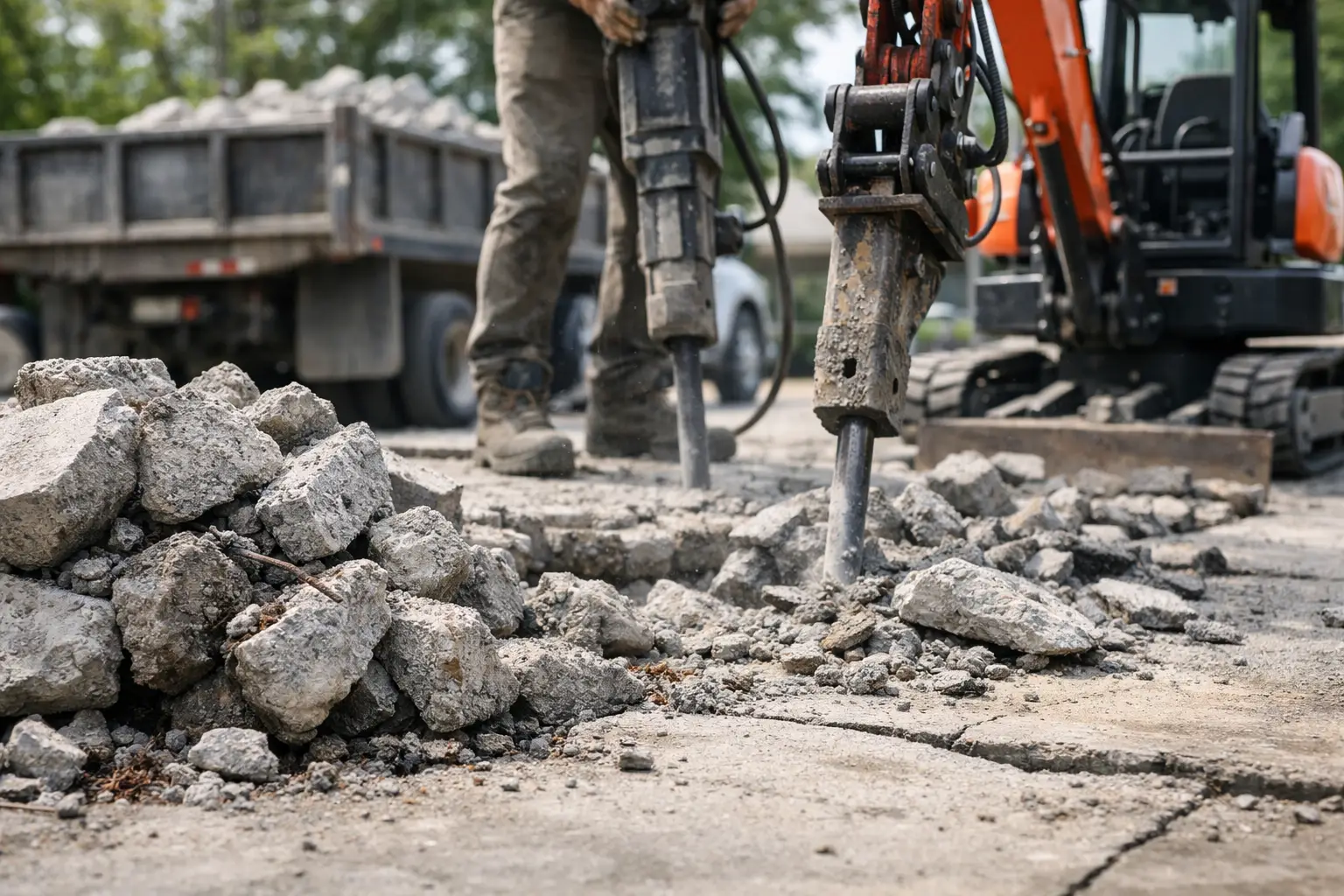
That old patio, broken driveway section, or leftover slab usually looks simple until it is time to get it out. Concrete removal cost can change fast based on how thick the slab is, how easy it is to reach, and whether the job is just demolition or full haul-away too.
If you are planning a renovation, cleaning up after a project, or trying to reclaim space, it helps to know what you are actually paying for. Concrete is heavy, messy, and labor-intensive. The price is not just about breaking it up. It is also about loading it, transporting it, and disposing of it properly.
What affects concrete removal cost?
The biggest factor is volume. A small cracked walkway costs far less to remove than a full driveway because there is less material to break, load, and haul. Thickness matters just as much. A four-inch patio slab is a very different job from a reinforced six-inch driveway or commercial pad.
Access also changes the number quickly. If the crew can back a trailer or truck right up to the concrete, the job moves faster and costs less. If the material has to be wheeled out from a backyard, carried through a gate, or removed in a tight area, labor goes up.
Reinforcement is another common price changer. Concrete with rebar or wire mesh takes more time and more effort to cut apart safely. That can add both labor and equipment time. The same goes for concrete that is tied into footings, curbs, or other structures.
Then there is disposal. Concrete is not like regular household junk. It is extremely heavy, and dump fees are often based on weight. In some cases, clean concrete can be taken to recycling facilities, which may help control cost. In other cases, mixed debris, dirt, or contamination can push disposal fees higher.
Typical price ranges for concrete removal cost
For many residential jobs, concrete removal cost often falls somewhere between a few hundred dollars for a small section and several thousand for a large slab or driveway. A short walkway or tiny patio may be priced as a minimum service call if the crew can finish it quickly. A full driveway, pool deck, or backyard slab usually lands much higher because of labor, equipment, and disposal weight.
Some companies price by square foot. Others price by the truckload, by the estimated weight, or as a full project rate after seeing the site. All of those methods can be reasonable, but they measure different things. A square-foot estimate may sound low until you realize the slab is thicker than expected or reinforced underneath. A truckload price may sound simple, but the total depends on how many loads the concrete actually creates.
That is why onsite estimates tend to be more accurate than phone guesses. Concrete has a way of hiding the hard part until the work starts.
Why small jobs can still cost more than expected
Homeowners are often surprised when a small concrete removal job does not come with a small price tag. The reason is simple. Even a modest slab still requires specialized labor, tools, safety gear, loading time, transportation, and disposal.
There is also setup time. Crews have to arrive, protect nearby surfaces if needed, break the slab, stage the debris, and clean up after. Whether the pile fills half a trailer or a full one, there is still a baseline cost to doing the work right.
This is especially true when the concrete is in a fenced backyard, near landscaping, or next to structures that need to be protected. The job may be physically small but logistically slow.
Demolition only vs. full-service removal
When comparing quotes, make sure you know what is included. Some pricing covers demolition only, which means the slab gets broken up and left on site for the customer to handle. Other pricing includes full-service removal, which covers demolition, loading, haul-away, and disposal.
That difference matters. Full-service pricing is higher upfront, but it saves you from renting equipment, arranging a dumpster, loading heavy debris yourself, and making multiple disposal trips. For most property owners, that convenience is worth it, especially when the concrete is heavy enough to turn a simple cleanup into a full weekend job.
If you are already doing a larger renovation, bundling services can also make sense. A company that handles demolition, debris hauling, dumpster rental, or Bobcat work can often simplify the schedule and reduce the back-and-forth between different contractors.
Equipment can raise or lower the total price
Not every concrete job needs heavy equipment, but some absolutely do. A small patio might be removed with handheld breakers and manual loading. A larger driveway or thick slab may call for a skid steer, mini excavator, or other equipment to break and move debris efficiently.
Using equipment can increase the quote, but it can also lower total labor hours. That is one of those it-depends situations. If machine access is good, equipment often speeds the job up and keeps costs more predictable. If access is poor and everything has to be done by hand, labor becomes the bigger expense.
This is one reason local site conditions matter so much. In parts of Miami-Dade and Broward, tight lots, narrow side yards, decorative pavers, and limited street access can all affect how the crew approaches the work.
Hidden cost drivers to watch for
A quote that looks cheap at first can get expensive if key details were not discussed. One common issue is buried thickness. What looks like a simple four-inch slab may be thicker at the edges or built over a footing. Another is mixed debris. If the concrete is combined with dirt, tile, fencing, or other material, disposal may cost more.
Permit requirements can matter too, depending on the scope of the work and local rules. Utility lines, nearby drains, and underground irrigation can also slow down demolition if the area has to be handled carefully.
Cleanup standards are worth asking about as well. Does the price include sweeping up loose debris and loading all fragments, or just removing the large pieces? Does it cover patching disturbed ground, or is that separate? A clear quote should explain the scope so you know what to expect.
How to keep concrete removal cost under control
The easiest way to avoid overpaying is to give accurate job details from the start. Share measurements, photos, slab location, and whether you know the thickness. If there is rebar, fencing, limited access, or a need to protect surrounding surfaces, mention it upfront.
It also helps to decide what outcome you want. If you only need the slab broken up, say that. If you want full haul-away and clean site pickup, make sure that is in the estimate. A vague request often leads to a vague quote.
Timing can make a difference too. If concrete removal is part of a bigger cleanup, demolition, or material delivery job, bundling services may be more cost-effective than booking everything separately. That is often where a practical, local company has an advantage. You get fewer moving parts and less stress.
Getting the right quote for concrete removal cost
The best quote is not always the lowest one. It is the one that clearly explains what is included, accounts for site conditions, and leaves less room for surprise charges. Ask whether pricing includes labor, equipment, loading, haul-away, disposal, and final cleanup. If something is not listed, assume it may not be included.
You should also pay attention to responsiveness. Concrete removal is heavy work, and delays can hold up the next phase of your project. A dependable crew that shows up on time, communicates clearly, and handles disposal responsibly can save more than just money. It can save your schedule.
For homeowners, contractors, and property managers, the real goal is not just breaking concrete. It is getting the space cleared quickly, safely, and without turning the job into a bigger headache than it already is. That is why companies like A&D Junk Removal LLC focus on making tough cleanup work simple, from demolition to haul-away.
If you are looking at a slab and wondering what it will take to get rid of it, start with a real assessment instead of a rough guess. Concrete has a way of looking smaller, lighter, and easier than it really is.