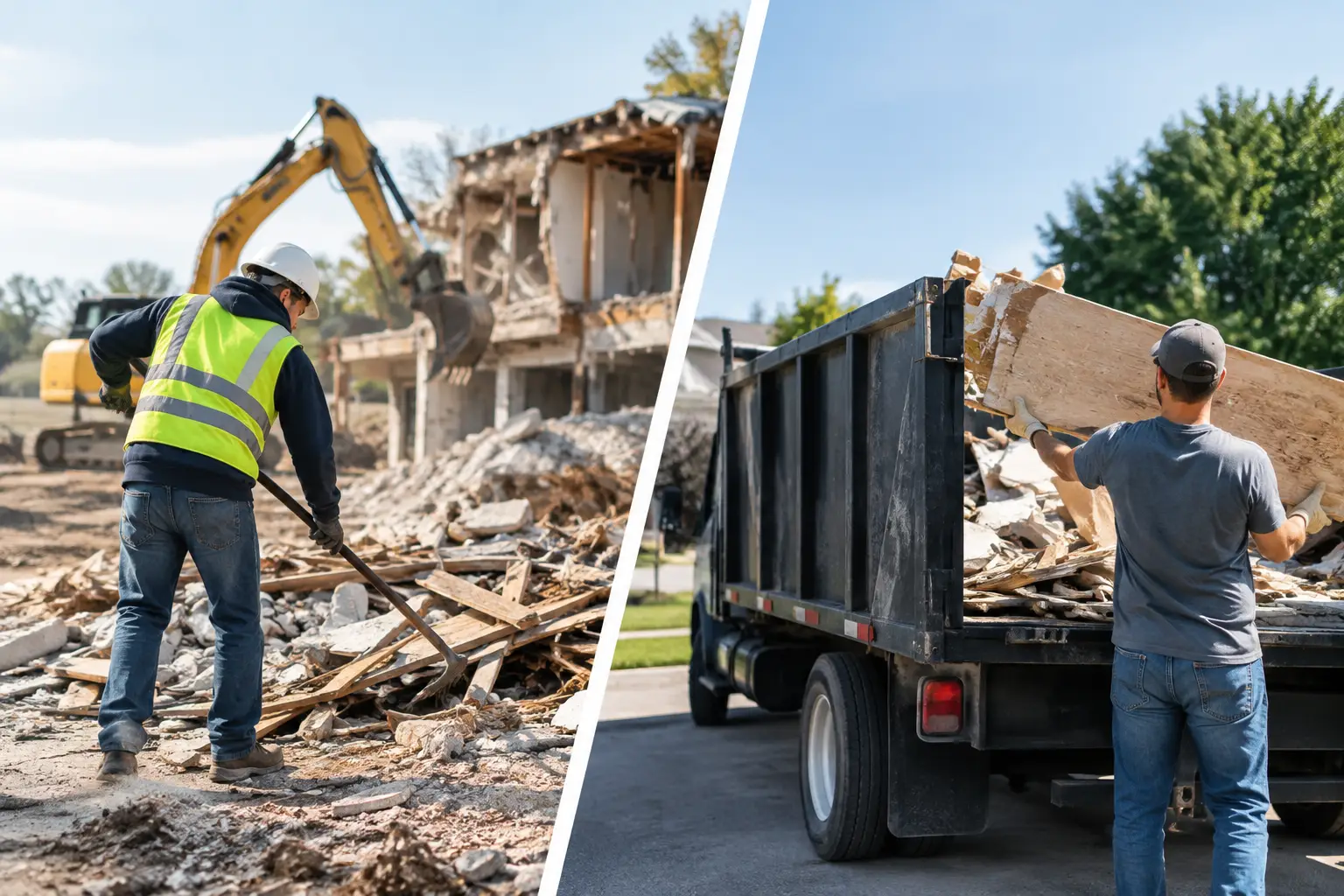
A bathroom tear-out can fill a pickup bed faster than most people expect. Old tile is heavy, drywall creates more volume than it seems, and broken cabinets do not stack neatly. When weighing demolition cleanup vs self hauling, the cheaper-looking option is not always the lower-cost choice once you factor in time, disposal rules, fuel, and the work of loading everything twice.
For a small pile of clean, lightweight debris, hauling it yourself may be a reasonable plan. For a renovation, rental turnover, commercial cleanup, or interior demolition job, professional cleanup often protects your schedule, your vehicle, and your back. The right choice comes down to what you are removing, where it needs to go, and how much of your day you can afford to spend on debris.
What Self Hauling Really Involves
Self hauling means you take responsibility for the debris from start to finish. You break it down, load it into a truck or trailer, secure it, drive it to an approved disposal facility, unload it, and clean out the vehicle afterward. If the debris does not fit in one load, you do it again.
That can work well when you already have the right vehicle, the material is accepted at a nearby facility, and the pile is small enough to handle safely. A few bags of yard waste, one appliance, or a small amount of cardboard may not justify scheduling a removal crew.
The problem is that demolition debris is rarely simple. Concrete, tile, wood, drywall, insulation, roofing material, cabinets, fixtures, and metal can have different disposal requirements. Some facilities charge by weight, some by load, and some will not accept certain materials mixed together. A load that looks manageable in a driveway can turn into multiple trips after it is broken down and loaded properly.
Self hauling also puts wear on your vehicle. Heavy debris can damage truck beds, trailers, suspension, tires, or interior cargo areas. Loose dust, sharp edges, and leaking bags create a cleanup job of their own. If you are using a rental truck, trailer, or borrowed vehicle, the savings can shrink quickly.
Demolition Cleanup vs Self Hauling: The Real Cost Difference
The upfront price is usually what gets attention. With self hauling, you may only see disposal fees and gas. With professional demolition cleanup, you receive a quote for a crew, hauling, and disposal. But a fair comparison needs to include the costs that are easy to miss.
Self hauling commonly involves these expenses:
- Disposal or transfer-station fees, often based on weight or material type
- Fuel, tolls, trailer rental, or truck rental charges
- Loading supplies such as gloves, tarps, tie-downs, bags, and protective gear
- Lost work time, delayed renovation work, or an extra weekend spent making runs
There is also the cost of mistakes. An overloaded truck, unsecured debris, or materials taken to the wrong location can lead to added fees, rejected loads, or unsafe driving conditions. A contractor or property manager may also lose valuable time waiting for a site to be cleared before the next crew can begin.
Professional cleanup is usually priced around the volume, weight, access, labor, and type of debris involved. That can make it the better value when the job includes bulky items, dense material, stairs, limited parking, or a deadline. Instead of estimating each trip and fee yourself, you know who is handling the removal and where the debris is going.
That said, hiring help is not automatically necessary for every project. If you have a pickup, a legal place to dispose of the material, and only one light load, self hauling can be efficient. The key is being honest about whether it is actually one load and whether you have the time to manage it.
Safety Is Not a Small Detail
Demolition waste is not regular household trash. Broken tile, nails, screws, glass, splintered lumber, and sharp metal are common. Drywall and insulation create dust, while old flooring and construction materials may need additional care depending on their age and condition.
Loading debris safely takes more than tossing it into a truck bed. Heavy items need to be distributed evenly. Sharp items need to be contained. Loads need to be covered and secured so nothing shifts or blows out on the road. One rushed trip can turn a cleanup project into vehicle damage or an injury.
A professional crew is especially useful when debris is inside the home, behind a business, in an upper-floor unit, or spread across a job site. The labor of carrying material out can be harder than the hauling itself. Having a team remove debris as part of the demolition process also keeps walkways clearer and gives other trades more room to work.
Time Matters More Than Most Projects Expect
A typical self-haul trip includes loading, driving, waiting at the facility, unloading, and returning home. Even when the disposal location is nearby, that process can take several hours. Add traffic, facility hours, a rejected material, or a second trip, and the day is gone.
This is where demolition cleanup has a clear advantage for busy homeowners and project teams. The debris leaves while you focus on the work that moves the project forward: selecting finishes, meeting a contractor, preparing a unit for a tenant, or reopening a workspace. A clean site also makes it easier to see what is left to do.
For Miami-area renovations, timing can be especially important when weather is unpredictable or construction access is limited. Leaving debris outside for days can block parking, take up valuable space, and create a messy impression for neighbors, customers, or potential renters. Fast removal helps keep the project looking controlled instead of stalled.
When Self Hauling Makes Sense
Self hauling is often a good fit when the debris is light, clean, and limited to one properly secured load. It can also make sense if you are already making a trip with a suitable trailer or truck and know the disposal facility accepts the material.
It is less appealing when the job includes large amounts of tile, concrete, drywall, lumber, cabinetry, roofing, or mixed debris. Those materials add weight and volume quickly. The same goes for projects involving multiple rooms, tight stairwells, or a property that needs to be ready quickly.
Before choosing the do-it-yourself route, ask yourself a practical question: If the debris takes two or three trips instead of one, is it still worth your time and vehicle cost? For many people, that is the point where professional hauling starts to make financial sense.
When Professional Demolition Cleanup Is the Better Move
Professional cleanup is built for the part of a project that nobody wants sitting around. It makes the most sense when you need debris removed promptly, do not have a hauling vehicle, or want one provider to handle the labor and disposal process.
It is also a strong option for landlords between tenants, contractors managing tight schedules, and homeowners who want their garage, driveway, or work area back quickly. A&D Junk Removal LLC can support demolition cleanup with hauling and site services, helping customers avoid the back-and-forth of trailers, dump runs, and disposal logistics.
A good removal crew should give you clear expectations about what they can take, how access affects the job, and when they can arrive. That matters more than chasing the lowest number. Reliable scheduling, careful loading, and responsible disposal are what keep a cleanup from becoming another task on your list.
If you are still deciding, walk out to the debris pile and picture loading it, tying it down, making the disposal run, unloading it, and repeating the process. If that sounds like a full day you do not have, getting cleanup help is not a shortcut. It is a practical way to keep the project moving and reclaim the space sooner.