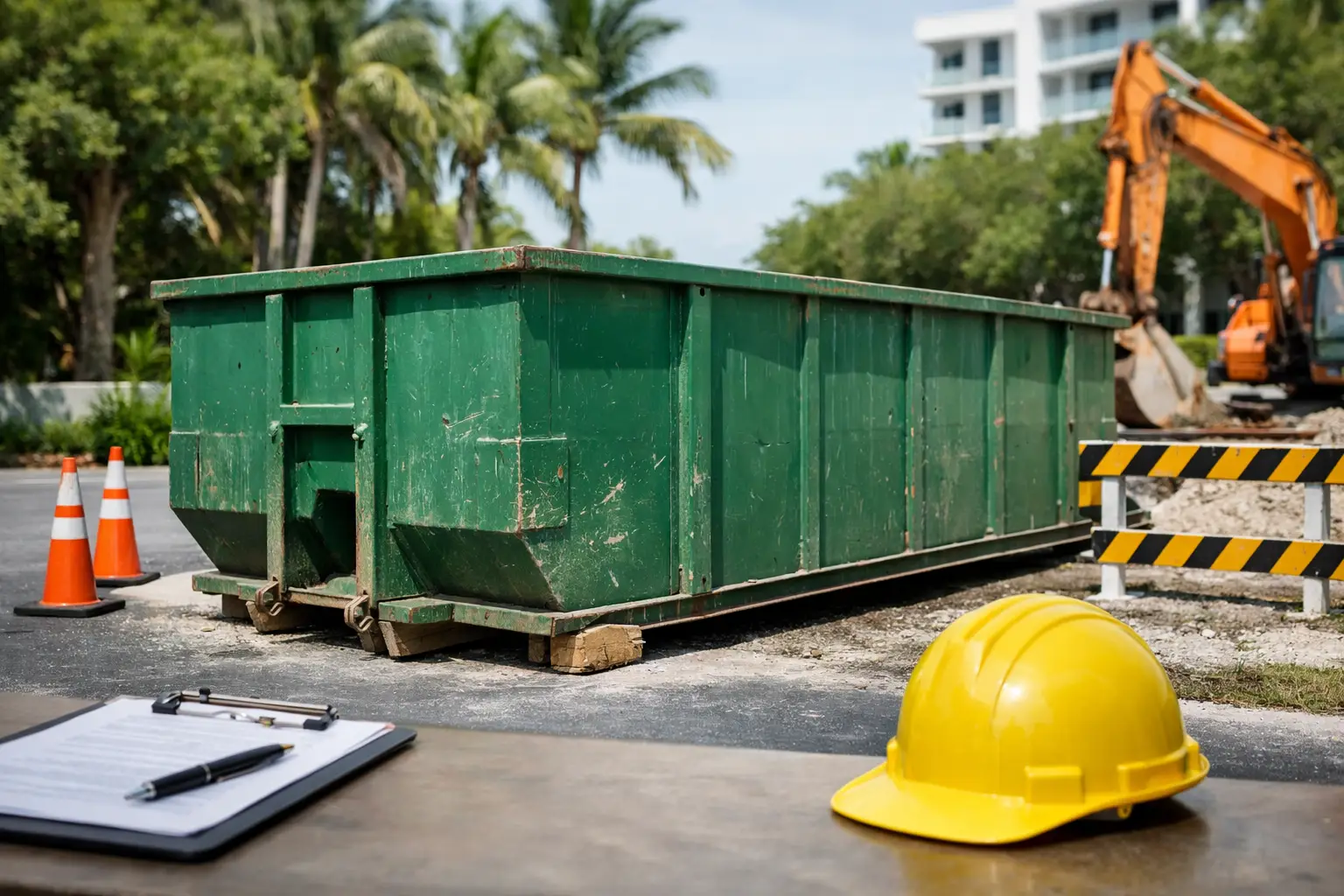
A dumpster can make a renovation, roof replacement, cleanout, or rental turnover much easier. But before a trailer or roll-off arrives, take a minute to sort out Broward dumpster permits. The key question is usually not what is inside the dumpster. It is where the dumpster will sit.
A container kept completely on private property may not require a county permit, but local city rules, homeowner associations, and site conditions can still apply. A dumpster placed in a public street, alley, sidewalk, swale, or other public right-of-way is much more likely to need approval before delivery. Getting that answer early prevents a frustrating call to move the container after your project is already underway.
Broward Dumpster Permits Usually Depend on Placement
Broward County includes many municipalities, and each city can administer permits and right-of-way rules differently. That means there is no single answer that fits every address in the county. A permit requirement in Fort Lauderdale may be handled differently than one in Hollywood, Pembroke Pines, Davie, or another nearby municipality.
For most customers, the first decision is simple: can the dumpster fit in the driveway, on a private parking area, or within a construction site without blocking access? Private placement is generally the easiest route because it keeps the container out of public space. Still, “private” does not always mean unrestricted. The container cannot create a safety issue, damage property, block a fire lane, or violate community rules.
Street placement is where permits commonly enter the picture. If a driveway is too narrow, occupied by vehicles, too steep, or unavailable during construction, a customer may need to place the dumpster along the curb. Because that space may be controlled by the city or county, permission may be required. In some areas, the permit is called a right-of-way permit, obstruction permit, or temporary use permit.
Do not assume a quiet residential street means permission is automatic. A container can affect parking, traffic visibility, drainage, pedestrian access, garbage collection, and emergency access. Local officials may require specific placement, safety cones, reflective markings, or a time limit.
Start With the Address, Not the Dumpster Size
Before reserving a dumpster, identify the exact delivery address and the planned placement area. This is especially helpful for property managers and contractors working across Broward County, where rules can change from one city line to the next.
Call the local municipal building, public works, engineering, or right-of-way department and explain that you need a temporary dumpster for a cleanup or project. Ask whether a permit is required for your planned location, how long it takes to process, whether a site plan or proof of insurance is needed, and how long the container can remain in place. If the property is in an unincorporated part of Broward County, county offices may be the right place to ask instead.
Be ready to describe the container’s dimensions and the exact location. A good description is more useful than saying, “It will be near the street.” Let the office know whether it will sit in a driveway, partially on a swale, at the curb, in a parking lot, or in a travel lane. If it will take up a parking space or affect a sidewalk, say so upfront.
It also helps to ask about required protection for the road or pavement. Some properties need boards placed under a dumpster or trailer to reduce the risk of surface damage. A delivery team can take care during placement, but choosing a stable, accessible spot remains the customer’s responsibility.
Driveways, Swales, and Sidewalks Are Not the Same Thing
Many permit misunderstandings come from treating every area in front of a home as part of the property. A driveway is usually the most straightforward option when it is fully within private property. A grass strip or swale between the sidewalk and road may be public right-of-way, even though the homeowner maintains it. A sidewalk is generally public access and should not be blocked.
If you are unsure where your property line ends, ask before scheduling delivery. The same caution applies to commercial plazas. A parking lot may look open, but it could include fire lanes, shared access routes, reserved spaces, or property-management restrictions.
HOA and Property Management Approval Can Still Matter
A city permit and HOA approval are two separate things. Even when local government does not require a permit for a dumpster in your driveway, a homeowners association, condo association, apartment community, or commercial property manager may have rules about containers, work hours, appearance, and how long debris can remain onsite.
Some communities require advance notice. Others allow a dumpster only for a short window or require it to be covered when not in use. Condo communities may also limit delivery access or require a certificate of insurance from vendors. Waiting until the morning of delivery to ask can put the project behind schedule.
For landlords and property managers, it is smart to confirm access before booking. Make sure gates are open, parked vehicles are moved, loading areas are clear, and the onsite contact knows when the dumpster is coming. Those few details can make the difference between a quick drop-off and a costly reschedule.
Plan for Safety, Access, and Pickup
A permit is only one part of a smooth dumpster rental. The placement area needs enough room for the delivery vehicle to safely enter, unload, and leave. Low tree branches, utility lines, narrow gates, soft ground, and tightly parked cars can all complicate delivery.
Keep the dumpster away from mailboxes, hydrants, utility equipment, and storm drains. Do not place it where it blocks a neighbor’s driveway or prevents normal trash pickup. If the container must sit near the street, leave room for cars to pass and make sure it does not interfere with sight lines at an intersection.
Once the dumpster is in place, load it evenly and keep debris below the top edge. Overfilled containers can be unsafe to transport and may need to be unloaded before pickup. Heavy materials such as concrete, dirt, tile, and roofing debris may also have separate weight or loading limits. Ask about the material before you start filling the container, especially on demolition or renovation jobs.
Hazardous waste does not belong in a standard dumpster. Paint, chemicals, fuel, propane tanks, batteries, certain electronics, and other regulated items may require separate disposal. Keeping prohibited materials out protects workers, avoids disposal issues, and helps prevent unexpected charges.
Common Situations and What to Expect
A homeowner clearing a garage may be able to place a small dumpster in the driveway with no city permit, provided the neighborhood allows it. A contractor remodeling a property with no usable driveway may need right-of-way approval for curb placement. A retail business doing a backroom cleanout may need permission from the plaza manager even when the dumpster stays in the parking lot.
Roofing projects can be more complicated because shingles are heavy and crews need quick access. If a roofing dumpster is placed in the street, confirm permit timing before materials begin coming off the roof. For a move-out or estate cleanout, junk removal may be a better fit than a dumpster if you do not have space for a container or do not want debris sitting onsite for several days.
That is where a local team can help you choose the practical option. A&D Junk Removal can provide dumpster rental or hands-on junk removal depending on the amount of debris, site access, and timeline. The best choice is the one that keeps the property clear without adding permit headaches or extra work.
A Simple Way to Avoid Delays
Give yourself a little lead time. Check the planned placement with the city or county office, get HOA or property-manager approval when applicable, and schedule the dumpster only after you know the site is ready. If a permit is required, keep a copy available and follow any conditions listed on it.
For projects with a tight deadline, private driveway placement is often the cleanest option when it is safe and allowed. If that is not possible, do not gamble on curb placement. A quick confirmation before delivery is far easier than dealing with a complaint, a fine, or an unexpected removal order halfway through a cleanup.
A clear space makes hard work feel manageable. Set up the container correctly, keep the site safe, and you can focus on finishing the job instead of chasing down approvals.