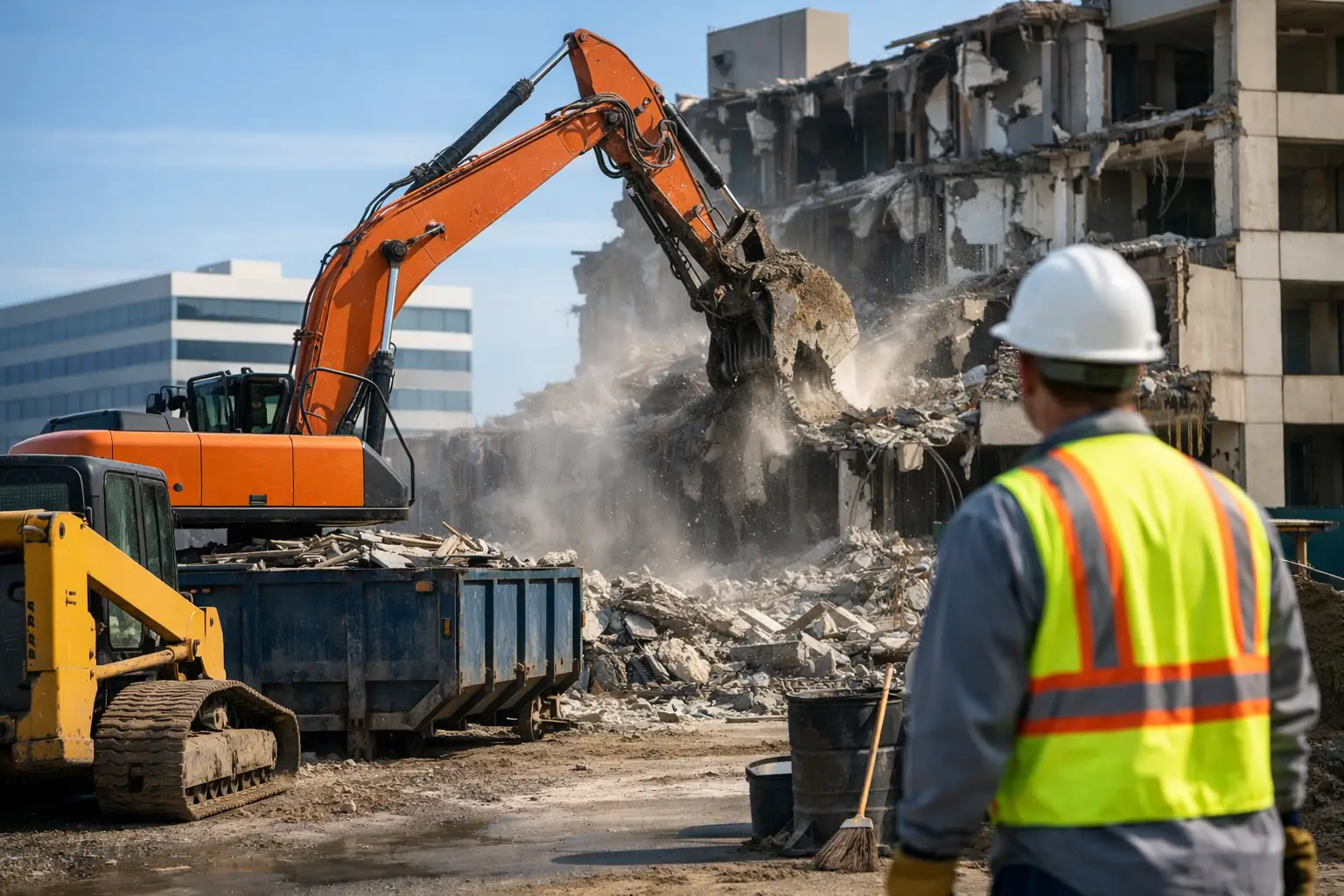
A commercial demolition project can make a property better, safer, and ready for what comes next. It can also create a fast-moving pile of concrete, drywall, metal, wood, fixtures, and dust that slows down the whole job if no one has a plan. This commercial demolition guide covers the practical steps that help business owners, property managers, and contractors keep the work organized from the first walkthrough to the final debris pickup.
The biggest mistake is treating demolition as simply “tearing things out.” Good demolition is controlled work. It protects the parts of the building that are staying, keeps people safe, and makes cleanup manageable instead of expensive.
Start With the Scope of the Commercial Demolition Project
Before a crew brings in tools or equipment, get clear on exactly what needs to come out and what must remain. A small interior demolition may involve removing old flooring, cabinets, ceiling tile, non-load-bearing walls, bathrooms, or storefront fixtures. A larger project may include concrete removal, exterior structures, parking lot sections, or a complete building teardown.
Walk the site and identify areas that need protection. That may include electrical panels, plumbing lines, sprinkler systems, elevators, neighboring tenant spaces, windows, finished floors, and structural walls. If a building is occupied or has businesses operating nearby, plan how noise, dust, access, and work hours will be handled.
The scope should also answer a basic question: Is this selective demolition or full demolition? Selective demolition requires more care because you are removing specific materials without damaging the structure or finishes that stay in place. Full demolition may move faster, but it usually creates more material to sort, load, haul, and dispose of.
Check Permits, Utilities, and Site Requirements First
Commercial work often has more rules than a basic residential cleanup. Depending on the project, local permits may be required before walls, plumbing, electrical systems, concrete, or structural elements are removed. Your contractor or project manager should verify the requirements before work begins, especially for properties in Dade and Broward counties where municipal requirements can vary.
Utilities must be addressed before demolition starts. Power, gas, water, communications lines, and fire protection systems can all create serious safety issues when they are active, damaged, or incorrectly assumed to be disconnected. Never rely on a quick visual check. Confirm shutoffs and coordinate with the proper utility providers or licensed professionals.
Older buildings deserve extra attention. Materials such as asbestos-containing flooring, ceiling material, insulation, pipe wrap, or lead-based paint may require testing and specialized removal. If hazardous material is suspected, stop and get it evaluated. Trying to save money by skipping this step can create a health risk, a project delay, and disposal problems later.
Build a Safety Plan That Matches the Job
A commercial demolition site changes by the hour. As materials come down, new trip hazards, sharp edges, exposed openings, and unstable debris can appear. A clear safety plan keeps workers, tenants, customers, and delivery drivers out of harm’s way.
Start by controlling access. Use barriers, signage, and designated entry points so the public does not wander into the work zone. Keep emergency exits clear, and establish a safe path for debris trailers, dumpsters, skid steers, and hauling trucks. On a busy commercial property, this traffic plan matters just as much as the demolition itself.
Dust control is another major concern. Plastic containment, temporary partitions, wet methods where appropriate, and regular cleanup can help keep dust from spreading through the building. This is especially important during interior renovation work in offices, retail spaces, medical facilities, and multi-tenant properties.
Personal protective equipment should fit the work being performed. Hard hats, gloves, eye protection, work boots, hearing protection, and respiratory protection may all be needed. The right protection depends on the materials, tools, and conditions on site. Safety is not a place to guess or cut corners.
Plan Debris Removal Before the First Wall Comes Down
Debris removal is not an afterthought. It is part of the demolition plan. When material has nowhere to go, crews lose time walking it across the site, debris piles block access, and the property looks out of control. That can affect inspections, tenant relations, and the next phase of construction.
Estimate the debris by material type and volume. Clean wood, metal, concrete, drywall, cardboard, fixtures, and mixed construction debris may need different handling. Separating materials can make the site cleaner and may help reduce disposal costs, but it only works if there is enough space and labor to keep the streams separate.
A dumpster can be a good fit for steady debris generation when there is a safe, accessible place to set it. Trailer-based hauling may be more practical for tight sites, short demolition phases, or projects where debris needs to be removed quickly instead of sitting on the property. The right choice depends on access, the type of material, pickup timing, and how much room the jobsite has.
For heavier material such as concrete, block, dirt, or roofing debris, do not overload a container. Weight limits matter. A smaller load hauled safely is better than a container that cannot be moved or creates added fees and delays.
Coordinate Equipment With Access and Timing
Commercial demolition can involve everything from hand tools and carts to saws, skid steers, breakers, and Bobcat services. Bigger equipment can save significant labor, but it needs room to operate safely. Check gate widths, overhead clearance, parking restrictions, surface conditions, and the route from the work area to the loading point.
A skid steer can make quick work of loading heavy debris, moving material, clearing a pad, or preparing a site for the next trade. But it may not be the best choice inside a finished building, in a narrow courtyard, or on a site where noise and vibration must be limited. In those cases, smaller equipment and manual removal may be slower but more controlled.
Timing also matters. Plan debris pickups around demolition milestones rather than waiting until every available space is full. Regular hauling keeps pathways open and helps the job keep moving. For commercial properties with active tenants, early morning, evening, or off-hours service may be worth considering to reduce disruption.
Protect the Parts of the Property That Stay
Even a well-planned demo job can become costly if nearby surfaces are damaged. Protect doors, windows, floors, loading areas, landscaping, and common areas before work starts. If a portion of the property remains open, use containment and clear communication to separate construction activity from daily operations.
Take photos before demolition begins. They create a record of existing conditions and help avoid confusion later. This is useful for property managers, contractors, and owners, particularly when several vendors are working on the same site.
Keep the site clean as work progresses. Removing loose debris, nails, broken glass, and packaging every day is safer than waiting for one large final cleanup. It also gives you a clearer view of the work, which makes it easier to spot damage, incomplete removal, or materials that need special disposal.
Choose a Partner Who Can Handle the Mess
Commercial demolition moves faster when demolition, hauling, site cleanup, and material support are coordinated instead of handled by several disconnected providers. Ask whether your service provider can remove debris promptly, deliver a trailer where it is needed, load heavy material, and adjust service when the job changes.
Clear communication is just as valuable as equipment. You should know what materials can be hauled, where containers or trailers will sit, when pickups are scheduled, and what happens if the project creates more debris than expected. Reliable scheduling helps protect your budget and keeps your crew focused on the work that requires their skill.
A&D Junk Removal LLC helps commercial customers simplify the dirty, labor-heavy side of renovation and site preparation with dependable hauling, dumpster rentals, demolition support, material delivery, and Bobcat services. The goal is straightforward: keep your property clear so the next phase can begin.
Commercial demolition does not need to leave your jobsite buried in debris. With a defined scope, proper safety steps, and a hauling plan in place before work begins, the cleanup becomes one less problem on an already demanding project.