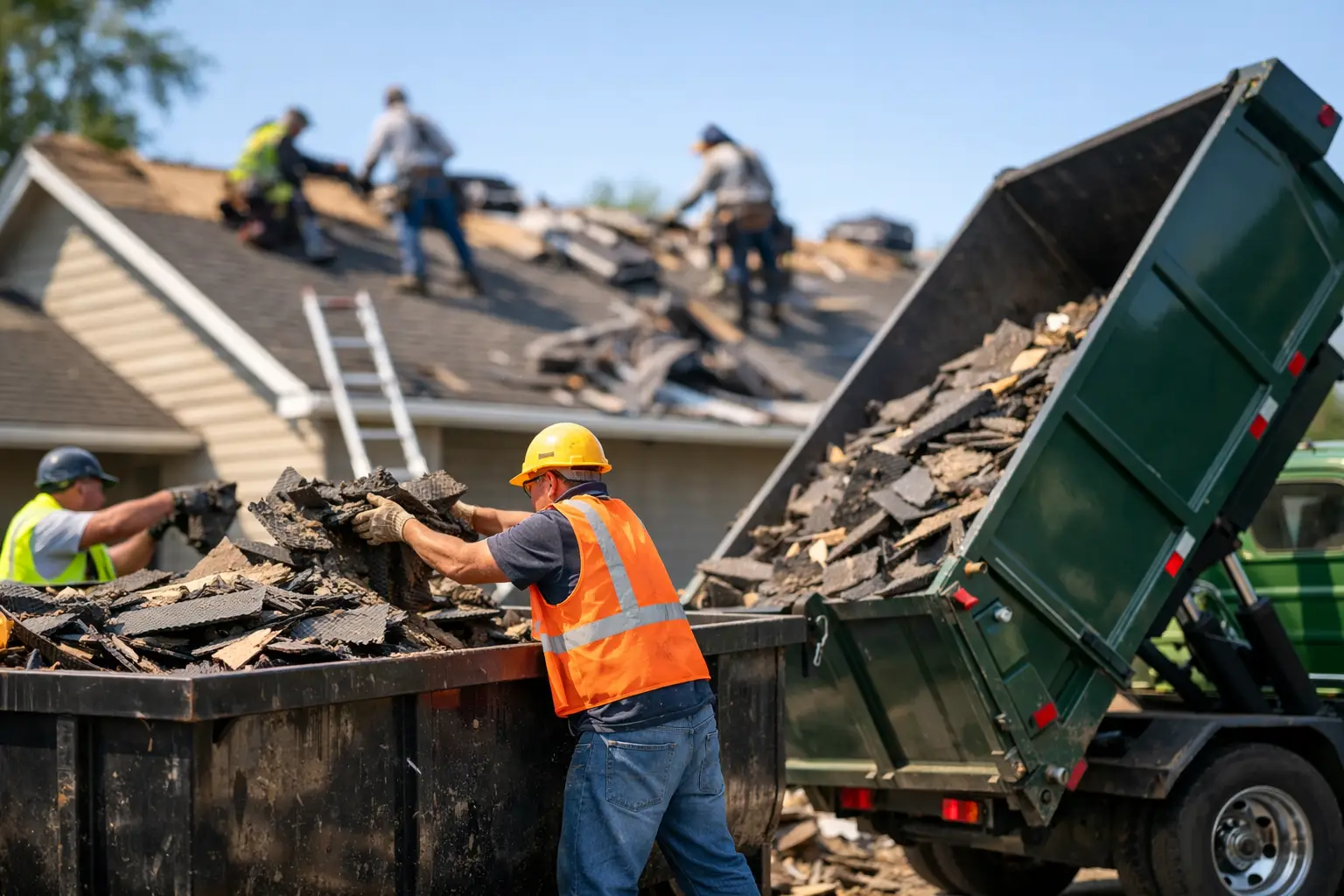
A roofing crew can finish a tear-off fast, but the job can still fall behind if old shingles, underlayment, nails, and damaged decking start taking over the property. Reliable debris hauling for roofers keeps the work area clear, protects the homeowner’s driveway and landscaping, and gives your crew room to stay productive.
For roofing contractors, cleanup is not an afterthought. It affects safety, scheduling, customer satisfaction, and the final impression you leave behind. A pile of roofing debris sitting for days can turn a successful install into a frustrating customer experience. The right hauling plan helps prevent that.
Why Roofing Debris Needs a Real Plan
Roofing waste builds up quickly. A standard roof tear-off can produce thousands of pounds of shingles, felt, flashing, wood, nails, and packaging. Even a small residential job can overwhelm a pickup truck or create too much loose material to manage safely by hand.
The biggest issue is timing. Roofers often have a narrow weather window, a crew on site, materials arriving, and another project scheduled next. If debris removal is slow or unplanned, it can create a bottleneck at the exact time the job needs to keep moving.
A clean site also matters to the homeowner. They want their new roof, but they also want their driveway usable, their yard protected, and their property free of sharp debris when the crew leaves. Fast hauling is part of professional jobsite management.
Dumpster Rental or Hauling Service?
The best option depends on the size of the roof, the space available, and how your crew works. Some roofing jobs need a dumpster on site from the first day. Others are better handled with scheduled hauling after the tear-off or at the end of the project.
When a Dumpster Makes Sense
A dumpster rental is often a good fit for larger tear-offs, multi-day projects, or jobs with a steady flow of debris. It gives the crew one central place to load waste throughout the day instead of creating piles around the property.
Placement is the key detail. The container needs to be close enough for efficient loading without blocking access, damaging the driveway, or interfering with material delivery. Before it arrives, check overhead lines, gate clearance, parking restrictions, and the homeowner’s preferred location.
A dumpster can be especially useful when the project includes more than shingles. If you are replacing damaged fascia, decking, gutters, or rotten wood, the volume can climb quickly. Having enough capacity from the start helps avoid a mid-job scramble.
When Scheduled Hauling Is Better
Not every property has room for a dumpster. Tight driveways, busy streets, homeowner association rules, and limited access can make a traditional container difficult. In those situations, a hauling crew can remove roofing debris once it is safely gathered and ready to go.
This approach also works well for smaller repairs, partial reroofs, and quick jobs where a full-size container would be more capacity than you need. The main requirement is clear communication. Set the pickup time around your work schedule so debris does not sit longer than necessary.
For contractors in Dade and Broward counties, fast scheduling can make a real difference during storm season and high-volume roofing periods. A responsive local hauling partner helps you turn over jobsites without tying up your own trucks and labor.
Keep the Crew Focused on Roofing
Your installers are most valuable on the roof, not making repeated dump runs. Sending a crew member to load loose debris, drive across town, wait at a disposal facility, and return can cost hours. It also pulls attention away from the active jobsite.
A dedicated debris plan lets your team focus on tear-off, installation, flashing, cleanup, and final inspection. That means fewer interruptions and a more predictable production schedule. It can also reduce the temptation to overload trucks or trailers, which creates safety risks and may lead to damage or disposal issues.
The real value is not only the disposal itself. It is the labor and time you keep available for the work that earns your business money.
Protect the Property Before Debris Starts Falling
Hauling is easier when the site is prepared correctly. Before the tear-off begins, identify where debris will be collected, where the trailer or container will sit, and which areas need protection. A few minutes of planning can prevent a difficult cleanup later.
Use tarps or ground protection where appropriate, especially near landscaping, pavers, pool decks, and decorative concrete. Keep a clear path from the roofline to the loading area. If the driveway is being used, discuss it with the homeowner before the job starts and take note of existing cracks or damage.
Nails deserve extra attention. Roofing debris is not just bulky. It can create puncture hazards for tires, people, and pets. A thorough magnetic sweep should happen throughout the job, not only after the final load is gone. Check driveways, sidewalks, grass, garden beds, and the street in front of the property.
Know What You Are Loading
Most roofing debris is straightforward, but disposal requirements can vary by material and local facility rules. Asphalt shingles, wood, metal flashing, old gutters, packaging, and general construction debris may be accepted together in many situations. Still, it is smart to confirm what is allowed before loading begins.
Materials that may need separate handling include paint, chemicals, fuels, batteries, propane tanks, certain electronics, and hazardous materials. If a customer has mixed old items into the debris pile, do not assume everything can go in the same load.
Separation can be worthwhile when there is a meaningful amount of recyclable metal, clean wood, or cardboard. On a fast-paced roofing job, though, sorting only makes sense if it does not slow the crew down or create more handling than it saves. The practical answer depends on the job volume and your disposal options.
A Better Workflow for Roofing Cleanup
The smoothest roofing projects treat debris removal as part of the schedule, not the final task. Decide before the crew arrives whether you need a delivered trailer, dumpster, same-day haul-away, or a pickup scheduled for the following morning.
Keep the loading area organized throughout the tear-off. Do not let loose materials spread across the yard or driveway. Flatten boxes, stack light materials safely, and keep sharp metal and exposed nails contained. If a load is reaching capacity sooner than expected, address it early rather than waiting until the site is full.
It also helps to give the hauling provider clear job details: roof size, tear-off layers, material types, access limitations, estimated load volume, and the preferred removal window. Accurate information leads to the right equipment and fewer surprises on pickup day.
What Homeowners Notice Most
Homeowners may not know how many bundles were installed or how much flashing was replaced, but they notice a clean property. They notice whether their driveway is blocked, whether nails are left behind, and whether debris disappears promptly once the work is complete.
That final cleanup is part of your reputation. It can influence reviews, referrals, and whether a homeowner feels comfortable recommending your company to a neighbor. A professional roofing job should look finished from the curb, not like the crew simply drove away after installation.
A&D Junk Removal LLC helps contractors and property owners handle trailers, debris hauling, demolition waste, and jobsite support without making cleanup another problem to solve. The goal is simple: get the debris out, keep the site orderly, and help the next phase of work move forward.
Build Hauling Into Every Estimate
Do not leave debris removal as a vague line item or a last-minute decision. Include it in your job planning and price it accurately. Consider the number of roofing layers, the square footage, access to the property, distance from the roof to the loading area, and any extra material replacement that may be needed.
There are trade-offs. A larger container may cost more upfront but prevent an extra haul. A smaller trailer may be easier to place but require more frequent removal. Same-day service can be worth the added cost when it keeps a crew on schedule or allows a homeowner to use their driveway again sooner.
A clear debris plan keeps roofing jobs safer, cleaner, and easier to manage. When the last bundle is installed, the property should be ready to enjoy, not waiting on a pile of old roof material to disappear.