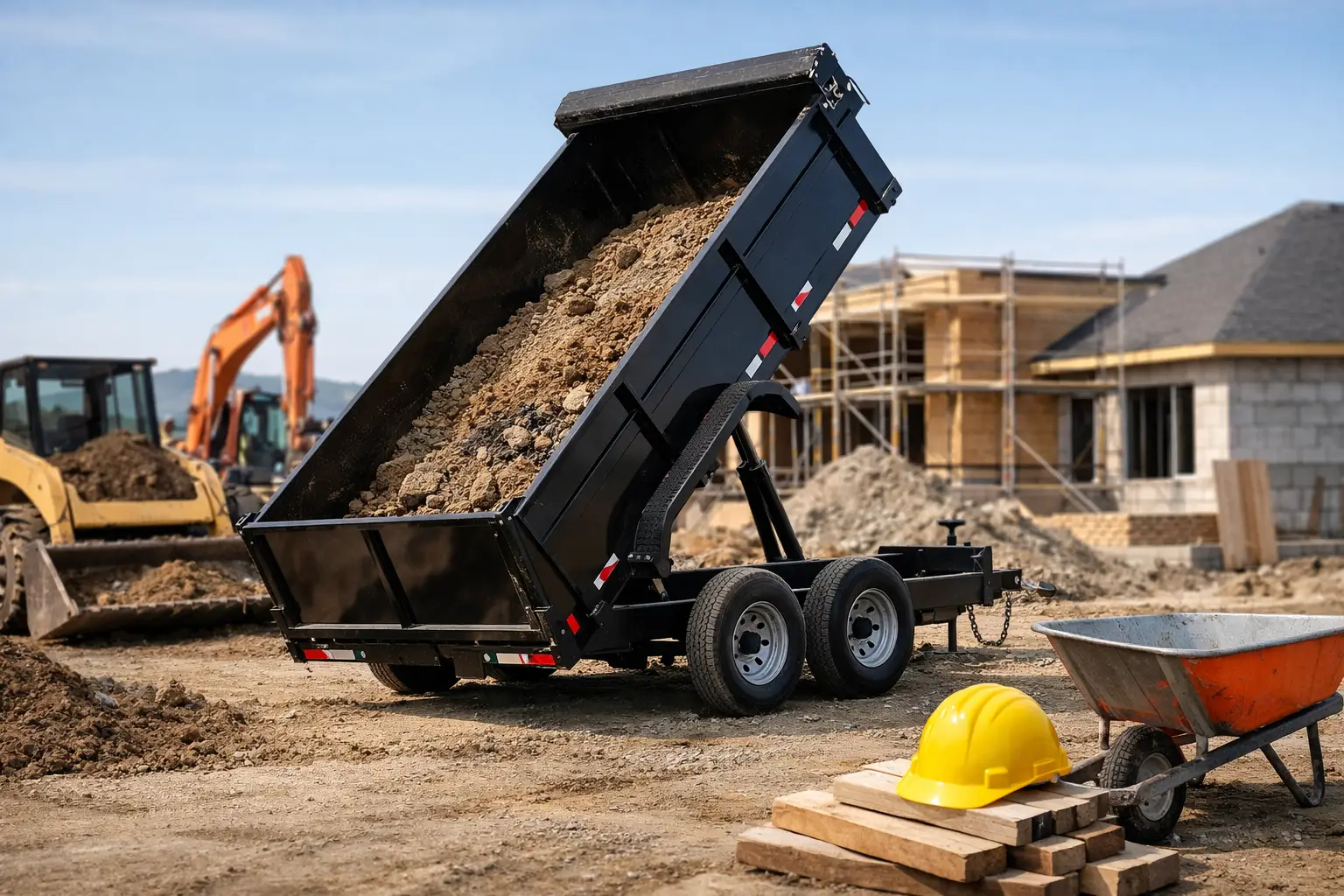
A renovation can go from productive to backed up fast when piles of drywall, lumber, tile, and packaging take over the job site. This contractor dump trailer rental guide helps you plan debris removal before waste starts slowing down your crew, blocking access, or creating unnecessary trips to the landfill.
For contractors, remodelers, property managers, and hands-on homeowners, a dump trailer can be a practical middle ground. You get on-site capacity for debris without committing to buying a trailer, maintaining it, towing it, or handling disposal yourself. The right rental keeps the site cleaner and the work moving.
When a Dump Trailer Makes Sense
Dump trailer rentals work best when debris is being created steadily over a short project. Think bathroom and kitchen remodels, flooring removal, roofing tear-offs, interior demolition, yard cleanups, rental turnovers, and small construction jobs. Instead of stacking materials in a corner and dealing with them at the end, your crew has a clear place to load waste as work happens.
A trailer is especially useful when access is tight. Many properties in Miami-Dade and Broward County have narrow driveways, active parking areas, gates, or limited room for a large container. A properly placed dump trailer may fit the site better and can often be removed promptly once the work is finished.
That said, it is not the right answer for every project. A major demolition job with a large volume of heavy concrete, block, or dirt may require multiple hauls, specialized equipment, or a larger disposal plan. The best rental is the one that fits both the type of material and the pace of the job.
Contractor Dump Trailer Rental Guide: Start With Debris
Do not choose a trailer based only on how big the job looks. Start by identifying what will be loaded into it. Volume matters, but weight is often what changes the plan and the final cost.
Light but bulky debris includes cardboard, cabinets, wood framing, carpet, furniture, insulation, and general construction packaging. These materials can fill a trailer quickly without reaching a weight limit. Dense material such as shingles, tile, concrete, dirt, brick, and wet landscape debris is different. A trailer may look only half full and still be too heavy to haul safely or accept at a disposal facility.
Mixed debris is common on remodeling projects, but it should be discussed upfront. If your load includes a large amount of clean concrete, soil, roofing, or other heavy material, ask whether it needs to be loaded separately or limited to a certain amount. Keeping heavy materials out of a mixed load can prevent overage charges and last-minute unloading problems.
Hazardous and restricted materials need their own disposal route. Items such as paint, chemicals, fuel, propane tanks, batteries, asbestos-containing materials, and certain electronics are not standard construction debris. Never assume these can go in a rental trailer. Ask before loading anything questionable.
Choose a Size That Gives Your Crew Room to Work
A trailer that is too small creates extra hauls and interruptions. One that is too large can take up valuable space, create placement issues, or leave you paying for capacity you do not need. The right size depends on the material, the duration of the project, and how often the trailer can be hauled and returned.
For a one-room renovation, a smaller trailer may be enough if debris is loaded neatly and removed on schedule. For a whole-home flooring project, kitchen demolition, or property cleanout, more capacity can keep the job site from becoming a staging area for waste.
Ask the rental provider for the trailer’s usable volume, weight allowance, and interior dimensions. Dimensions matter when you are removing long materials such as lumber, fencing, cabinets, or drywall. Also ask whether the sides are high enough for your expected load and whether the trailer can be swapped or hauled away if the project runs longer than planned.
It is usually smarter to build in a little room rather than plan for a trailer to be filled to the top on day one. Debris expands, packaging piles up, and crews do not always have time to break down every box or cut every piece of lumber to the smallest possible size.
Plan Placement Before Delivery Day
A convenient trailer is one your crew can reach without carrying debris across the property. But convenience also has to be balanced with access, safety, and surface protection.
Walk the site before scheduling delivery. Measure the driveway or available parking area, check for low tree branches and power lines, and consider where trucks, customer vehicles, and subcontractors will park. Make sure gates are wide enough and that the delivery route is clear. If the trailer will sit on a finished driveway, pavers, or softer ground, ask about protective measures before it arrives.
Placement can also affect loading speed. A trailer close to the work area saves labor, but it should not block garage access, emergency paths, sidewalks, or neighboring driveways. On commercial sites, coordinate with the property manager so delivery and pickup do not interfere with customers or other tenants.
For projects with permits, homeowner associations, or city restrictions, confirm the rules before the trailer is delivered. A quick check can prevent a call to move it after the job is already underway.
Load It Safely and Keep the Job Site Clean
Loading is where a well-planned rental can either save time or create a problem. Start with flat, heavy materials on the bottom and distribute weight as evenly as possible. Avoid placing dense material all on one side or piling it toward the back. Uneven loads are harder and less safe to transport.
Break down boxes, stack lumber, and place manageable pieces inside the trailer instead of throwing debris over the sides. Do not load above the top rails. Materials that stick out or rise above the trailer can shift during transport, and overloaded trailers may not be legally or safely hauled away.
Keep a separate area for items that need special handling. That includes appliances, tires, paint, batteries, and anything your crew is unsure about. Sorting as you work is easier than digging through a full trailer on pickup day.
A clean loading area also protects your crew. Sweep nails, sharp tile pieces, screws, and broken glass regularly. Waste management is not just about getting rid of debris. It is part of keeping the work zone safe, organized, and professional for clients.
Understand the Price Before You Book
A low rental price does not always tell you what the final bill will be. Get clear answers about the rental period, included hauling, disposal fees, weight limits, overage rates, extension pricing, and charges for prohibited items. If delivery access is difficult or the trailer needs to be moved during the project, ask how that is handled.
It also helps to explain your project honestly. Tell the provider whether you expect drywall, tile, roofing, concrete, household junk, green waste, or a mixed load. Accurate information lets them recommend the right trailer and helps you avoid paying for a service that does not match the debris.
For contractors, reliable scheduling often matters as much as price. A trailer that arrives late can hold up demolition. A trailer that stays too long can block the next phase of the job. Work with a provider that can communicate clearly about delivery windows, pickup timing, and changes to the schedule.
Use Trailer Rental as Part of a Bigger Job-Site Plan
A dump trailer handles debris, but some projects need more than one service. You may need demolition help before loading begins, Bobcat service for heavy material, material delivery for the rebuild, or a final junk removal visit after the main work is complete.
Using one dependable local team for connected services can reduce phone calls and scheduling gaps. A&D Junk Removal LLC supports contractors and property owners with trailer rentals, debris hauling, demolition, and site support, making it easier to keep cleanup from becoming its own separate project.
Before you schedule, take ten minutes to estimate your debris, identify heavy materials, check the delivery path, and decide where your crew will load from. That small amount of planning can keep the trailer useful from the first demolition day to the final sweep-up, leaving your job site ready for the next crew instead of buried under the last phase of work.