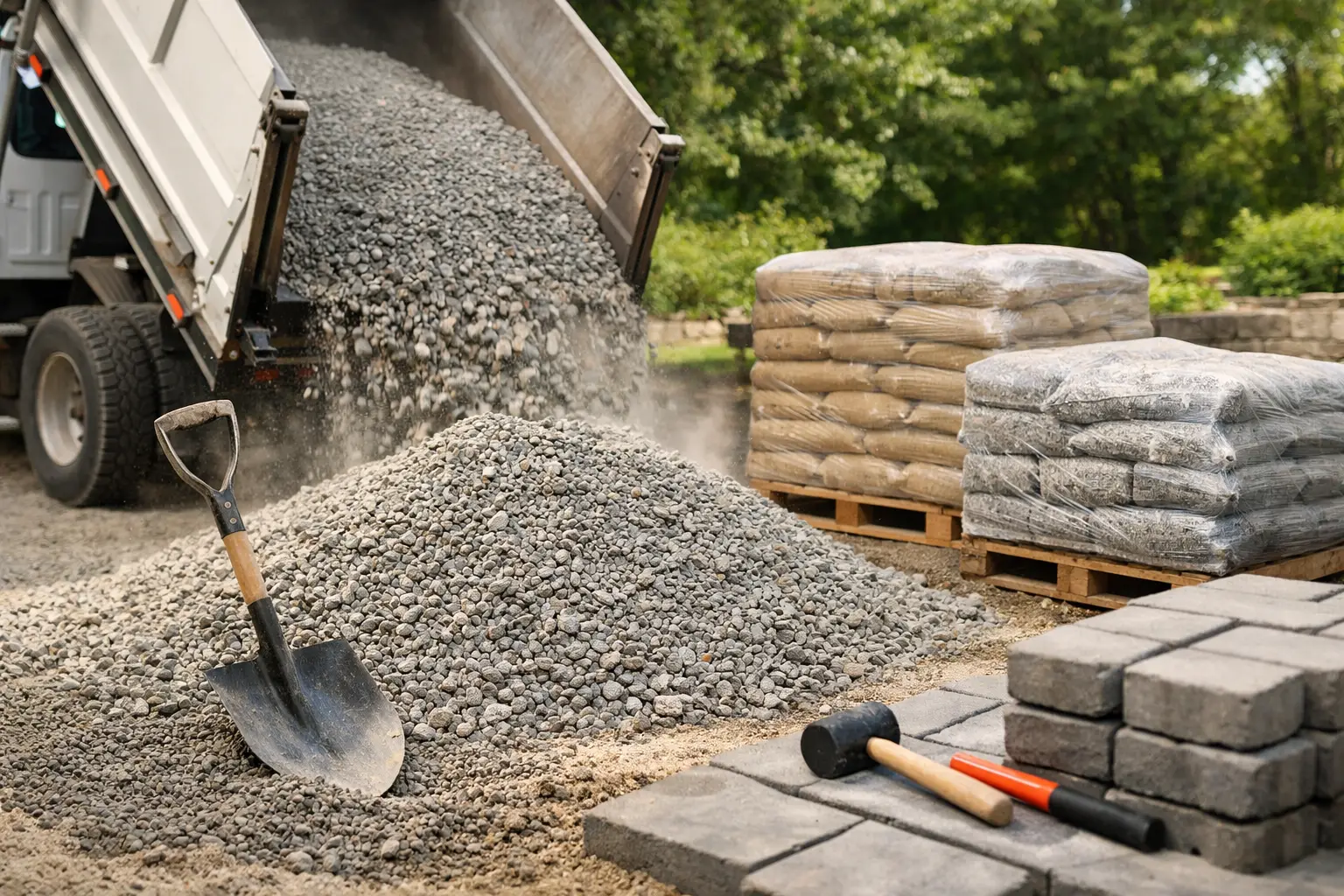
A patio, walkway, or driveway can look simple on paper. The work gets harder when you realize how much crushed stone, sand, and base material must get from the supply yard to your property. Paver base material delivery takes that heavy hauling off your plate so you can keep the project moving instead of making multiple truck-bed trips.
For homeowners and contractors, delivery is not just about convenience. It helps protect the schedule, avoids overloaded personal vehicles, and puts the material where the crew needs it before installation begins. Whether you are refreshing a small backyard patio or preparing a larger hardscape area, getting the base right starts with getting the material there.
Why the Base Matters Before Any Pavers Go Down
Pavers are only as dependable as the surface underneath them. A proper base supports the finished surface, helps distribute weight, improves drainage, and reduces the chance of shifting, low spots, or uneven pavers later. Skipping steps below the paver may save time for a day, but it can create an expensive repair job after rain, traffic, and normal settling take over.
South Florida projects also need to account for heavy rain and sandy soil conditions. The right base depth, compaction, edge restraints, and drainage plan depend on the use of the space. A pedestrian walkway has different demands than a driveway where vehicles will pass over the same area every day.
Base material is usually placed over a properly excavated and graded area. Many installations also use geotextile fabric between the soil and the aggregate base to help separate the layers. A bedding layer of concrete sand is typically added above the compacted base before pavers are set. The exact build-up should follow the paver manufacturer’s specifications, local requirements, and the recommendations of an experienced installer.
What Paver Base Material Delivery Can Bring
The word “base” can mean different materials depending on the job. Before booking paver base material delivery, confirm exactly what your installer needs and how the supplier measures it. Material may be ordered by the cubic yard, ton, bag, or pallet, and those measurements are not interchangeable.
For many paver jobs, crushed limestone, road base, or another compactable aggregate is used for the structural layer. The material needs angular particles and fines that lock together when compacted. Round gravel may look clean, but it generally does not compact into the same stable surface for a paver base.
Concrete sand is commonly used as the thin leveling layer directly under the pavers. Polymeric sand is a separate product used to fill the joints after installation. These materials have different jobs, so ordering “sand” without being specific can lead to a frustrating delay once the work is underway.
Your project may also require pavers, edging, drainage rock, geotextile fabric, or fill material. Combining material needs into one planned delivery can simplify logistics, but it depends on available truck space, material types, and where each item must be unloaded. Ask about delivery options before assuming everything can arrive together.
How Much Base Material Should You Order?
The most common delivery mistake is ordering based only on the finished paver area. You need to calculate the excavated area and planned compacted depth, then allow for compaction and a reasonable margin for grading adjustments.
Start by measuring the length and width of the area in feet. Multiply them to find square footage. Then multiply the square footage by the planned base depth in feet to find cubic feet. Divide that number by 27 to estimate cubic yards.
For example, a 20-foot by 15-foot patio is 300 square feet. A 4-inch base is about 0.33 feet deep. That works out to roughly 3.7 cubic yards before accounting for compaction, material type, and site conditions. An installer or material provider can help convert the order into the correct quantity and weight.
Do not guess on driveway depth. A driveway, parking area, or commercial access path may need a thicker base and more careful preparation than a patio. Existing soil, drainage, expected loads, and local requirements all affect the final plan. Ordering too little can stop the job halfway through. Ordering far too much can leave you with a pile that must be moved or hauled away later.
Plan the Drop-Off Before the Truck Arrives
Delivery day goes smoothly when the unloading area is ready. Aggregate is heavy, and the delivery driver needs a safe, accessible place to dump or stage material. A spot that seems close enough can still create extra labor if it blocks the driveway, sits on soft ground, or is too far from the work area.
Before scheduling, check the width of gates and driveways, overhead clearance from trees or utility lines, parked vehicles, low-hanging rooflines, and the turning space available for a truck and trailer. Let the delivery team know about tight access, steep slopes, homeowner association restrictions, or a narrow street. Clear communication helps avoid surprises at the curb.
Think carefully about where loose aggregate will be dumped. A pile on grass can damage the lawn, especially after rain. A pile placed in the middle of the only driveway may trap vehicles until it is moved. If the material will be delivered on pavement, use a protected location if possible and make sure it will not block traffic, drainage paths, or garage access.
For larger jobs, delivery timing matters just as much as placement. Schedule material after excavation is close to complete, but before the crew is standing by waiting for it. If rain is expected, protect the prepared excavation and avoid allowing runoff to wash soil into the work area.
Paver Base Material Delivery vs. Hauling It Yourself
Picking up material yourself can work for a very small repair, especially when you only need a few bags. Once a project requires bulk aggregate, the math changes quickly. A cubic yard of compactable base can weigh well over a ton depending on moisture and material type. That is more weight than many personal trucks and trailers can safely carry.
Multiple supply-yard trips also use time you could spend preparing the site, compacting layers, or setting pavers. You may need to load, secure, unload, sweep out the vehicle, and repeat the process several times. Delivery puts the bulk load where it belongs without asking you to turn your vehicle into a work truck.
There are trade-offs. Delivery has a scheduling window and may include a delivery charge, while bagged material gives you more flexibility for tiny jobs. But for most patios, driveways, and full walkway installations, bulk delivery is often the more practical and cost-conscious choice when you consider fuel, rental equipment, labor, and time.
Make the Installation Easier From the Start
Once material arrives, it still needs to be spread in manageable lifts and compacted properly. Dumping an entire pile directly into a prepared excavation can make access difficult and leave more raking and wheelbarrow work than expected. Plan a route for moving material and make sure the crew has the equipment needed to spread and compact it.
A plate compactor is usually needed to compact aggregate base in layers, not just at the end. Water may be lightly added depending on the material and conditions, but soaking the area is not the answer. The goal is a dense, level base with the planned slope for drainage.
If your project also creates old pavers, broken concrete, dirt, or renovation debris, plan removal at the same time. A&D Junk Removal LLC can support projects in Dade and Broward counties with material delivery, debris hauling, dumpster rental, and Bobcat services, helping keep the jobsite clear instead of turning it into another obstacle.
Before you book, have your material type, estimated quantity, preferred drop-off location, access details, and delivery date ready. A few minutes of planning can keep your paver project clean, organized, and ready for the next layer of work.