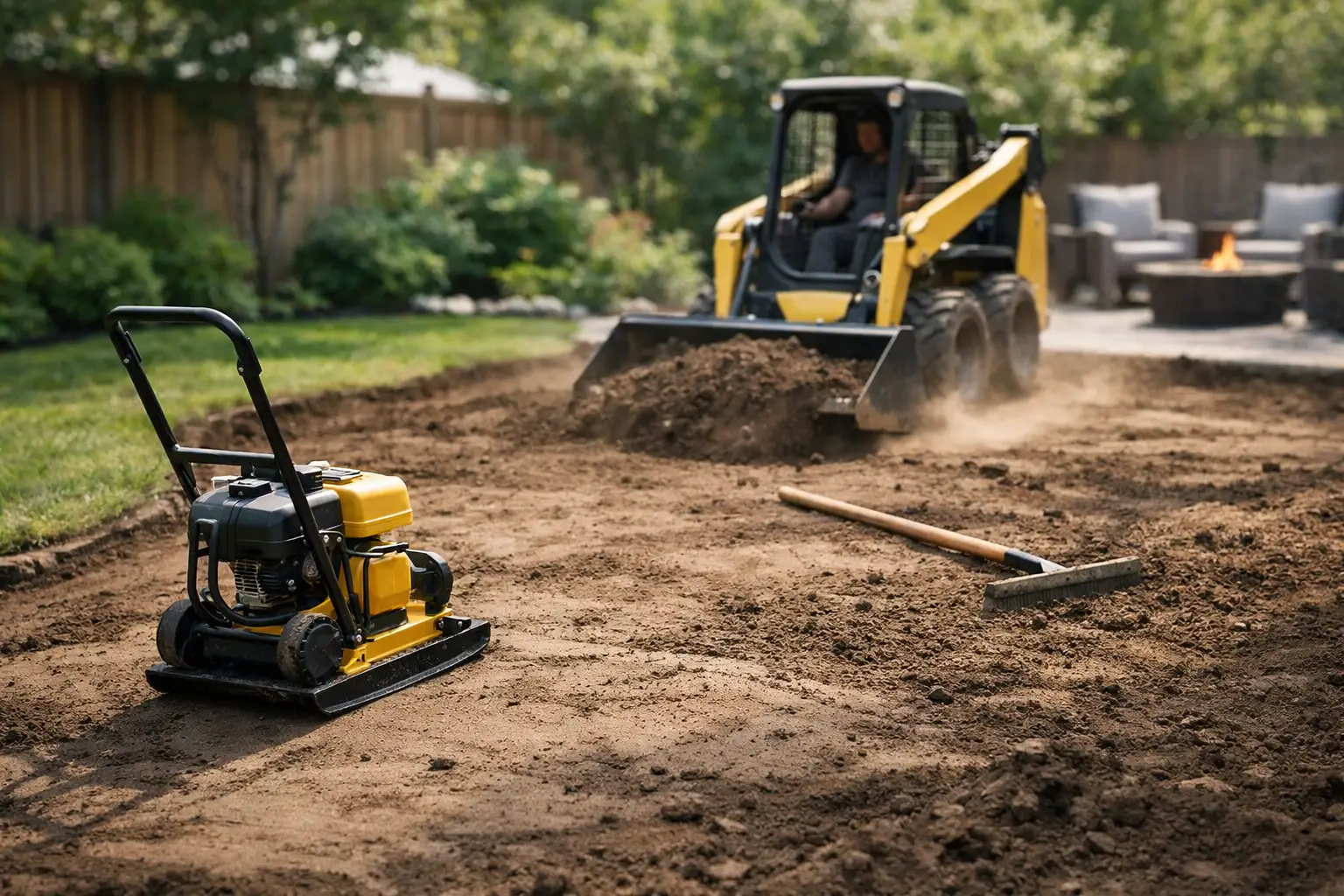
A backyard that looks only slightly uneven can cause bigger problems than most people expect. Water starts pooling near the house, patio plans get delayed, fences go in crooked, and mowing turns into a chore. That is usually when a backyard leveling service stops being a nice-to-have and becomes the smart next step.
If your goal is to make the space usable, safer, and easier to build on, leveling is often the first job that needs to happen. It creates a better base for everything that comes after, whether that is sod, gravel, a play area, a shed pad, or a full outdoor upgrade.
What a backyard leveling service actually fixes
Leveling is not always about making a yard perfectly flat. In many cases, the real goal is to create the right grade so water flows away from structures and the surface feels stable underfoot. A good yard can still have a gentle slope. What it should not have is low spots, soft areas, and uneven ground that keeps causing problems.
This kind of work is often needed after tree removal, demolition, pool removal, drainage issues, construction traffic, or years of patchwork yard repairs. In South Florida especially, heavy rain can make a small grading issue much more obvious. What looked like a harmless dip in dry weather can turn into standing water after one storm.
A professional backyard leveling service can help correct those trouble spots with the right equipment and fill material, then shape the area for practical use. That matters if you are trying to avoid repeat problems instead of just covering them up.
Signs your backyard needs leveling
Some signs are obvious. Others get ignored until another project forces the issue.
If water sits in the same area for days after rain, that is a red flag. If the yard feels bumpy when you mow, if sections stay muddy, or if you notice exposed roots and washed-out soil, the grade may be off. The same goes for patios that hold water around the edges, fences that no longer line up with the ground, or a yard that seems to shift after every rainy season.
Leveling also comes up when homeowners want to install something new. A shed, pavers, turf, playground equipment, or even a clean gravel area all work better on properly prepared ground. Trying to build on uneven soil usually leads to more labor, more material, and more frustration.
For landlords, property managers, and contractors, yard leveling can also be part of turnover and site prep. If the property needs to be cleaned up, debris removed, and the ground reshaped before the next phase begins, handling it early keeps the schedule moving.
Why DIY yard leveling is not always cheaper
On paper, leveling a backyard yourself can seem simple. Rent equipment, bring in fill, spread it out, and smooth the surface. In reality, the hard part is knowing how much material is needed, what type of fill makes sense, and how the grade should move across the property.
Too little fill does not solve the problem. Too much in the wrong place can push water somewhere worse, including toward the house or a neighbor’s fence line. If the area has buried debris, roots, broken concrete, or old construction waste, the job gets more complicated fast.
That is where working with a crew that already handles site cleanup, hauling, and Bobcat work makes a difference. You are not just paying for dirt to be moved. You are paying to avoid rework, drainage mistakes, and the hassle of juggling multiple vendors.
What the leveling process usually looks like
Every yard is different, but most jobs follow the same basic path. First comes an evaluation of the area. The main questions are where water is collecting, how the yard is currently sloped, what the space will be used for, and whether any debris or obstructions need to be removed before grading begins.
Next comes prep work. That may include clearing junk, hauling out yard waste, removing concrete fragments, scraping high spots, or bringing in fill dirt or other material. If the backyard has been neglected or used as a dumping area for leftover project debris, cleanup can be a major part of the job.
Then the ground gets reshaped with the right equipment. For many properties, compact equipment is the practical choice because it can move through tighter residential spaces while still getting serious work done. Once the grade is adjusted, the surface may need to be compacted and fine-tuned depending on what comes next.
That final use matters. A yard being prepped for sod is different from one being prepped for pavers or a shed pad. The best results come from planning the leveling work around the end goal, not treating every backyard the same.
Backyard leveling service and drainage go together
One of the biggest mistakes property owners make is treating leveling as a cosmetic fix. A smooth-looking yard is great, but drainage is usually the reason this work matters.
If water has nowhere to go, you can end up with mosquito-prone standing water, soggy turf, soil erosion, and extra wear near foundations and walkways. In some cases, improper grading can also make outdoor living spaces less usable because the ground stays soft or slippery.
That does not mean every yard needs major drainage construction. Sometimes correcting a few low spots and reshaping the grade is enough. Other times, it makes sense to pair leveling with additional cleanup, material delivery, or site prep so the entire area functions better instead of just looking cleaner for a week or two.
When leveling should happen before other projects
Backyard improvements tend to go smoother when leveling happens first. If you already know you want a patio extension, gravel pad, turf install, fence line cleanup, or storage area, handling the ground prep upfront usually saves money later.
It is much harder to fix grade issues after materials are installed. Pavers may settle unevenly, sod may fail in wet spots, and a shed can end up on unstable ground. Even simple upgrades like decorative rock or stepping stones can look off if the base underneath was never corrected.
This is especially true after demolition or heavy cleanup work. Once old structures, debris, or unwanted materials are removed, the yard often needs reshaping before it is really ready to use again. A one-call approach is easier than hiring one company to clear it, another to haul it, and another to level it.
How to know if the job is small or more involved
A few shallow dips in an otherwise healthy lawn are one thing. A yard with repeated drainage issues, buried debris, washout areas, or years of uneven settlement is another.
The size of the space matters, but access matters too. A compact backyard with tight side access can take more planning than a larger open lot. Soil condition, existing landscaping, and nearby structures also affect the scope. If the grade near the home is wrong, the work needs extra care because changing one area can affect the whole flow of the yard.
That is why quick pricing over the phone only tells part of the story. The real cost depends on labor, access, material needs, disposal, and whether cleanup has to happen first. Straight answers and a clear scope matter more than a vague low quote that grows once the work starts.
Choosing the right crew for backyard leveling service
You want a company that understands more than just grading. Backyard work often overlaps with junk removal, debris hauling, demolition cleanup, and material delivery. When one team can handle the messy parts before and after leveling, the whole project gets simpler.
Look for a provider that communicates clearly, shows up when scheduled, and explains what the job includes. That sounds basic, but it is what keeps a stressful yard project from dragging out. Reliability matters just as much as equipment.
For homeowners and contractors in Dade and Broward County, that local responsiveness can make a real difference when weather shifts or project timing changes. If a crew can adjust quickly, remove waste, deliver material, and prep the site without making you coordinate every step, that is real value.
A&D Junk Removal LLC fits that kind of job well because the work does not stop at hauling things away. When a backyard needs to be cleared, reshaped, and made ready for what comes next, having one dependable team handle the support work saves time and cuts down on headaches.
Before you book, think about the end use
The best way to approach yard leveling is to be clear about what you want the space to do. A play area, drainage fix, clean open yard, parking pad, or future patio all call for slightly different prep. If you know the goal from the start, the work can be done in a way that supports it.
That is the difference between a temporary patch and a useful result. A backyard should not just look better from the fence line. It should drain better, feel better underfoot, and make the next project easier instead of harder.
If your yard has become one more thing on a growing to-do list, start with the ground. Once the surface is right, the rest of the space gets a whole lot easier to use.