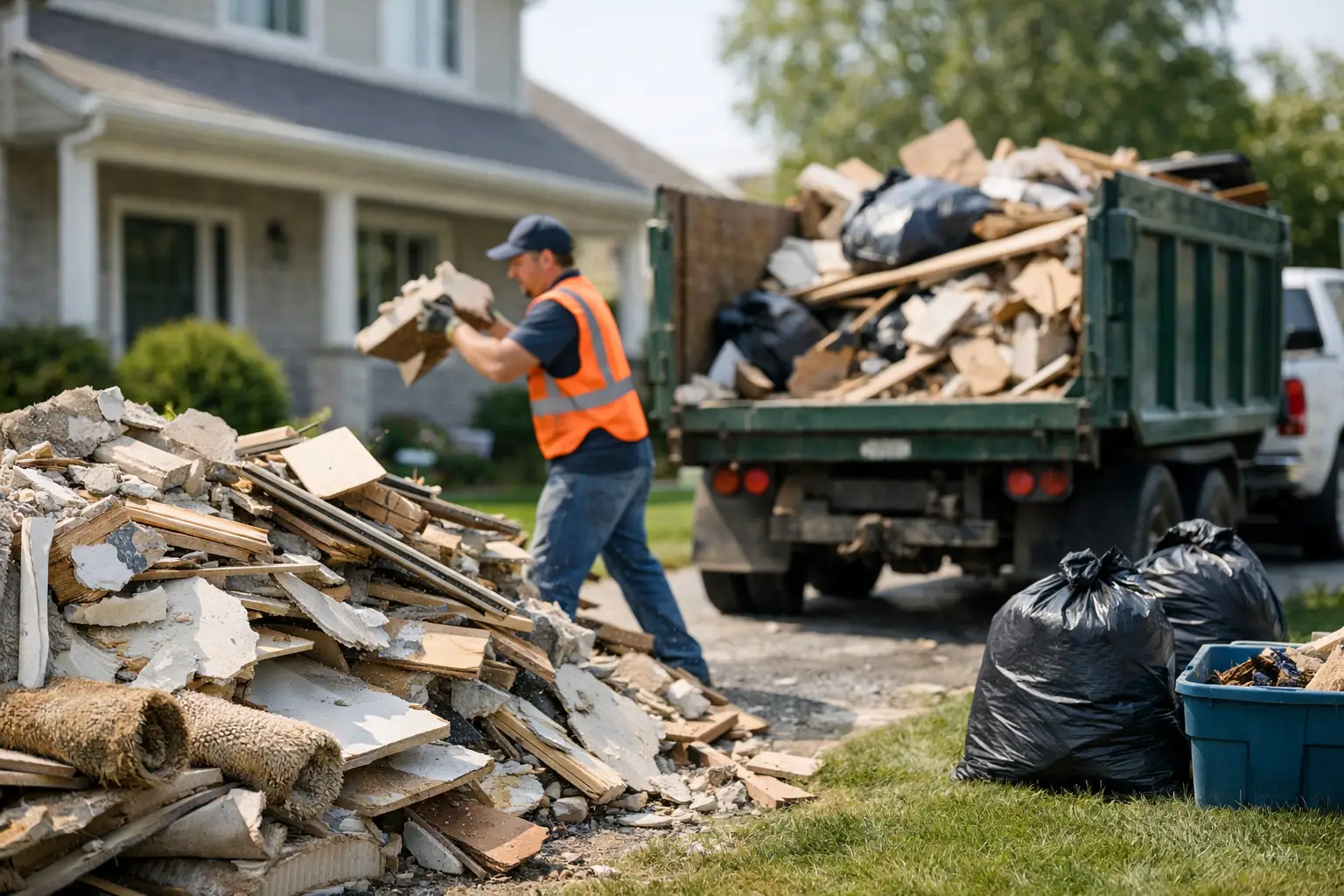
That pile usually starts small – a few broken boards, old shelving, a torn-out vanity, bagged yard waste, maybe a mattress you meant to deal with last month. Then the project keeps moving, the debris keeps growing, and suddenly your driveway, garage, or side yard is doing more work than your home. This residential debris removal guide is built for homeowners who want the mess gone without turning cleanup into a second job.
If you are planning a renovation, clearing out after a move, handling storm cleanup, or just trying to reclaim space, the right approach saves time, protects your property, and keeps disposal costs under control. The wrong approach usually shows up as extra dump runs, injuries, fines for improper disposal, or debris sitting around longer than expected.
What counts as residential debris
Residential debris is a broad category, and that matters because not everything gets removed the same way. One project may produce clean wood, drywall, and cardboard. Another may involve old furniture, fencing, yard waste, concrete chunks, and general junk all mixed together.
For most homeowners, the main categories are household junk, remodeling debris, yard debris, and heavy materials. Household junk includes things like furniture, mattresses, broken appliances, toys, storage clutter, and garage leftovers. Remodeling debris often includes drywall, tile, lumber, cabinets, flooring, shingles, and fixtures. Yard debris can mean branches, palm fronds, brush, dirt, and fencing. Heavy materials include concrete, brick, dirt, and roofing loads that can change hauling needs fast.
The reason this matters is simple: volume and weight are not the same thing. A trailer full of broken drywall is one kind of job. A smaller pile of concrete or dirt can be a completely different pricing and hauling situation.
Start with the type of cleanup, not just the pile
A good residential debris removal guide should help you think beyond what you see at the curb. The better question is what created the debris and what needs to happen next.
If you are doing a garage cleanout, speed and convenience usually matter most. You want items loaded quickly, swept up, and gone. If you are in the middle of a bathroom or kitchen remodel, timing matters more. Debris may need to be removed in phases so the project can keep moving. If you are dealing with storm damage or yard overgrowth, access and safety may be the biggest concerns.
This is where many people underestimate the job. A cleanup is rarely just disposal. It can also involve lifting, sorting, loading, protecting surfaces, navigating gates or tight driveways, and making sure materials are handled the right way.
When a dumpster makes sense and when full-service removal is better
This is one of the biggest decisions homeowners face, and the answer depends on the job.
A dumpster rental makes sense when you are generating debris over several days and want to load as you go. It works well for DIY remodeling, roofing jobs, flooring replacement, and longer property cleanouts. You get flexibility, and your project stays moving without waiting for a pickup every time a pile builds up.
Full-service debris removal is usually better when you want labor included, when the debris is already piled up, or when you simply do not want to handle the loading yourself. This is often the better fit for furniture removal, post-move cleanouts, yard pile removal, or mixed junk that needs to disappear fast.
There is also a middle ground. Some jobs start with a dumpster and finish with a final junk haul once the project wraps up. Others need demolition, debris hauling, and material delivery all coordinated together. That is where working with one dependable crew can make life easier, especially if your schedule is tight.
What affects price more than most people expect
Most homeowners focus on how big the pile looks. That matters, but it is not the only factor.
Weight is a major one. Dirt, tile, concrete, shingles, and wet materials can push a load into a different pricing range quickly. Material type matters too, because some items require special handling or disposal. Access is another factor. A pile in an open driveway is easier than debris that has to be carried from a backyard, upstairs unit, or fenced side area.
Mixed loads can also change cost. Clean construction debris is more straightforward than a pile that combines paint cans, broken furniture, yard waste, and old remodeling material. Labor time matters as much as hauling volume in many cases.
The easiest way to avoid surprises is to describe the job clearly. Photos help. Mention the material, where it is located, whether there are stairs, and whether anything is unusually heavy. Clear information usually leads to a clearer quote.
How to prepare for debris removal without wasting time
You do not need to over-organize the job, but a little prep helps the pickup go faster.
Start by separating what is staying from what is going. This sounds obvious, but it prevents the last-minute confusion that slows down loading. If possible, keep debris in one accessible area. Driveway placement is easiest, but that is not always realistic. If the material is in the backyard or inside the home, make sure there is a clear path.
If you are removing renovation debris, bagging fine material and stacking bulky items neatly can help. If you are dealing with furniture or household junk, empty drawers and remove loose contents ahead of time. For yard cleanup, bundling branches or consolidating smaller piles can reduce labor.
Most important, think about safety before pickup. Keep kids and pets away from the work area. Watch for nails, broken glass, unstable stacks, and slick surfaces. Cleanup work moves faster when there is room to work safely.
Items that may need special handling
Not all debris belongs in the same load. Some materials require separate disposal, and that is where homeowners can run into delays.
Paint, chemicals, fuels, propane tanks, certain electronics, and other hazardous materials often need different handling than regular junk or construction debris. Refrigerators and some appliances may also have disposal requirements depending on the unit. Tires, batteries, and some treated materials can fall into the same category.
This does not mean the job becomes complicated. It just means you should ask early rather than assuming everything can go together. A quick conversation before booking can save a wasted trip or a delayed pickup.
Why timing matters on residential projects
Debris has a way of slowing everything down. It blocks parking, clutters work areas, creates trip hazards, and makes a project feel unfinished even when the hard part is already done.
For remodels, waiting too long to remove debris can affect contractors, deliveries, and the next phase of work. For property cleanouts, piles left outside can become an eyesore fast. After storms, the issue is often safety and access more than appearance.
Fast turnaround matters because cleanup is part of progress. When the debris leaves, people can actually use the space again. That is true whether you are clearing a rental, preparing a house for sale, or trying to get your garage back.
Choosing a debris removal company without overthinking it
You do not need a complicated checklist, but you do need a company that is responsive, clear, and realistic about the job.
Look for straightforward communication first. If a company is hard to reach before the job, that usually does not improve later. Ask what is included, how pricing works, and whether labor, loading, and disposal are part of the quote. If your project may change, ask how they handle added volume or heavier material.
Reliability matters just as much as price. A low quote does not help if the crew shows up late, leaves a mess behind, or backs out when the load is heavier than expected. Homeowners in Miami-Dade and Broward often need quick scheduling because weather, renovations, and move-out timelines do not leave much room for delays.
This is one reason local, service-focused companies tend to stand out. A business like A&D Junk Removal LLC is built around exactly this kind of practical support – quick debris hauling, dumpster options, cleanup help, and project services that keep homeowners from juggling multiple providers.
The goal is not just removal
People usually think they are paying to get rid of debris. What they are really buying is time, safety, usable space, and one less problem to manage.
A good cleanup should leave your property easier to work on, easier to move through, and less stressful to look at. Whether the job is a single junk pile or a larger renovation mess, the best plan is the one that fits the pace of your project and the kind of debris you actually have.
If the mess is slowing down your home, do not wait for the perfect moment to deal with it. Clear space when it matters, and the rest of the job usually gets a whole lot easier.