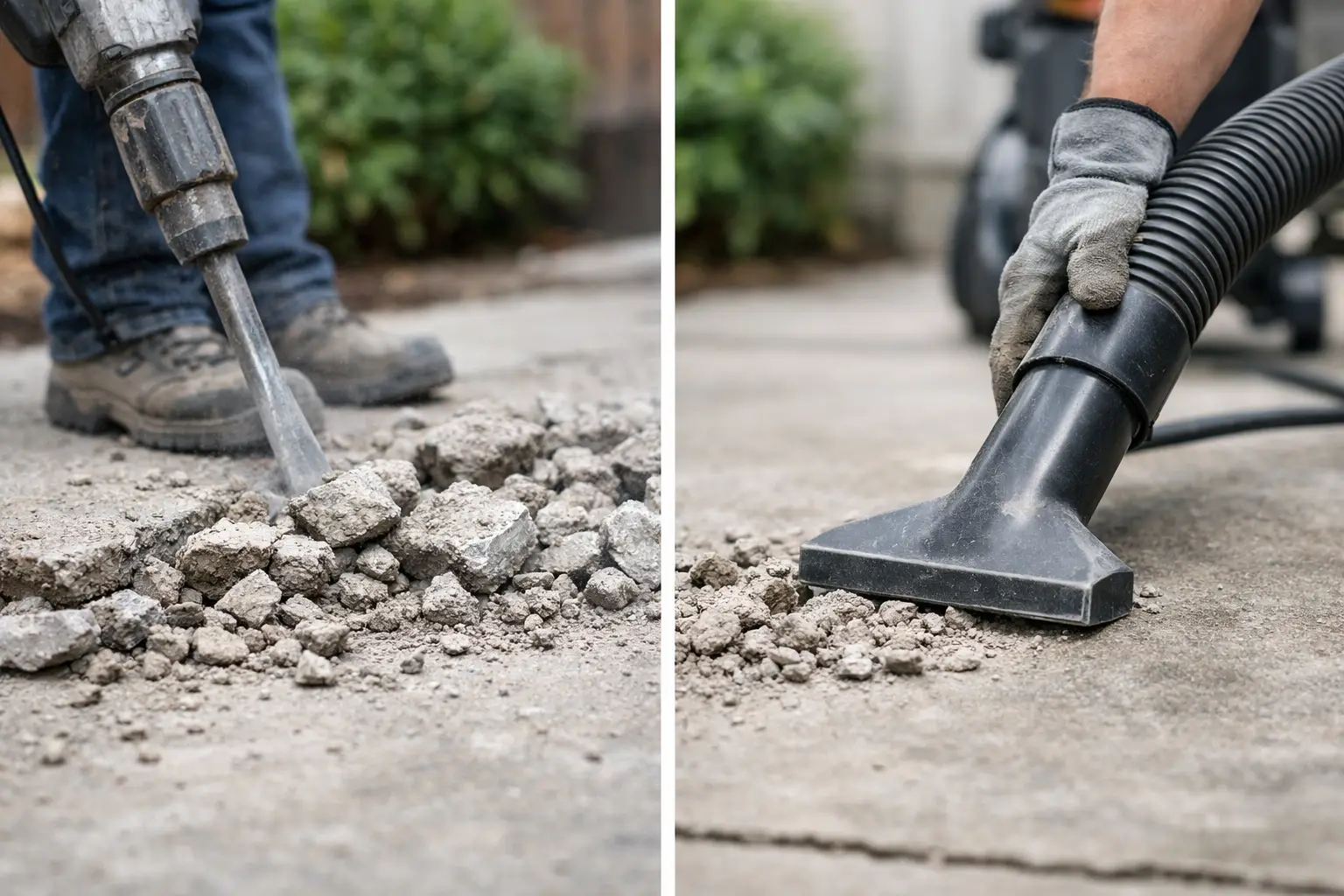
A cracked patio slab or broken driveway edge can turn into a bigger headache the moment you start moving it. Knowing how to remove broken concrete means planning for more than demolition – you also need a safe work area, the right equipment, and a realistic plan for hauling heavy debris away.
Concrete is not regular household junk. A few small pieces may be manageable, but a modest-looking pile can weigh hundreds or even thousands of pounds. Taking the right approach protects your property, your back, and your timeline.
Start by Deciding What Actually Needs to Go
Before picking up a sledgehammer, look closely at the damaged area. Loose pieces from an already-cracked slab are one thing. Removing a full section of driveway, sidewalk, patio, or foundation is another job entirely.
If the concrete is lifting because of tree roots, poor drainage, soil movement, or a plumbing issue, address the cause before installing new material. Otherwise, the replacement may crack or shift just as quickly. For a small broken corner, removing only the damaged section can be the practical choice. If cracks run deep across the slab or the surface has settled unevenly, full removal may make more sense.
Also think about access. Can a truck, trailer, dumpster, or skid steer get near the work area? A backyard project with a narrow gate takes more planning than a pile beside the curb. Measuring access early helps prevent a half-finished demolition job with nowhere to put the debris.
Safety Comes Before Breaking Concrete
Concrete can break unpredictably. Chips can fly, rebar may be hidden inside the slab, and heavy pieces can shift when you pry them loose. Wear safety glasses, durable work gloves, long pants, work boots, and hearing protection when using powered tools. A dust mask or respirator is also a smart choice, especially when cutting or breaking dry concrete.
Mark the work area and keep children, pets, and bystanders clear. If you are working near a wall, fence, utility box, pool equipment, or underground lines, slow down and confirm what is beneath and around the slab. Never assume a small concrete pad has no utilities nearby.
For driveways or sidewalks near the street, make sure you understand local rules before placing a dumpster, trailer, or debris pile in the public right-of-way. Requirements can vary by neighborhood and municipality.
How to Remove Broken Concrete Step by Step
For small areas of already-damaged concrete, the work is usually straightforward when you take it in stages. Start by clearing furniture, planters, loose materials, and trip hazards from the area. Sweep away dirt so you can see cracks, joints, and edges clearly.
Use existing cracks or control joints to your advantage. A sledgehammer can work for thin, broken concrete, but it is physically demanding and can create more dust and flying fragments. A demolition hammer or electric jackhammer is usually faster for thicker slabs and larger sections.
Break the concrete into pieces that one or two people can safely move. Bigger chunks may seem efficient until it is time to lift them into a wheelbarrow. In most cases, manageable pieces are better than oversized slabs that strain equipment or cause an injury.
Once pieces are loose, use a pry bar to separate stubborn sections. Watch for wire mesh or rebar. These materials often hold broken pieces together, and they may need to be cut with the appropriate tool before the concrete can be loaded out.
Avoid digging aggressively under the slab unless you know what is below it. Underground irrigation, electrical lines, plumbing, and drainage systems can turn a basic cleanup into an expensive repair.
Choose Tools Based on the Job Size
The right equipment depends on slab thickness, reinforcement, access, and how much material you need to remove. A small cracked walkway section may only require hand tools, a wheelbarrow, and a heavy-duty container. A driveway section or thick patio may call for a demolition hammer, concrete saw, skid steer, or professional demolition support.
A concrete saw is useful when you need a clean edge between the section being removed and the section staying in place. This is especially helpful for partial driveway or patio repairs. Saw cutting creates significant dust, however, so wet-cutting methods and proper protective equipment are often necessary.
A skid steer or Bobcat can save hours when there is enough room to operate safely. It can break up, scoop, and move material much faster than hand loading. The trade-off is access: tight yards, delicate landscaping, and limited gate clearance may make heavy equipment impractical.
Do Not Underestimate the Weight
Concrete debris is one of the easiest materials to overload. As a general rule, concrete weighs roughly 4,000 pounds per cubic yard. That means a pile that looks like it could fit in the bed of a pickup may exceed the truck’s payload rating.
Do not stack concrete in a container without checking its weight limit. Many dumpsters have specific rules for heavy materials, and mixing concrete with household junk, wood, roofing, or yard waste can affect disposal options and pricing. Keeping clean concrete separate is often the simplest way to manage the load.
If you are using a wheelbarrow, take smaller loads than you think you need. Uneven ground, ramps, wet grass, and driveway slopes can make a heavily loaded wheelbarrow difficult to control. Multiple lighter trips are slower, but they are safer and easier on your property.
Sort the Debris Before Hauling It Away
After the concrete is broken and piled, separate anything that does not belong with it. Pull out rebar, wire mesh, wood forms, plastic, trash, dirt, and landscaping material. Clean concrete can sometimes be processed differently from mixed construction debris, while mixed loads may require additional sorting.
This step also makes the cleanup look better and helps you avoid leaving sharp metal or small fragments behind. Use a rake and shovel for loose pieces, then sweep the area thoroughly. Concrete chips have a way of ending up in lawn areas, flower beds, tire treads, and near doorways.
For a renovation or demolition project, it can help to create separate piles as you work: concrete, metal, wood, and general debris. You will spend less time sorting later and have a clearer picture of what needs to be hauled.
Know When to Call for Help
DIY concrete removal can be worthwhile for a small, accessible section that is already broken. It becomes less appealing when the material is thick, reinforced, close to structures, or spread across a large area. The same is true when you do not have a safe hauling option.
Professional help can be the better value when it combines demolition, loading, hauling, and cleanup in one visit. For homeowners, property managers, and contractors in Dade and Broward counties, A&D Junk Removal LLC can provide project support for concrete debris, demolition cleanup, dumpster rental, and Bobcat work when the job is too heavy or time-consuming to handle alone.
Before booking a service or renting a dumpster, be ready to describe the approximate size of the concrete area, whether it contains rebar, and how close equipment can get to the debris. Photos and simple measurements can help confirm the right setup and avoid delays.
Leave the Site Ready for the Next Step
Removing broken concrete is only part of the project. Once the debris is gone, inspect the base underneath. Remove loose rubble, check drainage, and level the area if you are preparing for a new slab, pavers, gravel, landscaping, or a repair.
If the old concrete failed because water was pooling or the ground was moving, now is the time to correct it. A clean, properly prepared surface gives your next project a better chance of lasting – and lets you enjoy the finished space instead of dealing with another broken slab a few months later.