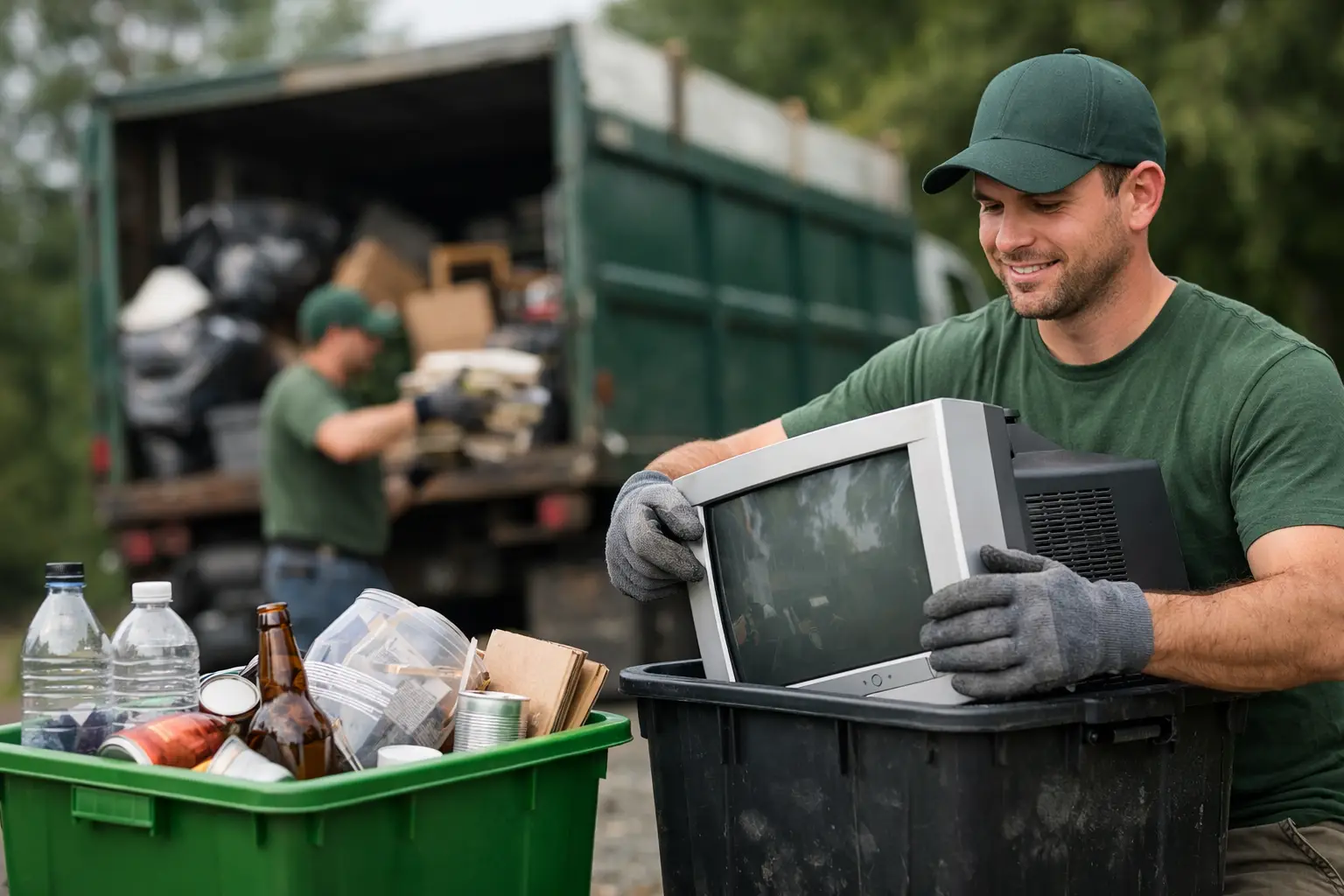
You’ve got a garage full of old furniture, broken appliances, cardboard, yard debris, and random things you’ve been meaning to get rid of for months. Then the obvious question comes up: do junk haulers recycle items, or does everything just end up in the landfill?
The honest answer is that it depends on the company, the condition of the items, and local disposal options. A good junk removal team does not treat every load the same. Some items can be donated. Some can be separated for recycling. Some have to be disposed of because they’re damaged, contaminated, or not accepted by local facilities. If you’re hiring help, it makes sense to know what usually happens after the truck pulls away.
Do junk haulers recycle items or throw everything away?
Some junk haulers make an effort to recycle and donate what they can. Others focus on speed and haul everything to the nearest dump. That does not always mean they are careless. Sometimes mixed loads, tight job timelines, or local restrictions limit what can realistically be sorted.
Still, responsible junk removal usually includes some level of separation. Metal is one of the most common materials to recycle because it has clear value and is widely accepted. Cardboard, certain plastics, electronics, appliances, and yard waste may also be recycled when local programs or transfer stations allow it.
Donation is another part of the process. Usable furniture, working appliances, home goods, and office items may be dropped off instead of discarded. But condition matters. A stained mattress, broken dresser, or water-damaged couch is usually not donation material no matter how good the intention is.
That’s why the better question is not just whether junk haulers recycle items. It’s how they decide what can be recycled, what can be donated, and what has to be thrown away.
What junk haulers can usually recycle
Recyclable items vary by area, but a few categories come up on jobs all the time. Scrap metal is the big one. Bed frames, metal shelving, grills, fencing, pipes, and some appliance parts are often pulled out and taken to the right facility.
Appliances can sometimes be recycled too, especially when they contain large amounts of metal. Refrigerators, washers, dryers, stoves, and water heaters may be accepted, although some require special handling because of refrigerants or other components.
Electronics are another category many customers ask about. TVs, computers, printers, monitors, and cables often cannot go out with normal trash, and many junk haulers know where to bring them. The catch is that not every hauler includes e-waste handling in a standard pickup, so it is worth asking ahead of time.
Cardboard, paper, and some plastics may also be separated if they are reasonably clean and not mixed with food waste, paint, or construction debris. Yard waste can sometimes be diverted as well, especially when it is kept separate from household junk.
Construction materials are a mixed case. Clean wood, metal, concrete, brick, and asphalt may be recyclable in some markets. But once demolition debris is mixed together, covered in adhesives, or contaminated, recycling becomes much harder.
What usually cannot be recycled
Customers are often surprised by how many items are technically recyclable in theory but not in practice. A sagging sofa with mold, a particle-board cabinet soaked from a leak, or a pile of mixed trash from an eviction cleanout usually has limited recycling value.
Heavily stained mattresses are difficult to process. Wet or rotted furniture is usually trash. Broken glass, food-contaminated packaging, and mixed household debris are also less likely to be recycled.
Hazardous materials are a separate issue. Paint, chemicals, solvents, propane tanks, gasoline, pesticides, and certain batteries often require special disposal and may not be accepted in a standard junk removal job. Tires and certain automotive fluids can also fall into restricted categories.
This is one reason estimates matter. A professional hauler should tell you if certain items need separate handling instead of loading everything first and sorting it out later.
Why recycling rates vary from one company to another
Not every junk removal job looks the same, and not every market has the same disposal network. A company in one area may have access to metal yards, donation centers, green waste sites, and recycling transfer stations. Another may have fewer options nearby, higher dumping fees, or stricter acceptance rules.
The type of load matters too. A clean garage cleanout gives a crew more room to separate items. A storm cleanup, hoarder property, or post-demo haul usually comes with more contamination and less salvageable material.
There is also a labor factor. Sorting takes time. Companies that care about responsible disposal often build that effort into their process. Others price only for quick removal. Neither approach changes the fact that some materials can be recovered and some cannot, but it does affect how much effort goes into separation.
How to tell if a junk hauler handles items responsibly
You do not need a long speech from a company. You need clear answers. Ask what they normally recycle, whether they donate usable items, and how they handle appliances, electronics, and hazardous materials.
A solid company should be able to explain the process in plain language. If they say they try to donate usable items, separate scrap metal, and follow local disposal rules, that is a practical answer. If they promise that nothing ever goes to the landfill, that is usually not realistic.
It also helps to ask whether you can separate items in advance. If you already know you have metal, electronics, or reusable furniture, setting those things aside can make recycling more likely. On large cleanouts, that small step can make a real difference.
For homeowners, renters, property managers, and contractors, this comes down to trust. You want a crew that shows up on time, clears the space fast, and does not take the easy route with everything in the truck.
Do junk haulers recycle items from construction and renovation jobs?
Sometimes, yes, but construction debris is one of the toughest categories to recycle well. Clean concrete, brick, asphalt, and scrap metal are often the easiest materials to divert. Untreated wood may also have recycling or repurposing options depending on the load.
The problem is that renovation debris is often mixed. Drywall dust, nails, insulation, broken tile, treated lumber, adhesive-covered flooring, and trash from the worksite can all end up in the same pile. Once that happens, disposal usually becomes the simpler and more practical route.
If recycling matters to you on a renovation or demolition project, mention it before the job starts. Keeping materials separated at the site gives your hauler more options and can reduce landfill waste.
What you can do before pickup
If you want the best chance of keeping reusable and recyclable items out of the dump, a little prep goes a long way. Put working items together. Keep scrap metal in one area. Separate electronics if possible. Try not to mix cardboard with wet trash or yard waste.
You do not need to turn your property into a transfer station. Just make things easier to identify. A crew can work faster and make better decisions when the load is not one giant mixed pile.
This is especially helpful on bigger jobs like garage cleanouts, office cleanups, rental turnovers, and remodel debris removal. The more visible the categories are, the easier it is to sort what has another destination.
The bottom line for local customers
So, do junk haulers recycle items? Many do, at least in part. The better ones look for opportunities to donate usable goods, separate metal, handle electronics properly, and reduce what goes to the landfill. But no company can recycle everything, and any honest answer should leave room for that reality.
If you are hiring a junk removal service, ask a few direct questions before booking. Find out what they can separate, what needs special disposal, and whether they make an effort to keep usable material in circulation. A dependable company should make the process easy while still being straight with you about what is and is not possible.
At the end of the day, junk removal should solve a problem, not create a new one. When the crew is responsive, the pricing is fair, and the disposal process is handled responsibly, clearing out your space feels a whole lot easier.