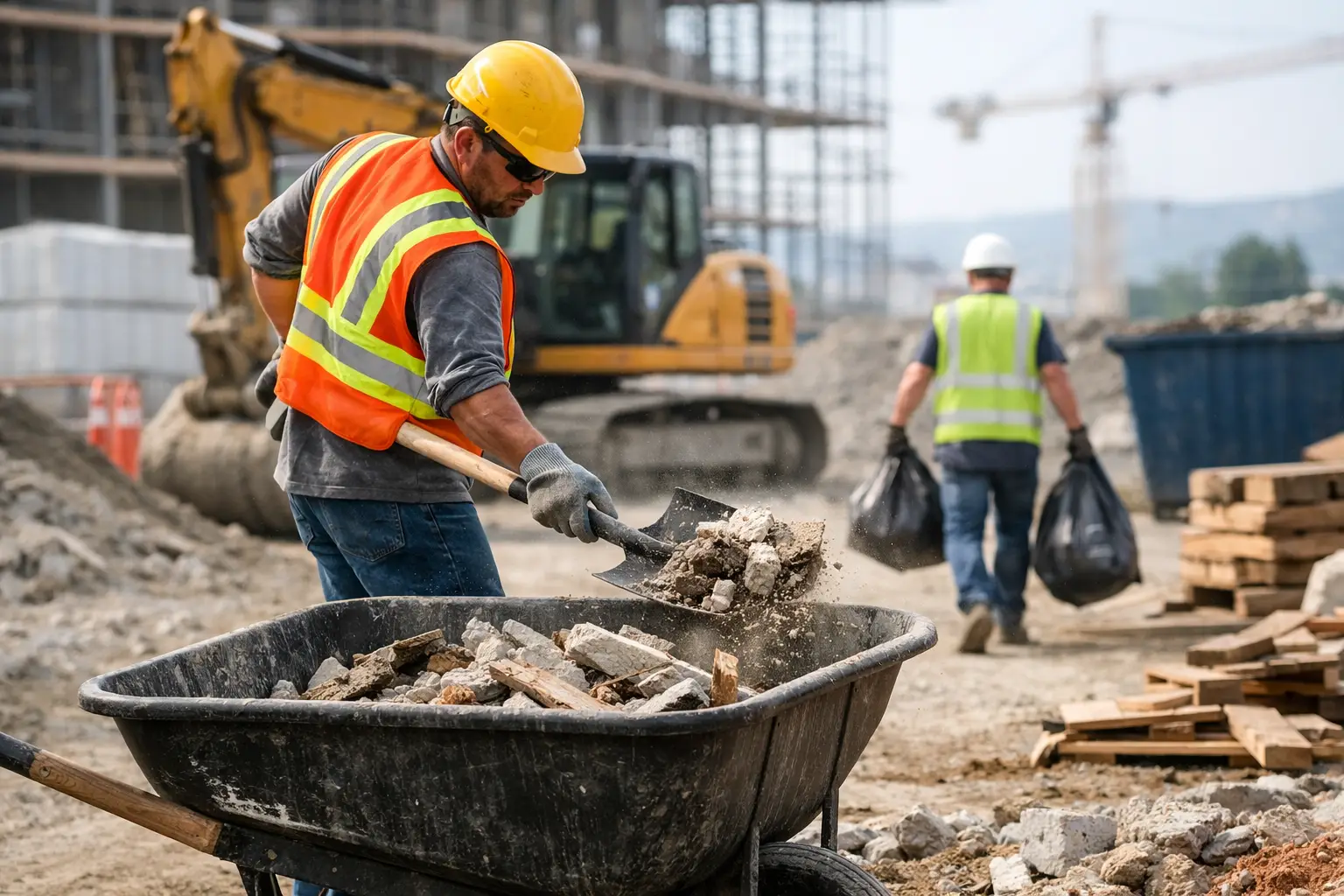
A job site can go from productive to frustrating fast when debris starts piling up. Construction site cleanup is not just about making the area look better. It affects safety, workflow, inspections, and how quickly the next phase of work can start.
For contractors, property managers, and owners, cleanup usually becomes a problem at the worst time – when trades are stacked up, deliveries are arriving, and nobody has extra time to stop and deal with debris. That is why a solid cleanup plan matters before the mess starts slowing the job down.
Why construction site cleanup matters more than most people think
On an active project, waste builds up in layers. You might start with packaging, pallets, and scrap material. Then come drywall pieces, broken tile, framing offcuts, old fixtures, roofing debris, concrete chunks, and dust everywhere. If it all stays in the way too long, the site gets harder to work in and harder to manage.
The biggest issue is safety. Loose debris creates trip hazards, exposed nails and sharp edges cause injuries, and blocked walkways make it harder to move materials and equipment. A cluttered site also slows down every trade on the project. Crews spend extra time working around junk, moving piles from one spot to another, or trying to figure out where waste is supposed to go.
There is also the professionalism factor. If a client, inspector, tenant, or project manager walks onto a messy site, it sends a message – fair or not – that the job is disorganized. Clean sites tend to run better because they are easier to supervise, easier to access, and easier to keep on schedule.
What a good construction site cleanup plan actually includes
Cleanup works best when it is treated as part of the project, not as an afterthought. That means deciding early how debris will be handled, where it will be staged, and how often it will be removed.
Some jobs need ongoing cleanup throughout the project. Others can manage with scheduled haul-offs tied to major phases, like demolition, framing, roofing, or final punch-out. It depends on the size of the project, the type of material involved, and how tight the site is.
A good plan usually covers three things. First, there needs to be a clear area for waste collection so debris does not spread across the whole job. Second, someone needs to be responsible for keeping that area usable. Third, there needs to be a realistic hauling schedule, because once the pile starts overflowing, cleanup becomes more expensive and more disruptive.
If the site is in a dense area or a property with limited access, planning matters even more. In parts of Miami-Dade and Broward, space can be tight, parking can be limited, and neighbors or tenants may be close by. In those cases, quick turnaround and the right equipment can make a big difference.
When to schedule construction site cleanup
There is no single right schedule for every project. A kitchen remodel has different needs than a commercial build-out or a full property renovation. But in general, cleanup should happen before debris starts affecting labor efficiency.
For demolition-heavy jobs, an early haul-off is often the smart move. Demo waste is bulky, dirty, and quick to spread. Letting it sit too long can block access for the next phase. On framing and roofing jobs, periodic removal helps keep material staging areas open and reduces safety risks. For finishing phases, cleanup becomes more about detail – clearing scraps, packaging, dust-producing waste, and leftover materials so the final work can move without delays.
Final cleanup is its own phase too. That is the point where the site needs to be presentable, functional, and ready for turnover, inspection, or the next occupant. Waiting until the very end to deal with all debris at once can work on some jobs, but it often creates a bottleneck when time is already tight.
The debris that causes the most problems
Not all site waste is equally easy to deal with. Some materials are light but bulky, while others are dense, sharp, or difficult to load. That is one reason cleanup pricing and logistics can vary from one project to another.
Wood scraps, drywall, cardboard, and general packaging tend to take up space fast. Concrete, tile, dirt, and masonry are heavier and may require different loading or hauling limits. Old cabinets, fixtures, doors, vanities, and construction leftovers add another layer, especially when they are awkward to carry or mixed in with loose debris.
Then there is the material that needs more care. Items with glass, metal edges, exposed fasteners, or partial demolition remains can slow the whole process if they are not separated and handled correctly. The more mixed and scattered the debris is, the more labor is involved.
That is why cleanup is not always just a dumpster issue. Sometimes a trailer rental works best. Sometimes full-service junk removal is faster. Sometimes a project needs labor, hauling, and light equipment support together. It depends on how the debris is piled, how accessible the site is, and whether the crew has time to load everything themselves.
Dumpster rental or full-service cleanup?
This is where a lot of people either save time or lose it.
If your crew can load debris consistently and you have a good place to stage a container, a dumpster or trailer rental can be the efficient choice. It gives the project a designated disposal point and keeps cleanup moving day by day. This setup works well when the job is active, labor is available, and the waste stream is fairly predictable.
Full-service cleanup makes more sense when speed and labor are the bigger issues. If debris is already piled up, spread across multiple areas, or too heavy and messy for your crew to stop and handle, bringing in a team to load and haul it away can get the site back under control much faster.
There is also a middle ground. Some projects need recurring pickups, occasional labor help, or equipment support for moving heavy material. That is where working with one company that can handle junk removal, hauling, site support, and material movement can simplify the job. A&D Junk Removal LLC is built around that kind of no-hassle support, which is often what contractors and property managers need most when schedules are tight.
What makes cleanup efficient instead of expensive
The cheapest option on paper is not always the lowest-cost choice once labor delays are factored in. If your electricians, tile installers, or painters are losing hours because debris is in the way, cleanup is already costing more than it should.
Efficient construction site cleanup comes down to timing, access, and matching the right service to the job. A quick pickup of a manageable debris pile can be straightforward. A site with tight access, multiple floors, scattered material, and heavy demo waste takes more coordination. Neither is wrong, but they should not be priced or scheduled the same way.
Communication helps here. When the cleanup team knows what kind of debris is on-site, where it is located, and how fast it needs to be cleared, the job tends to go smoother. Surprises usually add labor, time, or disposal complications.
It also helps to think one step ahead. If a delivery is coming tomorrow, schedule the haul-off today. If demolition ends Friday, do not wait until Monday afternoon to clear the site for the next crew. Small scheduling decisions like that keep projects moving.
A cleaner site helps everyone on the job
Owners want progress they can see. Contractors want crews working, not stepping around trash. Property managers want less disruption and a cleaner handoff. Cleanup supports all of that.
It can also reduce stress on the people running the job. When debris removal is handled properly, there are fewer last-minute scrambles, fewer blocked work areas, and fewer calls trying to solve a mess that has already gotten bigger than it needed to be.
That is really the value of professional construction site cleanup. It is not just removing junk. It is making the site easier to manage, safer to work in, and more ready for what comes next.
If your project is already feeling crowded, behind, or harder to manage than it should, cleanup is usually one of the fastest ways to get control back. A clean site will not solve every construction problem, but it removes one that causes more delays than most people expect.