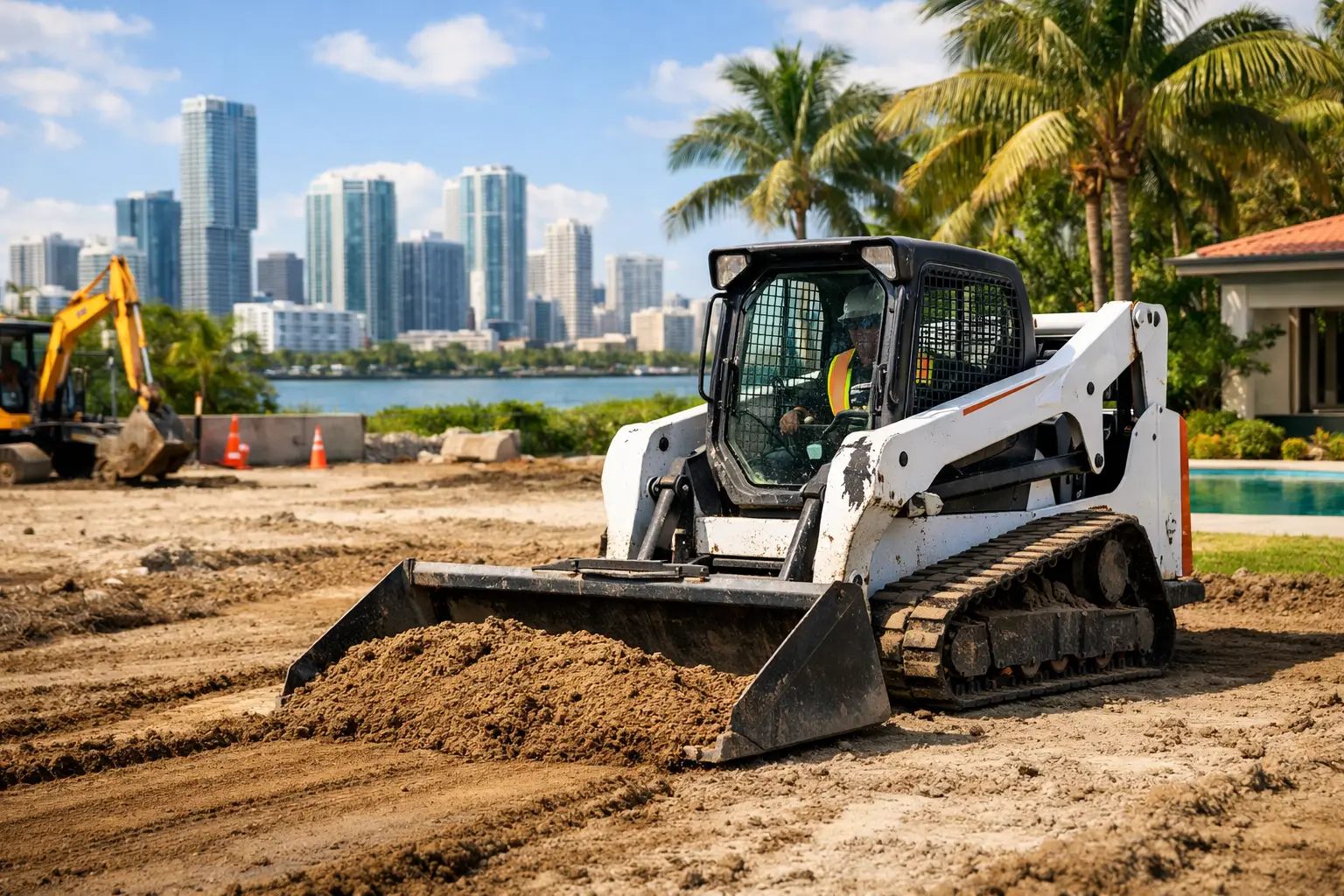
A lot of site problems start before the first load of material ever shows up. Water sits where it should drain. Soil is uneven. Access is tight. If you need bobcat grading services Miami property owners rely on, the real value is not just moving dirt – it is getting the ground ready so the rest of the job goes smoother.
Grading sounds simple until you are dealing with a sloped yard, a small commercial lot, leftover demolition debris, or a property that needs to be cleaned up and reshaped fast. That is where Bobcat work earns its keep. A compact machine can do a lot in a small footprint, and when the operator knows what they are doing, it saves time, labor, and repeat work.
What bobcat grading services in Miami usually include
Bobcat grading services are used to level, shape, and prepare ground for the next step of a project. That next step might be sod installation, gravel placement, drainage correction, a new driveway base, a shed pad, demolition cleanup, or general site prep.
In practical terms, grading can mean cutting down high spots, filling low areas, smoothing rough terrain, spreading material, and creating a more usable surface. On some jobs, the goal is appearance. On others, it is function. A yard might need to be leveled so water stops pooling near the house. A contractor might need a compact area cleaned and shaped for material staging. A property manager might need a lot straightened out after debris removal.
The machine matters, but the judgment matters more. Good grading is not just pushing soil around until it looks flat. The operator has to understand slope, runoff, access, and how the site will actually be used afterward.
Why a Bobcat makes sense for smaller and mid-size jobs
Not every project needs full-size heavy equipment. In many residential and light commercial jobs, bigger equipment is harder to maneuver, rougher on the property, and more expensive than necessary. A Bobcat is often the better fit because it can get into tighter spaces and still handle a serious amount of earthmoving.
That matters in neighborhoods with limited access, side yards with gates, driveways that need prep, and properties where you cannot afford to tear up everything just to fix one area. A compact skid steer can grade around obstacles, work in smaller sections, and keep the project moving without the footprint of larger machines.
There is a trade-off, of course. If the site is massive or the terrain is especially demanding, larger equipment may be faster. But for many cleanup, prep, and reshaping jobs, Bobcat grading gives you a practical middle ground between hand labor and oversized machinery.
When grading is worth doing before the problem gets worse
A lot of people wait until the issue becomes obvious. That usually means standing water, muddy access, erosion, or a project that stalls because the ground is not ready. Grading is often one of those services that saves money by preventing a second problem.
If water collects near a foundation, grading can help redirect surface flow. If a yard is bumpy and unusable after junk removal or demolition, grading can make it functional again. If you are bringing in gravel, fill, or other material, grading first gives that material a better base and helps it stay where it belongs.
This is especially true after site clearing. Once brush, debris, scrap, or old material is removed, the shape of the ground becomes more obvious. What looked like a clutter problem can turn out to be a grade problem too. Handling both at the same time is often the smarter move.
Bobcat grading services Miami projects often need before the next phase
In Miami-area projects, timing matters. Rain, heat, and fast-moving schedules do not leave much room for delays. That is why bobcat grading services Miami contractors, homeowners, and property managers book are often tied directly to the next step of the job.
Maybe a renovation crew needs a cleaner, level area for access. Maybe a landlord wants a rental property exterior cleaned up before listing. Maybe a homeowner is tired of a backyard that stays uneven and wet. In each case, grading is not a luxury service. It is part of making the property workable.
The same goes for demolition and debris-heavy work. Once broken concrete, old fencing, junk piles, or construction waste are gone, the site usually needs more than a quick rake-over. Tire ruts, loose fill, and uneven ground can slow down everyone who comes next. A machine-grade finish helps reset the property so you are not stacking one problem on top of another.
What to look for in a grading crew
The lowest quote is not always the cheapest job once everything is done. A grading crew should be clear about what is included, what material may be needed, whether hauling is part of the job, and what the finished result is supposed to be.
That last part matters. There is a big difference between rough grading and finish grading. Rough grading gets the general shape right. Finish grading is more refined and ready for the next visible layer, whether that is sod, gravel, or another surface treatment. If expectations are not discussed upfront, customers can end up thinking they paid for one thing and received another.
You also want a crew that can handle the job as part of a bigger process. If debris has to be removed first, fill has to be delivered, or demolition leftovers need to be hauled away, it helps to work with a company that can coordinate those moving parts. That reduces downtime and cuts down on the back-and-forth of hiring separate vendors for each step.
Responsiveness counts too. Site work often moves fast, and delays can affect multiple trades. A dependable local company that answers the phone, shows up when scheduled, and keeps the scope clear is worth a lot more than a vague promise and a no-show.
Common grading jobs for homes and businesses
Residential grading jobs usually center on yard leveling, drainage correction, driveway prep, shed pads, post-cleanout smoothing, and cleanup after small demolition work. These are the jobs where homeowners want the property to feel usable again without turning the project into a major construction event.
Commercial and property management jobs often involve lot cleanup, surface prep, access improvement, debris-area reshaping, and getting a site ready for additional work. Small business operators and contractors usually care less about perfect landscaping and more about speed, stability, and making the area safe and functional.
In both cases, the best results come from looking at the whole job, not just the machine time. If the site has junk, broken material, brush, or loose debris in the way, grading should be planned with cleanup in mind. If new aggregate, fill dirt, or other material is needed, that should be part of the conversation from the start.
Why combined services make the job easier
This is where a company like A&D Junk Removal LLC can make a real difference. When one crew can handle debris removal, hauling, material delivery, and Bobcat work, the project becomes a lot easier to manage.
Instead of scheduling one company to clear the site, another to deliver material, and another to grade it, you are working with a team that understands how the steps connect. That usually means fewer delays, less confusion, and a cleaner result. It is also easier on the customer because there is one point of contact instead of three.
For many Miami-area customers, convenience is not a bonus. It is the reason they hire help in the first place. They do not want to spend days coordinating site prep, hauling, and cleanup around work, tenants, or project deadlines. They want the ground cleared, shaped, and ready to go.
Pricing depends on more than machine time
People often ask for a grading price as if every site is the same size and condition. It rarely works that way. Cost usually depends on access, terrain, material movement, debris on site, whether hauling is needed, and how precise the finish needs to be.
A small open lot with easy access is one thing. A tight backyard with old junk, uneven soil, and drainage issues is another. Neither is necessarily a bad job, but they are different jobs. Clear photos, a quick walkthrough, or a site visit can make pricing more accurate and help avoid surprises.
The good news is that compact grading can be a cost-effective solution when you need real progress without bringing in oversized equipment. If the work is scoped properly, it can save hours of labor and set up the next phase of the project the right way.
If your property is uneven, cluttered, or not ready for the next step, grading is often the fix that gets everything back on track. The best time to handle it is before delays, drainage issues, or extra labor turn a manageable job into a bigger one. When the ground is right, the rest of the project has a much better chance of going right too.