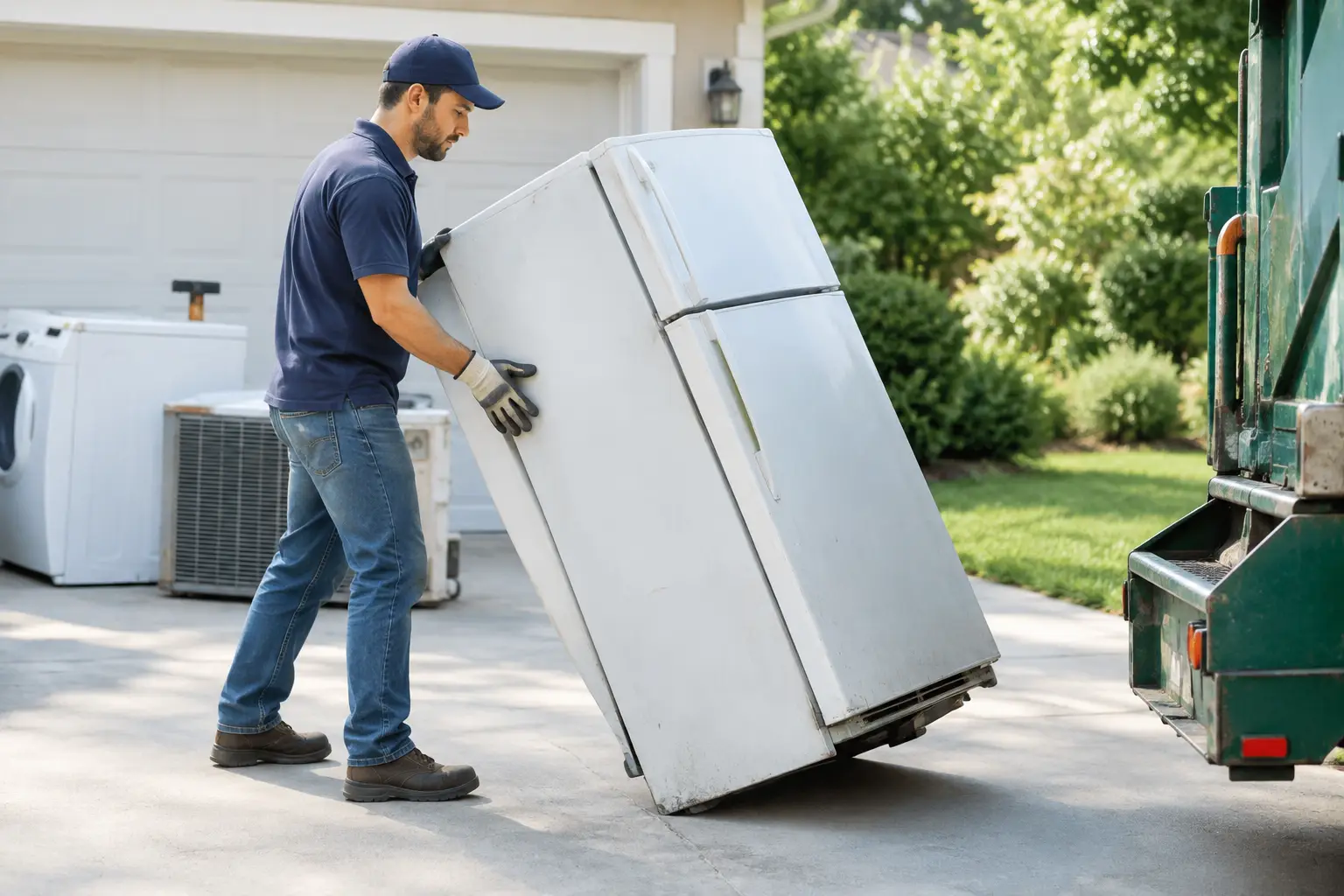
That old refrigerator in the garage is not just taking up space. It may contain refrigerant, oil, wiring, and heavy components that need to be handled the right way. The same goes for washers, dryers, stoves, window AC units, and microwaves. A guide to safe appliance disposal starts with one simple rule: do not treat a large appliance like ordinary curbside trash.
Getting rid of appliances safely protects your property, the people helping with the move, and the local environment. It can also save you from a missed pickup, a surprise fee, or the hassle of dragging a heavy unit back inside after it is refused. Here is how to clear it out without creating another project for yourself.
Start by Deciding Whether It Can Be Reused
Before arranging disposal, take an honest look at the appliance. If it is clean, works properly, and is a model someone could reasonably use, donating or selling it may be an option. A working stove, washer, or dryer can be useful to a neighbor, landlord, charity, or secondhand buyer.
Be realistic about condition. An appliance with mold, major rust, broken controls, pests, leaking fluids, or a failing motor is usually a disposal job. Do not pass along a safety problem just because the appliance still turns on. If it has reached the end of its useful life, recycling or professional removal is the more responsible route.
A Guide to Safe Appliance Disposal by Appliance Type
Not every appliance has the same disposal requirements. The size of the unit matters, but what is inside matters more.
Refrigerators, Freezers, and Air Conditioners
Refrigerators, freezers, dehumidifiers, and window AC units are the appliances that require the most care. Many contain refrigerant that must be recovered by a qualified technician before the unit can be recycled or processed. Do not cut, disconnect, or puncture refrigerant lines yourself. A damaged line can release harmful chemicals and make the appliance unsafe to transport.
Empty the appliance completely, wipe it out, and unplug it well before pickup. Allow a refrigerator or freezer to defrost, placing towels underneath to catch water. If you are moving it through a home, secure loose shelves and doors so they do not swing open. Keep the unit upright whenever possible. Laying it on its side can cause compressor oil to move into places it should not be.
Some disposal providers and recycling facilities require proof that refrigerant has been properly removed. Ask about this before scheduling a pickup, especially for commercial coolers and older units.
Washers, Dryers, Dishwashers, and Water-Using Appliances
Water is the main concern with washers, dishwashers, ice makers, and similar appliances. Shut off the water supply, disconnect the hoses, and drain any remaining water before moving the unit. A small amount of trapped water can turn into a slippery mess in a hallway, elevator, truck, or storage area.
For washing machines, tape hoses to the back of the unit after draining them. If the machine has a transport bolt system or manufacturer guidance for moving, follow it. Dryers should be unplugged, and gas dryers need extra attention. Never disconnect a gas line unless you are qualified to do so. A licensed professional should cap and verify the line before the dryer is removed.
Stoves, Ovens, Microwaves, and Small Kitchen Appliances
Electric stoves and ovens are generally straightforward once they are unplugged and cleaned. Gas ranges are different. The gas must be turned off and the connection safely handled before removal. If you smell gas at any point, stop work, leave the area, and contact the appropriate professional.
Microwaves may look small enough for regular trash, but they contain electronic components and capacitors. They should be handled as electronic waste or removed with other household appliances when possible. The same applies to countertop ovens, blenders, coffee makers, and other broken small appliances. Check local program rules because accepted items can vary.
Prepare the Appliance Before Pickup or Drop-Off
A few minutes of preparation makes removal faster and safer. Start by unplugging the appliance. Do not pull it out by the cord, and do not leave cords loose where someone can trip. Coil and tape the cord securely to the side or back of the unit.
Remove all personal items, food, detachable trays, and loose glass shelves. Clean out debris and wipe up grease, moisture, or spills. This is especially helpful with refrigerators, ovens, and dishwashers that may have been sitting unused for a while.
Measure doorways, hallways, stairwells, and the path to the curb or driveway. A large refrigerator can look manageable until it reaches a tight corner. Clear rugs, furniture, boxes, and anything else that could create a trip hazard. If the route includes stairs, do not attempt the move alone. Appliances are heavy, awkward, and capable of causing serious injuries or damaging walls and floors.
For appliances with doors or lids, secure them for transport. If the unit will sit outside while awaiting pickup, keep children away from it and do not leave doors accessible. Old refrigerator and freezer doors are a particular safety concern.
Choose the Right Disposal Option
The best disposal method depends on the appliance, its condition, and your local rules. Curbside bulk pickup can work for certain large appliances, but many cities require advance scheduling, have item limits, or will not accept units containing refrigerant. Leaving an appliance at the curb without approval can result in a missed collection or code issue.
A recycling center may be a good fit when you have transportation and the facility accepts your specific item. Call ahead before loading anything. Ask whether refrigerant-containing appliances are accepted, whether preparation is required, and whether there is a fee. Recycling is valuable because appliances contain recoverable metal, but not every facility processes every type of unit.
Professional junk removal is often the easiest option when the appliance is heavy, upstairs, broken, leaking, or part of a larger cleanout. It also makes sense when you have multiple items such as an old fridge, mattress, cabinets, and renovation debris. Instead of arranging separate trips and finding help to lift, you can have the items removed in one visit.
For homeowners, property managers, and contractors in Dade and Broward counties, A&D Junk Removal LLC can handle appliance pickup as part of a no-hassle cleanout or debris removal service. It is a practical choice when time is short, hauling capacity is limited, or the appliance cannot safely be moved without help.
Avoid These Common Disposal Mistakes
The biggest mistake is assuming all appliances can go in a dumpster or regular trash bin. Refrigerant units, gas appliances, electronics, and large metal items may require separate handling. Putting the wrong item in a rental dumpster can create extra work and added disposal costs.
Do not dismantle an appliance unless you know exactly what you are doing. Taking apart a dryer or stove may seem like a way to make it easier to move, but sharp metal edges, heavy components, electrical parts, and stored energy in certain components can cause injuries. The same applies to stripping wiring or trying to remove refrigerant yourself.
Also, do not move a heavy appliance with one person and a hand truck if the route includes stairs, uneven ground, or narrow turns. The cost of getting help is far lower than the cost of a damaged floor, broken appliance, or back injury.
Make Room Without Creating More Stress
Safe appliance disposal is less about finding the fastest way to get an item out of sight and more about choosing a method that fits the appliance. Prep it, keep hazardous components intact, and confirm where it is allowed to go before moving it.
If the appliance is one piece of a bigger cleanup, handle it at the same time as the rest of the clutter. Clearing a garage, rental unit, job site, or kitchen renovation area is much easier when the heavy items, loose debris, and disposal logistics are handled in one plan. Reclaiming the space should feel like progress, not another weekend of lifting and guesswork.