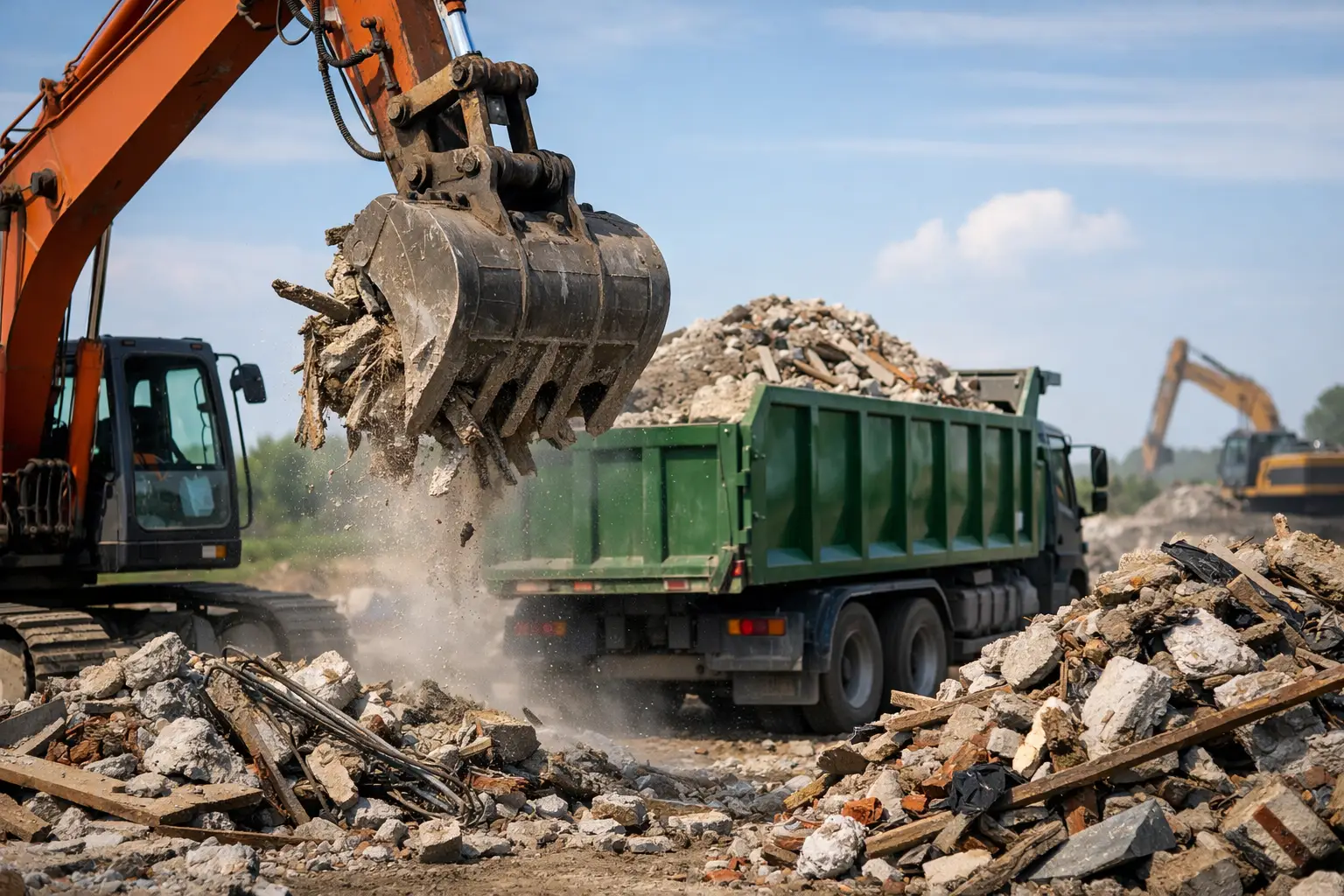
A teardown gets messy fast. One wall comes down, then another, and suddenly you are staring at piles of drywall, broken tile, wood, metal, concrete, and dust everywhere. That is why demolition waste disposal matters early, not after the debris is already stacked in the driveway or blocking the work area.
If you are remodeling a home, clearing out a rental, or managing a commercial space, the right cleanup plan saves time, protects the property, and keeps the job moving. It also helps you avoid the common mistake of underestimating just how heavy and awkward demo debris can be.
Why demolition waste disposal needs a real plan
Demolition debris is different from everyday junk. It is heavier, rougher to handle, and often mixed. A single bathroom demo can leave behind tile, backer board, vanity pieces, drywall, fixtures, and sharp fragments that are not easy to bag and set out at the curb.
The bigger issue is flow. When debris piles up, the site slows down. Workers lose room to move, materials get damaged, and cleanup becomes harder than it needed to be. In some cases, waste left too long can also create safety problems, especially around nails, broken glass, exposed metal, and dusty materials.
A good disposal plan is really a project support plan. It keeps the space usable, reduces repeated handling, and makes it easier to stay on schedule.
What counts as demolition waste disposal
In most projects, demolition waste disposal covers the removal, hauling, and proper unloading of materials generated during tear-out or structural removal. That can include interior renovation debris, exterior demolition debris, and mixed construction materials.
Common materials include drywall, wood, cabinetry, flooring, tile, concrete chunks, fencing, roofing debris, old fixtures, and general site waste. Some loads are straightforward. Others need sorting because the material mix affects how they can be hauled and where they can go.
That is where people often run into delays. They assume all debris can be handled the same way, but weight, volume, and material type all change the job.
The materials that change the job most
Some demo debris is bulky but manageable. Other debris is dense enough to turn a small pile into a heavy-load problem. Concrete, dirt, brick, mortar, tile, and shingles are the usual examples. They do not always look like much until it is time to load them.
Mixed debris can also complicate things. A pile of wood and drywall is different from a pile that includes concrete, metal, and old fixtures. The more mixed the load, the more important it is to have the right equipment and enough labor to move it safely.
There is also the question of prohibited or restricted materials. Paint, chemicals, certain electronics, and hazardous waste usually require separate handling. If there is any chance the structure contains asbestos, lead-based paint, or other regulated materials, that needs to be identified before general hauling starts.
Dumpster rental or full-service hauling?
This is one of the biggest decisions in demolition waste disposal, and the right answer depends on the project.
Dumpster rental makes sense when you want debris on site for a period of time and have a crew actively loading as the work happens. It gives you flexibility and keeps cleanup close to the work zone. For a renovation that will take several days, that can be the most practical option.
Full-service hauling is often better when the debris is already piled up, when labor is limited, or when the material is too heavy or awkward for the customer to manage alone. It is also a strong choice for people who want the mess gone quickly without coordinating loading, transport, and disposal themselves.
Sometimes the smartest approach is a combination. A trailer or dumpster can handle the main phase of the demo, then a haul-away service can clear the leftovers, sweep the area, and remove what the project missed. That kind of flexibility helps on jobs where the scope shifts halfway through, which happens all the time.
How to avoid the most common disposal mistakes
The first mistake is waiting too long to set up removal. Once debris starts spreading through the site, disposal gets more expensive and more time-consuming because materials have to be gathered, restacked, and reloaded.
The second mistake is guessing on volume. People routinely underestimate how much space demo debris takes up. Cabinets do not stack neatly. Drywall breaks into awkward pieces. Wood with nails cannot just be tossed anywhere. A small room can produce a surprising amount of waste.
The third mistake is ignoring weight. This shows up most often with tile, concrete, dirt, plaster, and roofing materials. A container may look only half full and still be extremely heavy.
The fourth mistake is mixing in materials that should be handled separately. That can create unloading issues, added fees, or delays at the end of the job.
A little planning upfront usually prevents all four.
Demolition waste disposal for homeowners
For homeowners, the goal is usually simple – get the debris out without turning the property into a bigger project. That is especially true during kitchen remodels, bathroom demos, flooring replacement, fence removal, and shed tear-downs.
The biggest concern is convenience. Most homeowners do not have the truck space, equipment, or time to make multiple dump runs. They also do not want heavy debris sitting in front of the house for days longer than necessary.
A good setup keeps access open, protects driveways when possible, and matches the disposal method to the size of the job. If the project is small, a direct haul-away may be the fastest path. If the remodel is active over several days, on-site trailer or dumpster service can keep things under control without constant trips.
Demolition waste disposal for contractors and property managers
Contractors and property managers usually care about speed, site condition, and predictability. They need debris removed on schedule so crews can keep working and properties can move to the next phase.
That means disposal is not just cleanup. It affects productivity. A cluttered site slows trades down, creates safety issues, and makes a property look unmanaged. On occupied properties or turnovers, it can also affect tenants, neighbors, and access.
Reliable service matters here more than anything. Fast response, clear load limits, and straightforward pickup scheduling make a real difference when timelines are tight. In Dade and Broward County, where turnaround expectations can be high and access is not always easy, working with a local team that knows how to move quickly helps keep projects from dragging out.
What affects cost
Pricing for demolition waste disposal is usually shaped by volume, material type, weight, labor, and access. A light load of wood and drywall is different from a dense load of tile and concrete. A curbside pickup is different from hauling debris out of a backyard, second floor, or tight commercial unit.
Labor can be a major factor when debris is scattered, bagged poorly, or mixed with materials that need sorting. Distance to the truck matters too. So does whether the debris is loose, stacked, or buried under other material.
The cheapest option on paper is not always the cheapest in practice. If a low-rate service cannot handle the load properly, shows up late, or requires extra trips, the savings disappear fast. A dependable crew that brings the right equipment and clears the site correctly usually saves money where it counts – time, labor, and avoided headaches.
Keeping the site cleaner and safer
The best disposal jobs are the ones that stay ahead of the mess. That means removing debris before walkways are blocked, keeping sharp material contained, and clearing enough space for the next phase of work.
It also means thinking beyond the pile itself. Dust, loose nails, shattered tile, and broken trim pieces tend to spread. Once they do, cleanup becomes more than a hauling job. It becomes detail work.
That is why professional removal support can make a project feel easier from start to finish. You are not just getting rid of waste. You are making the site safer, more workable, and less stressful to manage.
When the goal is to keep a demo moving, simple beats complicated every time. Have a plan, use the right removal setup, and do not wait until the debris becomes its own problem. If you want the job handled without the usual runaround, A&D Junk Removal LLC is built for exactly that kind of work. Clear the mess early, and the rest of the project tends to go a whole lot smoother.