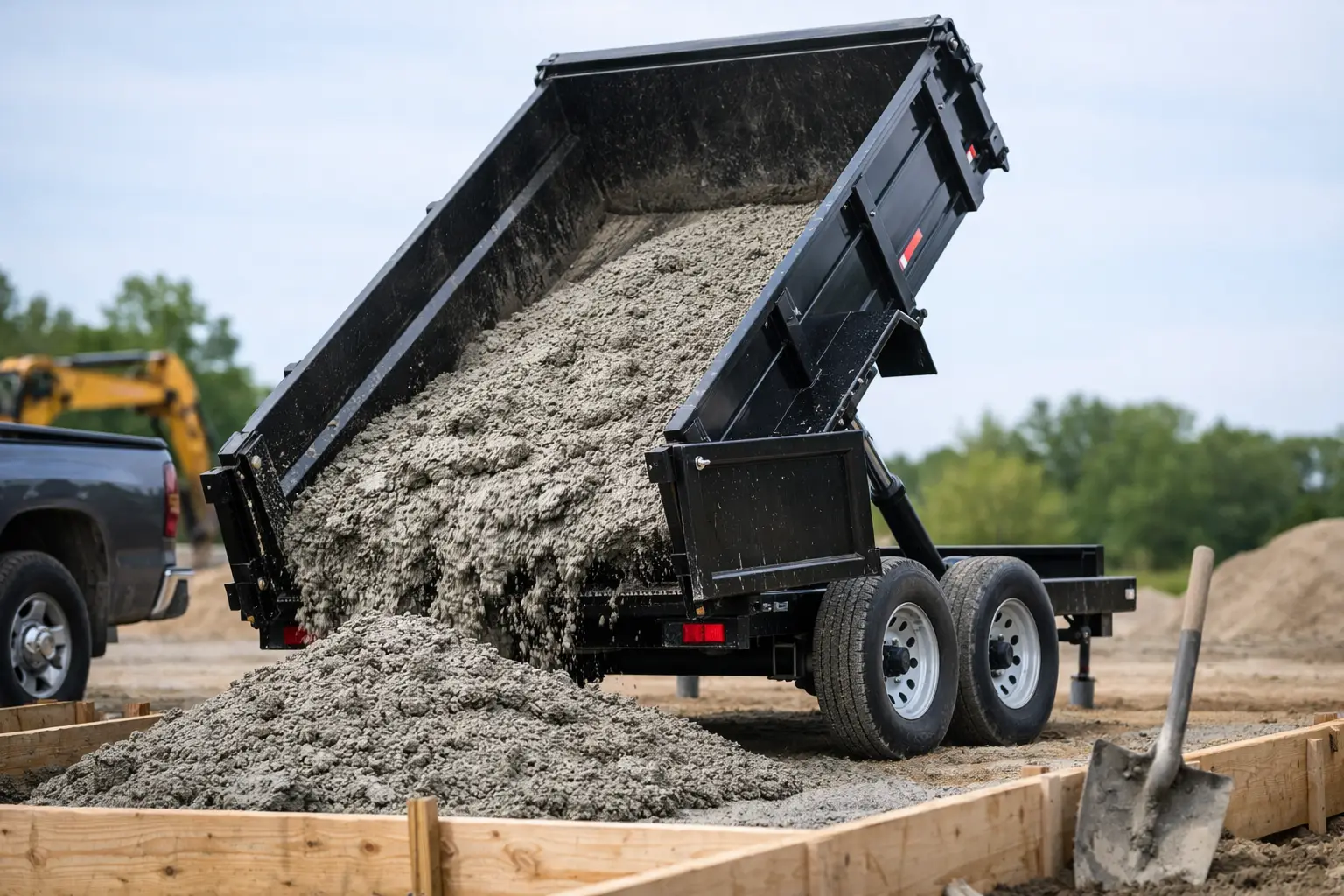
A lot of jobs look simple until the concrete shows up. What seems like a small patio pour, broken sidewalk removal, or leftover slab cleanup can turn into a serious weight problem fast. So, can dump trailers hold concrete? Yes, some can – but not every dump trailer should, and the difference comes down to weight capacity, trailer design, and how the concrete is being loaded.
That distinction matters whether you are a homeowner cleaning up after a project or a contractor trying to keep a job moving. Concrete is one of the heaviest materials you will ever load into a trailer. If you guess wrong, you can overload the trailer, stress the hoist, damage the bed, or create a dangerous towing situation on the road.
Can dump trailers hold concrete?
They can, but only within their rated limits and only if the trailer is built for that kind of load. A dump trailer is made to carry heavy material, but concrete is not the same as yard waste, household junk, or light demolition debris. Wet concrete is extremely dense, and broken concrete chunks can create hard point loads that hit the trailer floor differently than loose dirt or brush.
That is why the real question is not just whether a dump trailer can hold concrete. The better question is how much concrete that specific trailer can hold safely.
A heavy-duty dump trailer with a strong frame, proper axle setup, and a high payload rating may handle concrete just fine in smaller quantities. A lighter trailer, even if it looks large, may run out of payload long before the bed looks full. This is where people get in trouble. The trailer can appear half empty and still be overloaded.
Why concrete is tricky in a dump trailer
Concrete is heavy enough to make volume misleading. One cubic yard of concrete can weigh around 4,000 pounds. That means a trailer does not need to be filled very high before it reaches its limit. If the trailer itself already weighs several thousand pounds, your legal and safe payload shrinks even more.
Broken concrete also loads unevenly. Large chunks can slam into the bed during loading, and sharp edges can put extra stress on the floor. Wet concrete brings a different issue. It can shift, settle, and stick, which makes dumping and cleanup harder. If it begins to cure inside the trailer, the problem gets expensive fast.
For that reason, people handling concrete need to think beyond whether it fits. They need to think about total weight, balance over the axles, and whether the dumping system can lift that load without strain.
Wet concrete vs. broken concrete
If you are asking whether dump trailers can hold concrete, it helps to separate two very different situations.
Wet concrete is usually the riskier choice. A dump trailer is not a concrete mixer and is not designed for transporting ready-mix the way a dedicated concrete truck does. Wet concrete is dense, messy, and time-sensitive. It can leak through gaps, coat the trailer bed, and start setting before unloading if the timing goes wrong. Even if the trailer can technically hold the weight, that does not mean it is the right tool.
Broken concrete from demolition is more common in dump trailers. Sidewalk pieces, patio chunks, curb sections, and slab debris are often hauled this way. Even then, the load usually needs to stay much lower than people expect. The trailer may only be able to take a shallow layer of concrete rubble before reaching max payload.
What determines if your trailer can handle it
The biggest factor is payload capacity, not bed size. Payload is the amount of material the trailer can carry after accounting for the trailer’s own weight. Two trailers can look almost identical but have very different carrying limits.
Axles matter too. A dual-axle trailer rated for lighter jobs is not in the same class as a heavy-duty gooseneck dump trailer built for construction debris. Floor thickness, frame reinforcement, hoist design, tire rating, and coupler setup all play a part.
Tow vehicle capacity matters just as much. Even if the trailer itself is rated to carry concrete, the truck pulling it must also be rated to tow that total loaded weight. A trailer that is technically within its own limits can still be unsafe if the truck is undersized.
Then there is loading method. Dropping concrete chunks from a skid steer or excavator into one spot can create concentrated impact and uneven balance. Spreading the load carefully helps protect the trailer and improves dumping.
Common mistakes people make
The most common mistake is loading by sight instead of by weight. With lighter debris, people get used to filling a trailer near the top rail. That approach does not work with concrete. A partial load can already be too much.
Another mistake is assuming all dump trailers are built the same. They are not. Some are designed for general cleanup, mulch, brush, or mixed junk. Others are built for dense construction materials. If you do not know the trailer’s GVWR, empty weight, and payload, you are guessing.
People also underestimate cleanup. If wet concrete hardens in the bed, removing it can damage the trailer coating and waste hours of labor. Even broken concrete leaves dust, grit, and abrasive residue that should be cleaned out before the next use.
When a dump trailer makes sense for concrete
A dump trailer can be a practical option when you are hauling limited amounts of broken concrete and the trailer is properly rated for it. That might be a small demo job, a short driveway section, or a load of busted-up patio material that has been weighed and distributed correctly.
It also makes sense when you need fast load-and-go removal from a renovation or site cleanup. For contractors and property owners, that convenience matters. A trailer delivered to the site, loaded efficiently, and hauled away saves time and keeps the project area cleaner.
For jobs in Dade County and Broward County, where scheduling and turnaround often matter as much as price, having the right trailer for the material can keep the whole project moving instead of turning into a second cleanup problem.
When it is better to use another option
If you are dealing with large volumes of wet concrete, a dump trailer is usually not the best answer. A ready-mix truck, volumetric mixer, or other specialized setup is better suited for transport. If you are removing a major slab, commercial pad, or heavily reinforced concrete, you may need equipment and hauling built specifically for dense debris.
The same goes for jobs where weight is hard to estimate. If there is any doubt, it is smarter to underload and make more trips than to overload once. Overloaded trailers wear out components faster and create real safety issues with braking, steering, tires, and dumping.
A practical rule of thumb
Think heavy material means shallow loads. If the material is concrete, dirt, block, or roofing, the trailer often reaches weight capacity before it reaches visual capacity. That is why experienced operators pay attention to ratings first and volume second.
If you are renting or booking a trailer for concrete debris, ask what the load limit is for that material specifically. That is a better question than asking for the biggest trailer available. Bigger does not always mean more usable payload once the trailer’s own weight is factored in.
A dependable provider will tell you where the limit is, help you avoid overloading, and recommend a better option if concrete is not a good fit for that trailer. That kind of honesty saves money because it helps you avoid fines, damage, and wasted time.
The bottom line on concrete and dump trailers
So, can dump trailers hold concrete safely? Yes, if the trailer is rated for the load, the truck can tow it, and the material is loaded with weight in mind. But concrete is not forgiving. It gets heavy fast, it stresses equipment, and it punishes guesswork.
If you are dealing with concrete cleanup and want the job done without extra hassle, it helps to think less about filling space and more about managing weight the right way. The safest trailer load is usually smaller than people expect, and that is exactly why getting the setup right at the start makes the whole job easier.