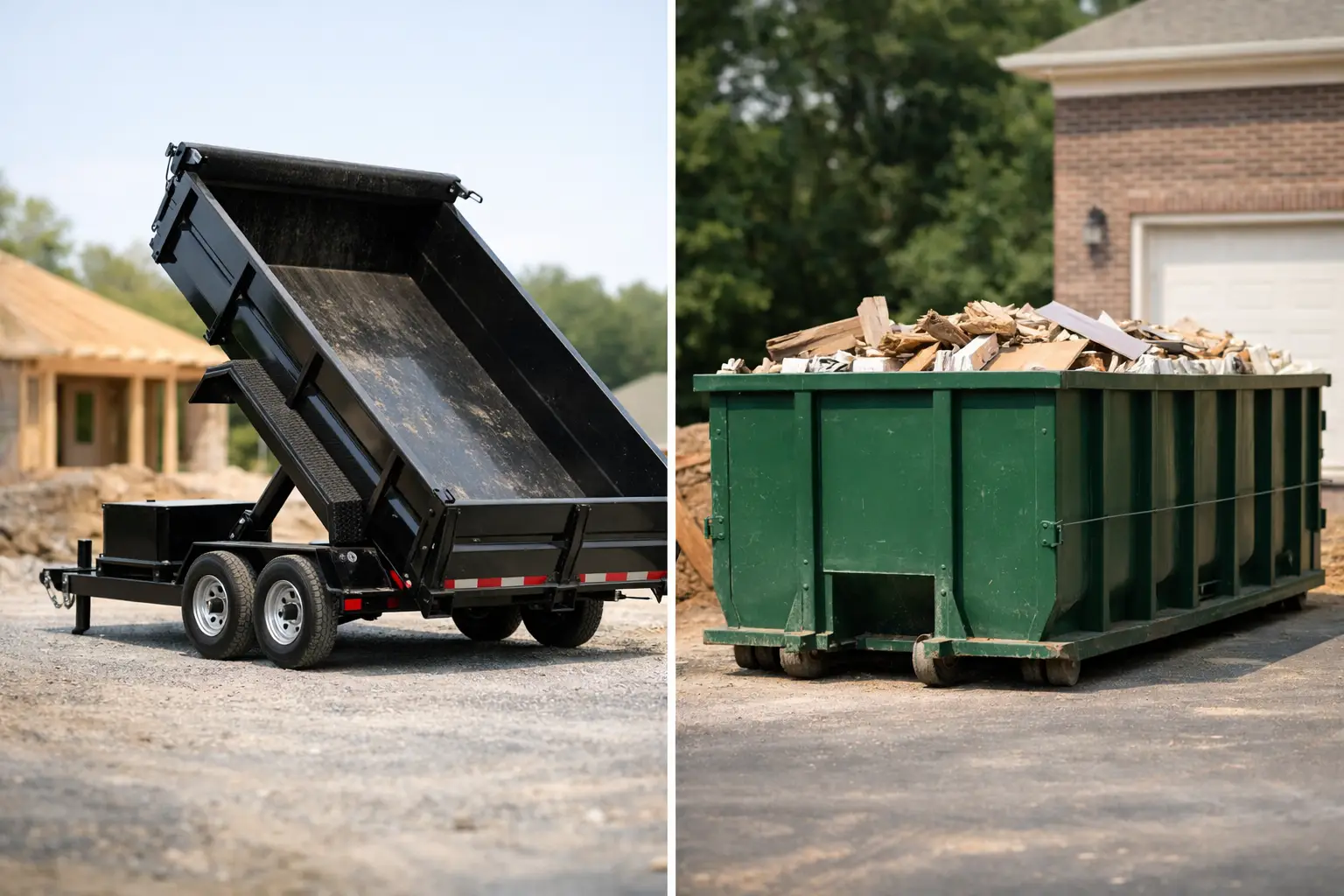
If you have debris piling up in the driveway, a rental decision usually comes fast. The dump trailer vs dumpster question matters because the wrong choice can slow down your project, take up too much space, or cost more than it should.
For some jobs, a standard dumpster is the easy answer. For others, a dump trailer gives you more flexibility, easier placement, and faster pickup. The best option depends on what you are tossing, how long you need it, how much room you have, and whether your cleanup is a one-day push or a project that will stretch out over several days.
Dump trailer vs dumpster: the basic difference
A dumpster is a stationary container dropped off at your property or job site and picked up later. It is built to sit in one place while you fill it over time. That makes it a common fit for longer cleanouts, renovations, roofing jobs, and property turnover work.
A dump trailer is a trailer-based container delivered to your location. It can often be easier to place in tighter spots, and in many cases it is better for customers who want a simpler drop-off and haul-away setup without the footprint of a larger roll-off container.
The biggest practical difference is mobility and footprint. Dumpsters are made to stay put and hold a lot. Dump trailers are often easier to position, easier on certain driveways, and useful when you want quick service without turning your front yard or parking area into a construction zone.
When a dumpster makes more sense
If your job is going to create debris steadily over several days, a dumpster usually gives you the breathing room you need. You can load it as the work happens instead of rushing to finish before pickup.
This is especially helpful for remodels, eviction cleanouts, office cleanups, and larger home projects where debris comes in waves. Tear out a bathroom one day, old cabinets the next, flooring after that. A dumpster keeps the site moving without forcing you to stack waste in piles while you wait.
Dumpsters also make sense when volume is the main issue. If you are clearing out a house, dealing with bulky furniture, or handling a heavy load of mixed debris, capacity matters more than convenience of placement. A larger container can save you from overloading a smaller option or needing extra haul-offs.
That said, bigger is not always better. A dumpster can take up more room, may be harder to place on a tight property, and can feel excessive for a small residential project. If your driveway is short, your access is narrow, or you live in a neighborhood where space is already limited, a dumpster may create more hassle than help.
When a dump trailer is the better choice
A dump trailer is often the smarter option for smaller to mid-sized jobs where convenience matters just as much as capacity. If you are cleaning out a garage, removing yard debris, handling a light remodel, or doing a fast property cleanup, a trailer can be the right fit.
One major advantage is placement. In tighter residential areas, a dump trailer can often be easier to maneuver than a larger roll-off dumpster. That matters in many parts of Miami-Dade and Broward, where homes, duplexes, and commercial spaces do not always come with wide-open access.
Another advantage is speed. If your goal is to load up and clear out quickly, a dump trailer often supports that better than a long-term container rental. You get the debris out, reclaim the space, and move on.
It can also be a better option if you care about reducing wear on a driveway or keeping the job site looking cleaner and less cluttered. For homeowners who do not want a large container sitting outside for days, that makes a real difference.
Cost depends on more than container type
A lot of people ask which is cheaper, but the honest answer is that it depends on the job. The container itself is only part of the cost. Volume, weight, rental length, debris type, access, and turnaround time all affect the total.
A dumpster may seem like the best value if you need more capacity over several days. But if your project is smaller and you finish quickly, paying for a larger container and a longer rental window may not be the most efficient choice.
A dump trailer can be more cost-effective when you want a practical amount of space without overbooking. It may also reduce labor headaches if easier placement means less walking, less staging, and faster loading.
The cheapest option on paper is not always the least expensive in real life. If the wrong setup slows your crew down, crowds your property, or forces a second haul, the savings disappear fast.
Think about what you are loading
The type of debris matters just as much as the amount. Household junk, old furniture, yard waste, renovation debris, concrete, roofing material, and mixed construction waste all behave differently.
Bulky but lighter material may fill a container before it gets too heavy. Dense debris like dirt, tile, brick, or concrete reaches weight limits much faster. In those cases, choosing based on size alone can lead to problems.
This is where local guidance helps. A good provider will ask what the material is, how much of it you have, and how you plan to load it. That keeps you from paying for more than you need or choosing a setup that is not built for the job.
Access and property layout matter more than most people think
Customers often focus on debris first and placement second. In practice, access can decide the whole job.
If your site has a steep driveway, low-hanging branches, parked vehicles, limited street access, or a narrow entrance, a large dumpster may not be the easiest answer. A dump trailer may fit the property better and make loading less of a chore.
On the other hand, if you have open access and a project that will keep generating debris all week, a dumpster gives you a simple, stable solution. That is why there is no one-size-fits-all answer to dump trailer vs dumpster. The right choice has to match both the waste and the space.
Homeowners and contractors often need different things
Homeowners usually care most about convenience, driveway space, and getting rid of junk without a drawn-out process. For them, a dump trailer is often appealing because it feels more manageable and less disruptive.
Contractors, property managers, and renovation crews may lean toward dumpsters when they need consistent debris handling during an active job. A container that stays on site can keep workflow smooth, especially when demo and disposal are happening at the same time.
Still, plenty of contractors use dump trailers too, especially on smaller remodels, punch-list cleanups, landscaping jobs, and sites with tight access. The best rental is not the one people use most often. It is the one that fits the real conditions of your job.
The easiest way to choose
If you need more capacity, longer loading time, and a container that can stay put through a multi-day job, a dumpster is usually the stronger choice. If you need easier placement, quicker turnaround, and a simpler option for a smaller cleanup or tight property, a dump trailer may serve you better.
If you are not sure, the smartest move is to describe the project instead of guessing the container. A reliable local team can usually tell within a few questions what will save you time and money. That is especially true when the same company understands junk removal, demolition debris, site cleanup, and material handling, not just drop-off rentals.
At A&D Junk Removal LLC, that practical approach matters. The goal is not to push one option every time. It is to make cleanup easier, keep pricing fair, and get the right equipment to the right job without wasting your day.
Before you book, think about how long the project will last, what kind of debris you have, and how much room you actually have to work with. A good rental should make the job lighter, not add another problem to manage.